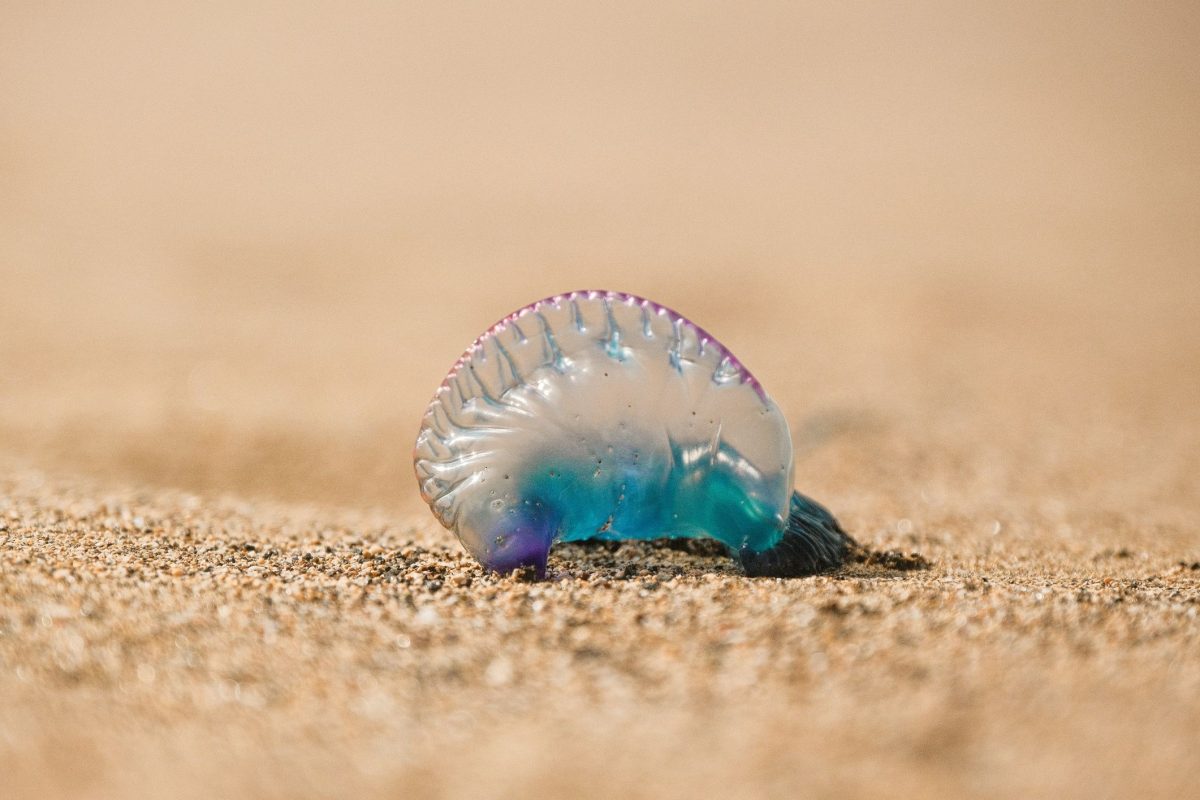
Summer beach trips to Spain's Basque Country and southwestern France just got riskier. Lifeguards from San Sebastian to France's Pyrénées-Atlantiques region are raising red flags (literally) about an invasion of Portuguese man o' war washing ashore. These aren't jellyfish, despite what most people think. They're something far more complex and far more dangerous.
The Portuguese man o' war is a siphonophore, which sounds like a technical term from a marine biology textbook because it is. What makes it so strange is that it's not technically a single creature at all. Instead, it's a colonial organism, a floating collective of specialized microorganisms that work together as one living unit. Some parts keep it buoyant. Others digest food. And then there are the tentacles, which can stretch down more than 30 meters below the surface, armed with thousands of microscopic harpoons loaded with venom that causes excruciating pain on contact.
On the surface, the man o' war looks almost beautiful: a transparent, purplish balloon topped with a pink-tinged crown and trailing long violet-blue tentacles. The creature earned its ominous name from a fancied resemblance to an 18th-century Portuguese warship. Unfortunately, the resemblance is where the charm ends. These organisms are genuinely feared by anyone who knows what they're capable of.
The Danger Zone
What makes the man o' war particularly troubling for swimmers is the sheer reach of its tentacles. You can spot one bobbing peacefully on the water's surface from a considerable distance away, which seems safe enough. But here's the catch: those tentacles stretch far below the visible creature, making it possible to get stung while never seeing what attacked you. And the threat doesn't end once you leave the water. Even dead specimens washed up on the sand, or tentacles severed from the body, retain their venom and can still inflict painful burns. This is why lifeguards in Pyrénées-Atlantiques and city officials in San Sebastian have installed white warning flags to mark their presence and red flags to prohibit swimming entirely.
When a sting occurs, the venom breaks down tissue in a process called cytolysis, leaving behind distinctive red whiplash marks. The pain is immediate and intense. If you're stung, get out of the water quickly and alert a lifeguard, but do it carefully to avoid another encounter. Then seek immediate first aid.
What Works and What Absolutely Doesn't
Rinsing the wound with vinegar is your best bet. Authorities recommend a mixture of food vinegar and warm seawater at a 1:3 ratio. If you don't have vinegar, rinse with seawater alone. What you must avoid matters just as much as what you do. Never use fresh water, never apply ice packs, and whatever you do, don't rub or scratch the sting. Never pick off tentacle fragments with your bare hands either; tweezers are the only safe tool. And forget everything you learned from that one famous Friends episode. Urine does nothing except add humiliation to injury. Skip the creams, the gels, and any other home remedies you've heard about.
If the pain persists beyond a few hours, see a doctor. Severe cases can trigger headaches, fever, muscle cramps, nausea, vomiting, difficulty breathing, and even cardiac complications. These require immediate medical attention, so don't brush them off as minor irritation.
Why They're Here Now
This isn't a fluke. The unusual arrival of tropical man o' war on Basque and Cantabrian shores links directly to warming ocean currents, part of this summer's relentless heatwave pattern. Scientists agree that climate change is intensifying these heat events. The consequences ripple across the global ocean. Sargassum blooms in the Caribbean are exploding, coral bleaching events are multiplying, and flesh-eating bacteria are proliferating at European beaches. The Portuguese man o' war invasion is one visible consequence of a warming planet.
If you're planning a beach trip to Spain or France this summer, check local beach conditions before you go. Most European beach resorts maintain updated safety information, and lifeguards take these warnings seriously. The man o' war swarm likely won't last forever, but for now, respect the red flags and stay alert. The ocean is magnificent, but it demands respect and awareness.