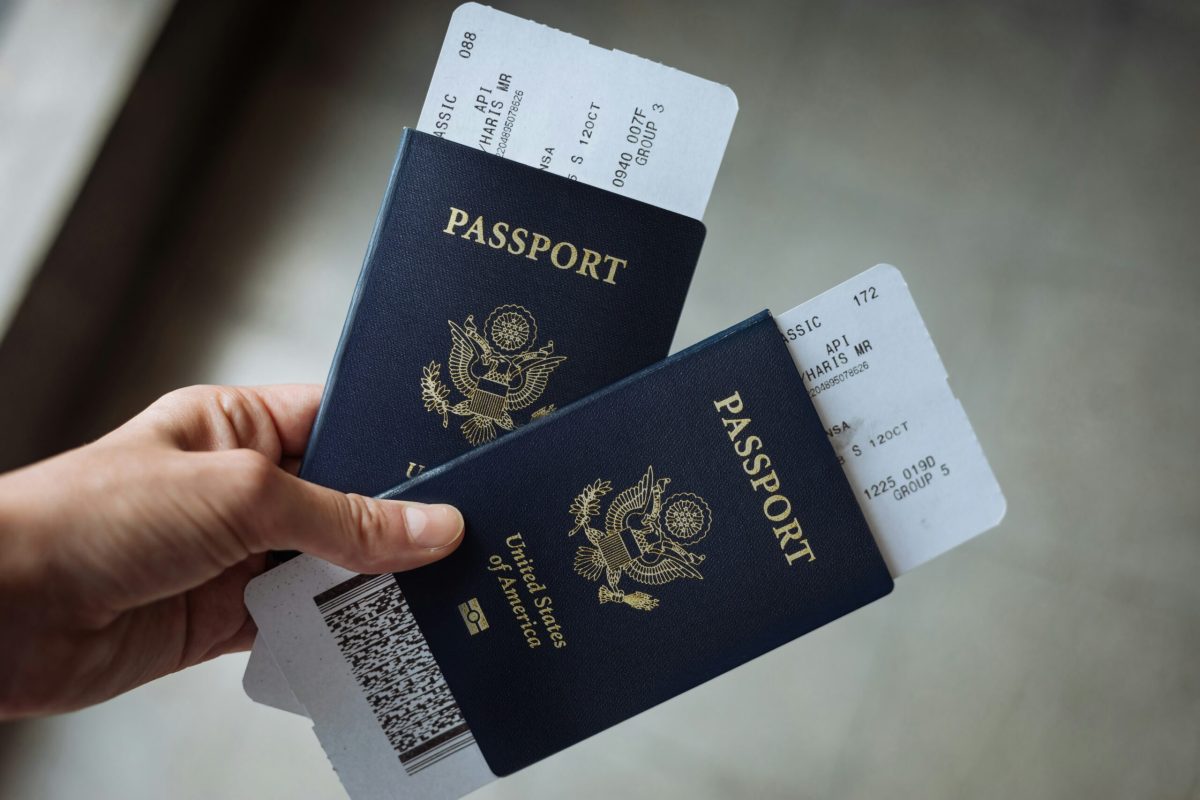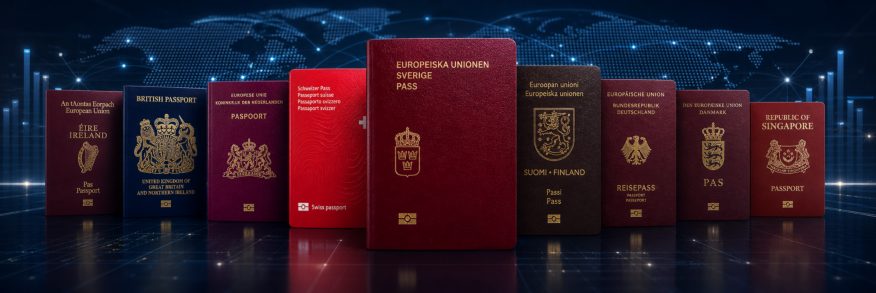
If you thought the strongest passports were simply the ones that let you visit the most countries without a visa, think again. A fresh ranking from Global Citizen Solutions released in July 2026 flipped the script entirely, and the results paint a striking picture of global inequality.
Sweden now holds the title of the world's most powerful passport, followed by Switzerland and Finland. But here's what makes this different from other annual passport rankings: it isn't about counting visa stamps. Instead, the Global Passport Index weighs fourteen distinct factors across three pillars: travel mobility, investment opportunities, and quality of living. Think healthcare access, economic strength, tax environment, climate, safety, and social infrastructure. The result is a European lock on the top nine positions, with Singapore as the sole non-European outlier.
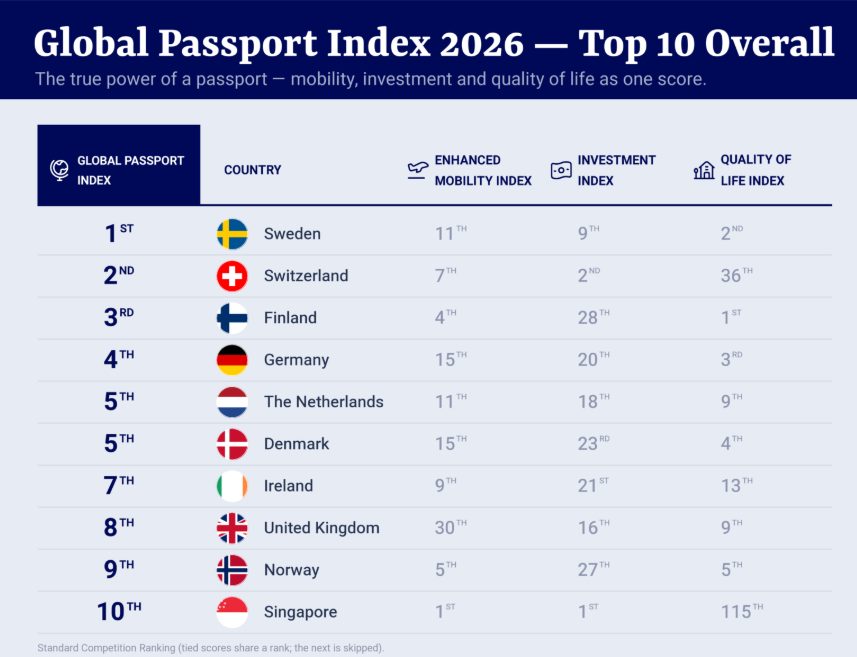
"Europe's dominance is total at the top, and it is built on balance, not on any single strength," explained Patricia Casaburi, CEO at Global Citizen Solutions. "On pure travel freedom, Singapore beats every one of them. On raw investment pull, several Gulf and Asian states rival them. Europe's edge lies elsewhere: it is the only region that pairs near-maximum global access with the world's highest quality of life."
The Growing Gap Between Haves and Have-Nots
The data reveals something darker beneath the rankings. Sweden's score of 96.05 sits 72.95 points above Afghanistan's 23.10. Since 2021, this gap has widened with each new edition of the index. The top passports keep gaining ground while the bottom loses it in absolute terms. It's a mobility divide that hardened sharply through 2026.
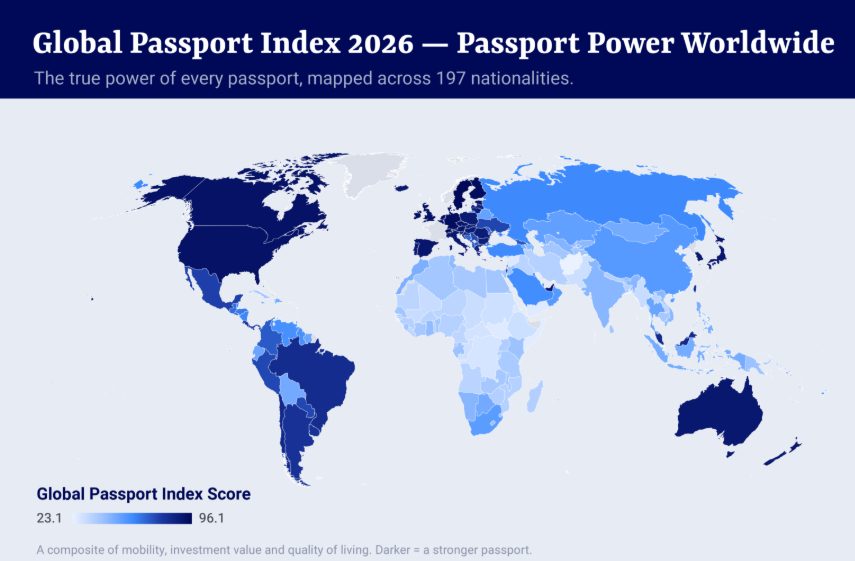
Reciprocity, it turns out, is rare. The world's most privileged passports cluster in wealthy Anglosphere countries and Gulf states, while bilateral mobility agreements often flow in only one direction. A Swedish passport opens doors that an Afghan one simply cannot, regardless of visa-free agreements on paper.
Two Worlds Moving in Opposite Directions
The 2026 index uncovered a fascinating paradox in how global mobility is reshaping itself. The Global North has converged on digital pre-screening systems like the UK's Electronic Travel Authorisation, the EU's Entry/Exit System (ETIAS), and the long-standing US ESTA. These supposedly streamline travel, but in practice they add friction even to destinations theoretically wide open.
Meanwhile, Asia is moving a different direction entirely. China expanded visa-free access to roughly fifty countries, pointedly excluding the United States. The system is liberalizing and tightening simultaneously, following wealth and geopolitical lines rather than any consistent global principle. As European carriers expand their global reach, these shifting mobility patterns will reshape who can actually travel where.
What This Means for Travelers Right Now
For most readers, passport strength determines more than just how many countries you can visit visa-free. It shapes whether you can live comfortably abroad, invest in new property, access quality healthcare, and navigate a safer climate as the planet warms. It determines tax rates and social stability. Europeans are increasingly traveling and relocating, and their passports give them advantages that go far beyond the typical tourist itinerary.
The index reminds us that global travel freedom isn't equally distributed. Holders of weaker passports face mounting barriers as wealthy nations implement stricter digital screening. The world of borderless movement, even for privileged travelers, is becoming harder to navigate. If you hold a strong passport, now might be the time to use it. The doors are still open, but the locks are getting more complex for everyone.