
Greece is cementing its position as one of Europe's most coveted destinations. Fresh data from the Greek National Tourism Organization shows that 29% of European travelers intend to visit by May 2027, ranking it third among Mediterranean hotspots and signaling genuine momentum in the region's recovery.
What makes this number even more telling? More than half of those planning trips (58%) are returning visitors who've already fallen for Greece. Another 42% are first-timers eager to experience it themselves. That split reveals something important: Greece has built real loyalty while still attracting fresh audiences at scale. "We're seeing both the trust of people who've been here before and the curiosity of entirely new travelers," the Greek National Tourism Organization's secretary general noted.
Why travelers can't resist Greece
The appeal boils down to four key factors. Eighty-three percent of respondents cited the sheer range of experiences available across the country. You can chase ancient history, island-hop through the Aegean, feast on seafood in coastal villages, or hike through olive groves without ever repeating yourself. That variety ranks above everything else on travelers' wish lists.
Close behind that is the warmth of local hospitality (82% approval) and a genuine sense of safety (77%). Tourist infrastructure scores well too (75%), and prices remain attractive compared to other Mediterranean rivals, with 67% praising value for money. None of this happens by accident. Greece has invested deliberately in accessibility while keeping its character intact.
The shoulder season shift is real
There's a fascinating shift happening in when people want to visit. About 35% of surveyed travelers are planning trips between September and November 2026, with September alone claiming 23%. After a brutal European summer marked by extreme heat waves and wildfires, travelers are actively seeking cooler temperatures and breathing room away from peak-season crowds. Greece's mild autumn weather has suddenly become a major draw.
The data comes from nearly 8,000 travelers across 10 countries: Austria, France, Germany, Italy, Spain, the Netherlands, Poland, Romania, Sweden, and the United Kingdom. Enthusiasm isn't uniform. Romanians lead the charge with 45% expressing intent to visit, followed by Italians (38%) and Swedes (37%). That geographic spread shows Greece's appeal transcends any single market.
Smart policy moves are opening doors
Greece hasn't left its growth to chance. The country made headlines by unilaterally waiving new European Entry/Exit System requirements for British arrivals early in the summer, sidestepping the operational headaches that plagued other EU nations. That gesture alone likely boosted numbers among UK travelers.
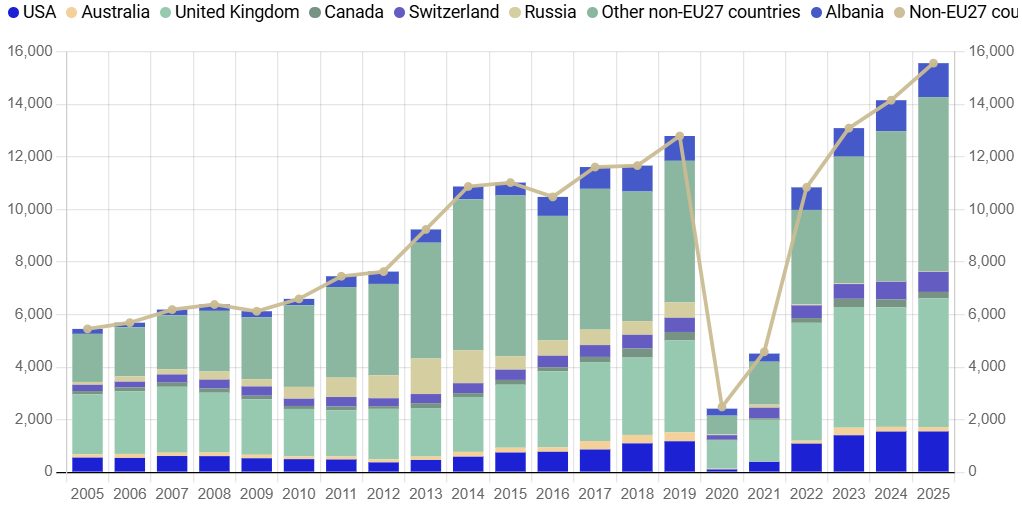
Even more innovative is Greece's "door visa" policy for Turkish visitors. The program enables visas on arrival for Turkish travelers to 12 Greek islands (Chios, Kalymnos, Kastellorizo, Kos, Leros, Lesvos, Limnos, Patmos, Rhodes, Samos, Samothraki, and Symi) situated just offshore from Turkish territory. The results speak clearly: Turkish arrivals to Greece surged 25% since 2024. It's border policy that actually encourages travel rather than creating friction.
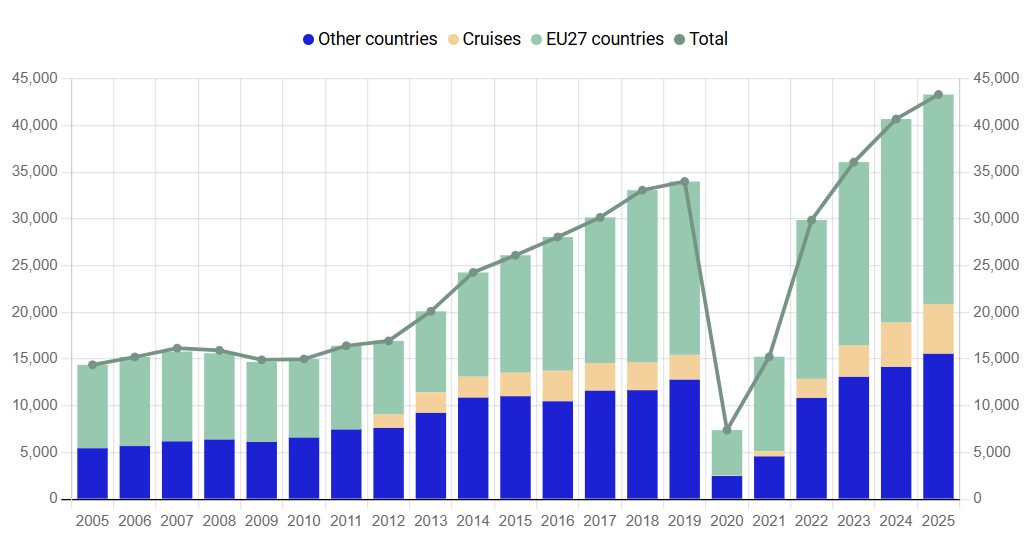
The broader numbers confirm what the European Travel Commission already reported. Greece logged stronger visitor growth in early 2026 (+38.3%) compared to Italy and Malta, making it a genuine standout. That momentum matters. It means hotels are investing, restaurants are expanding, and local communities are gearing up to welcome crowds thoughtfully rather than reactively.
For travelers watching the European landscape shift, the message is clear: Greece isn't resting on its reputation. It's actively making itself easier to reach, safer to explore, and more affordable to enjoy. Whether you're chasing ancient ruins under moonlight or planning a fall getaway before the rush peaks, the conditions for a Greek adventure have rarely been better.