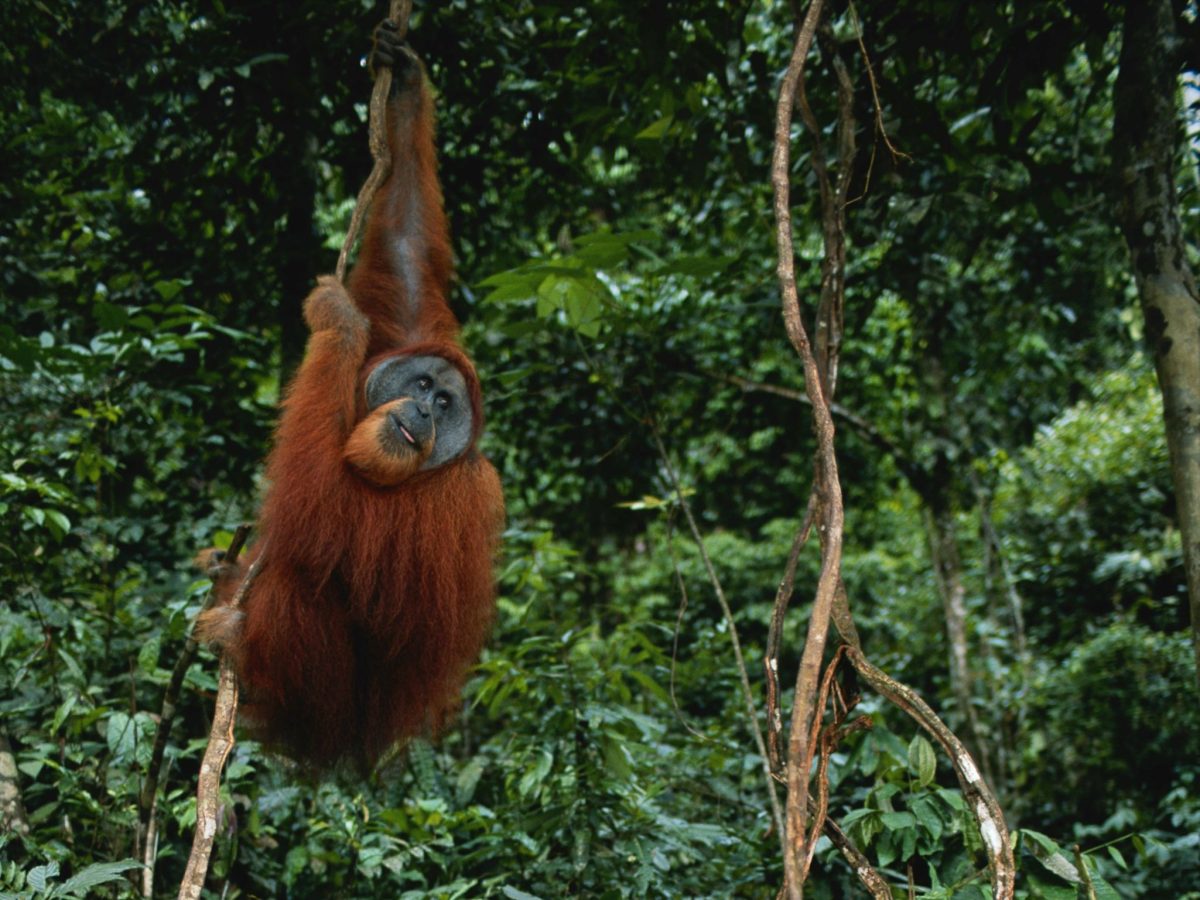
A cyclone that tore through Sumatra in November revealed how fragile the world's newest great ape species really is. Cyclone Senyar triggered torrential rains that sent mudslides cascading through the northern island, killing over 1,200 people and destroying roughly 300,000 homes across Indonesia, Malaysia, and Thailand. But the storm's toll on wildlife tells a quieter, more urgent story.
Researchers estimate the disaster killed at least 58 Tapanuli orangutans, a species that was only officially recognized by scientists in 2017. That represents roughly 7% of the entire global population, now estimated at around 800 individuals. The true death toll may be far higher, as the latest survey only covered part of the Batang Toru forest in western Sumatra, where most of these apes live.
Finding a new great ape species in the modern world is exceptionally rare. When the Tapanuli orangutan was confirmed as distinct from other orangutan populations, it marked the first time in nearly 100 years that scientists had identified a previously unknown great ape. These primates are sophisticated creatures, using tools, building complex social networks, and displaying intelligence that rivals other apes. They exist nowhere else on Earth but the shrinking forests of northern Sumatra.
How a Storm Became a Extinction Crisis
The mechanics of the disaster were straightforward but devastating. Flash floods mixed with heavy mudflow swept through Tapanuli, Sibolga, Aceh, and Padang in Sumatra, with landslides moving so fast that orangutans had virtually no escape route. Researchers from Borneo Futures, Liverpool John Moores University, and the World Weather Attribution initiative analyzed satellite images and historical population data to calculate the losses.
What made these floods particularly catastrophic for the apes was deforestation. Without dense forest cover to anchor soil in place, the hillsides became saturated and collapsed into fast-moving mudslides. In regions still blanketed in mature forest, the trees slow water movement and stabilize slopes. Where forests have been cleared for agriculture, logging, or development, the ground offers almost no resistance. Erik Meijaard, the lead researcher, explained that the orangutans were caught in terrain where nature's own defenses had already been stripped away.
Climate change complicated matters further. Scientists found evidence that human-induced warming has intensified both rainfall intensity and the frequency of extreme weather events around the Malacca Strait. A storm that might have been manageable 30 years ago now arrives with greater fury. The combination of climate shifts and habitat loss created a perfect disaster scenario for a species already living on a knife's edge.
A Species Running Out of Room
The Tapanuli orangutan's predicament extends far beyond last November's storm. Like so many endangered species in Southeast Asia, these apes face a convergence of threats that narrow their chances for survival. Infrastructure projects, habitat fragmentation, and human-wildlife conflict all push endangered species into increasingly smaller areas, leaving little room for recovery.
Hunting and poaching contributed significantly to orangutan decline across Sumatra in past decades. Today, however, researchers say habitat destruction poses the greater threat. As development creeps into remaining forests and agricultural expansion continues, orangutans lose both territory and food sources. When humans and apes are forced to compete for the same shrinking spaces, conflict becomes inevitable and often fatal for the animals.
Panut Hadisiswoyo, an Indonesian conservationist who worked on assessing the disaster's impact, emphasized that hunting can theoretically be managed through enforcement and education. Poor land management, however, remains structurally harder to fix. Forests cannot regenerate if the land has been converted to plantations or settlements. Soil cannot stabilize on eroded hillsides. Without addressing how land is used and managed, the underlying vulnerabilities that made this disaster so deadly will persist.
What Recovery Looks Like
Meijaard and Hadisiswoyo both called for urgent action from Indonesian authorities and international conservation groups. They stressed the need for a coordinated species action plan backed by serious funding. For a population of just 800 individuals, losing 7% in a single event is catastrophic. The margin for error vanishes when numbers are this small.
The researchers urged closer collaboration between government agencies, non-governmental organizations, and scientists to both prevent similar disasters and protect the remaining orangutans. That means reinforcing remaining forests so they can withstand extreme weather. It means controlling development in critical habitat areas. It means managing land in ways that reduce flooding and landslides during storms.
The Tapanuli orangutan's story serves as a stark reminder that endangered species don't decline gradually in a vacuum. They're caught in overlapping crises: climate change, habitat loss, deforestation, and infrastructure expansion all converging at once. For travelers visiting Indonesia and Southeast Asia, understanding what these apes face underscores why forest conservation, sustainable tourism, and land-use practices matter so profoundly in tropical regions. The rarest great apes on Earth exist in one small corner of Sumatra, and that window is closing faster than anyone expected.