Europe is busier than ever. The European Union just crossed a staggering milestone: more than 3 billion nights spent in tourist accommodation in a single year. But here's the catch. That enormous wave of visitors is splashing down in roughly the same corners of the map, year after year.
According to the European Commission's latest Transport and Tourism report, just seven regions account for nearly one in every five nights tourists spend in EU hotels, hostels, and guesthouses. The lineup reads like a greatest hits album: the Canary Islands, Croatia's Adriatic coast, Paris and its surroundings, Barcelona, Andalusia, Venice, and the Balearic Islands. These destinations have become so dominant that Spain, France, Germany, and Italy together pull in more than 60 percent of all EU tourism activity.
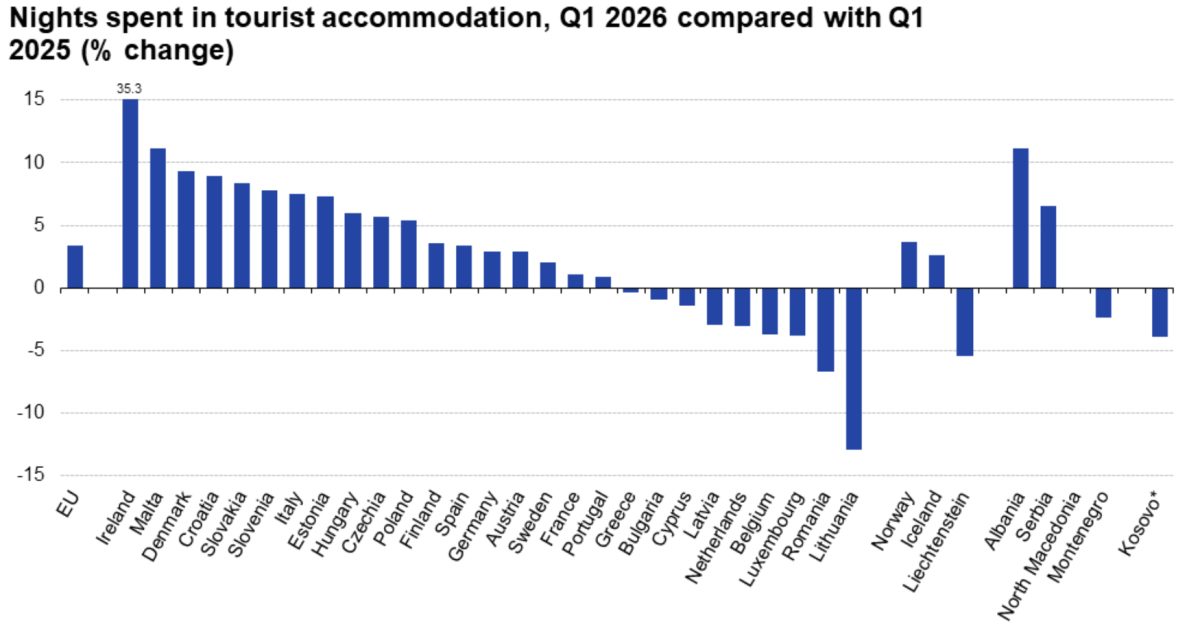
This extreme concentration reveals a real imbalance. While Paris buzzes with millions and Venice's canals struggle to breathe, entire regions across the EU remain tourism backwaters. The Commission uses the term "uneven tourism dependency" to describe this lopsided reality. Some areas are drowning in visitors while others have barely developed their tourism potential. The pressure falls heaviest on smaller destinations with tighter populations. When you measure tourism intensity (nights per local resident), Mediterranean and island hotspots show numbers that would make any small town nervous.
The consequences ripple outward. Housing shortages. Strained infrastructure. Depleted water supplies. Local communities squeezed out of their own neighborhoods. Italy's lakeside villages are already fighting back with visitor caps, and similar tensions are brewing across the continent.
Summer is eating the entire year
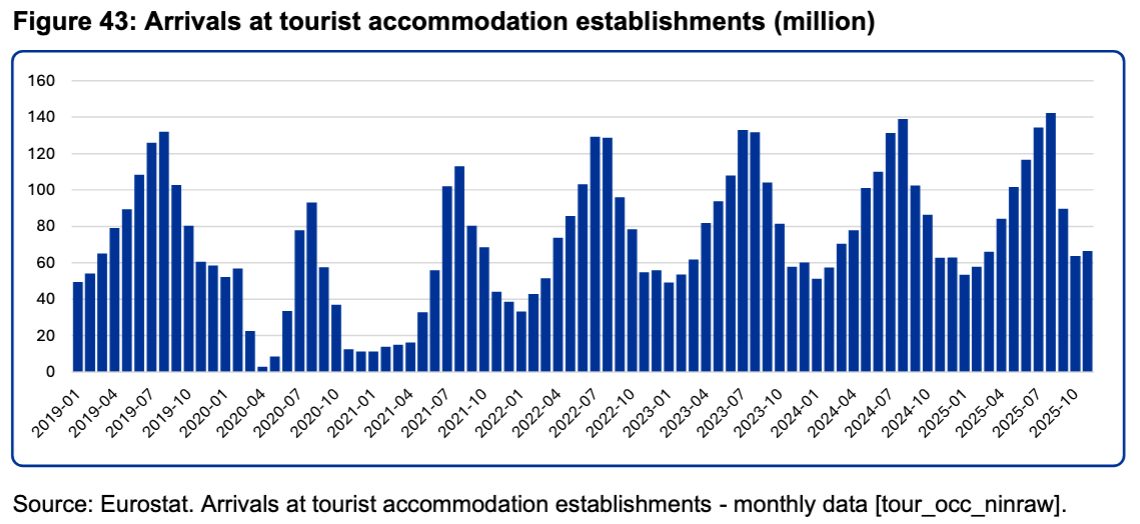
Geography isn't the only problem. Add seasonality into the mix and the picture gets even messier. In 2024, a staggering 42 percent of all EU tourism nights happened during just two months: July and August. Imagine compressing nearly half a year's worth of visitor pressure into eight weeks. That's what the Amalfi Coast, Santorini, and Barcelona navigate every single summer. The infrastructure and local populations that handle this spike barely have time to recover before doing it all over again.
The numbers keep climbing. Europe welcomed 582 million tourist arrivals in 2025, though that represents a smaller slice of global tourism than it did a few years back. EU residents themselves spent roughly 618 billion euros on travel in 2024. Tourism is no longer a nice-to-have industry for many European regions. It's their lifeblood. That makes balancing growth with livability increasingly difficult.
Rethinking how Europe spreads its visitors
The European Commission isn't ignoring these problems. Europe's tourism boom presents challenges that go beyond simple overcrowding, and Brussels is working on an EU Sustainable Tourism Strategy scheduled to arrive in 2026. The goal is straightforward on paper but fiendish in practice: figure out how to manage growth without crushing the places that make tourism worth doing.
The real question the Commission is wrestling with isn't how to lure more visitors to Europe. It's how to scatter the ones already coming across a wider range of destinations and spread them across the entire calendar rather than cramming them into peak season. Encouraging travelers to skip August in Barcelona for April in Budapest. Pointing curious visitors toward lesser-known regions that could genuinely benefit from tourism revenue. Breaking the magnetic pull of the same seven regions year after year.
This isn't just about comfort or authenticity for travelers, though those matter. It's about whether communities in popular destinations can afford to live in their own cities. Whether Venice can survive another decade of cruise ships and Instagram pilgrims. Whether Paris can breathe. The data suggests Europe has a tourism distribution problem that's only getting worse as the total numbers climb. And solving it means convincing travelers to wander beyond the postcards.