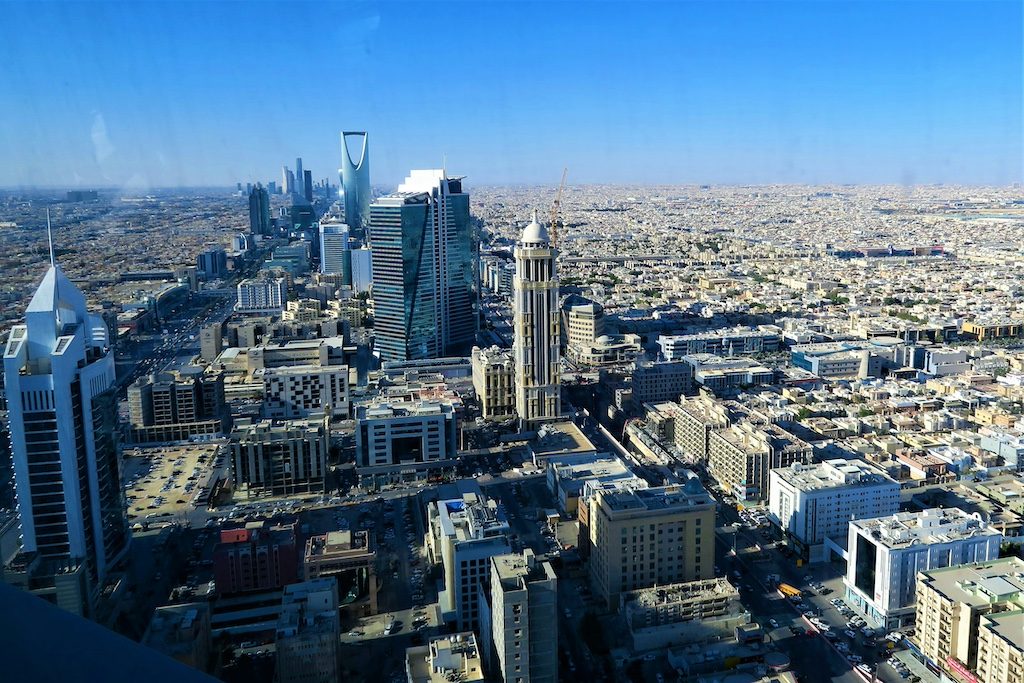
The tourism world just got a seismic shock. According to fresh data from the OECD's 2026 Tourism Trends and Policies report, Saudi Arabia has logged a staggering 67% jump in international arrivals compared to pre-pandemic levels. That's not just growth. That's the kind of trajectory that rewrites how the travel industry thinks about emerging destinations.
The kingdom welcomed roughly 30 million visitors in 2025, a number that would've seemed almost impossible a decade ago. This explosive expansion isn't accident or luck. It's the direct result of Vision 2030, the government's sweeping economic diversification strategy that treated tourism infrastructure like a moonshot worth billions.
How a kingdom reimagined itself
Saudi Arabia's transformation has been methodical and bold. The country rolled out streamlined visa policies that actually work. Airlines expanded their fleets and routes. The government pumped money into heritage preservation, built luxury resort clusters, and courted mega-events that put the kingdom on travelers' mental maps. The Red Sea coast is now blooming with high-end resorts, while a new year-long Umrah visa encourages repeat visits beyond the traditional pilgrimage season.
What makes this story even more intriguing is where visitors are coming from. About 65% hail from Muslim-majority nations, particularly Egypt, Pakistan, Indonesia, and neighboring Gulf states. But there's a plot twist worth your attention: in 2025, non-religious tourism (52%) edged out religious pilgrimage (48%) for the first time since the pandemic. This signals that the kingdom's bet on diversification is working. Makkah Province, anchored by Mecca and the gateway city of Jeddah, pulled in 22.5 million visitors alone, though that figure blends airport arrivals with actual tourism.
A different kind of global recovery
Saudi Arabia isn't alone in bouncing back stronger. Morocco sits at number two with a 53% increase, followed by Egypt (47%), Brazil (46%), Colombia (45%), and Japan (34%). Europe is recovering too, though at a steadier pace. Norway is up 28%, Serbia 27%, and Denmark 22%. Europe's tourism boom is running on oil, and nobody knows how to fix it, but the continent's traditional powerhouses are holding their ground.
Across the 53 nations tracked by the OECD, international tourism grew 4% overall, hitting approximately 1.5 billion cross-border arrivals by 2025. The takeaway from analysts is clear: most destinations have now recovered from the pandemic. But recovery tells only half the story.
The stunning exceptions
For every Saudi Arabia climbing the charts, another destination is hemorrhaging visitors. Israel posted the most devastating collapse, down 71% from 2019 levels. The country had been tracking toward one of its strongest tourism years on record before October 7, 2023, when the Hamas attack and subsequent regional conflict essentially froze its tourism sector. Ireland ranks second among losers, with arrivals down 32%, a decline blamed on rising travel costs, shrinking accommodation inventory, and the lingering effects of Brexit.
The United States saw a 14% dip, while Canada fell 11%. Germany and Italy remain slightly underwater from pre-pandemic numbers at negative 6% and negative 5% respectively. In Asia-Pacific, Thailand took the biggest hit with a 17% drop, followed by New Zealand (down 9%) and Peru (down 22%).
What this means for travelers
The data sketches a world where travel patterns have fundamentally shifted. Destinations that invested in accessibility, infrastructure, and experience are pulling ahead. Those that rested on reputation or faced external shocks are struggling to recover ground. For travelers, it means opportunity. Emerging destinations like Saudi Arabia offer novelty and fresh experiences. Meanwhile, some traditionally saturated European hotspots might benefit from a breather.
Saudi Arabia still has an ambitious target in its crosshairs: 150 million domestic and international visitors annually by 2030. With 30 million already in place and momentum building, that goal doesn't feel as fantastical as it would have seemed just five years ago. The kingdom's tourism boom is just getting started.