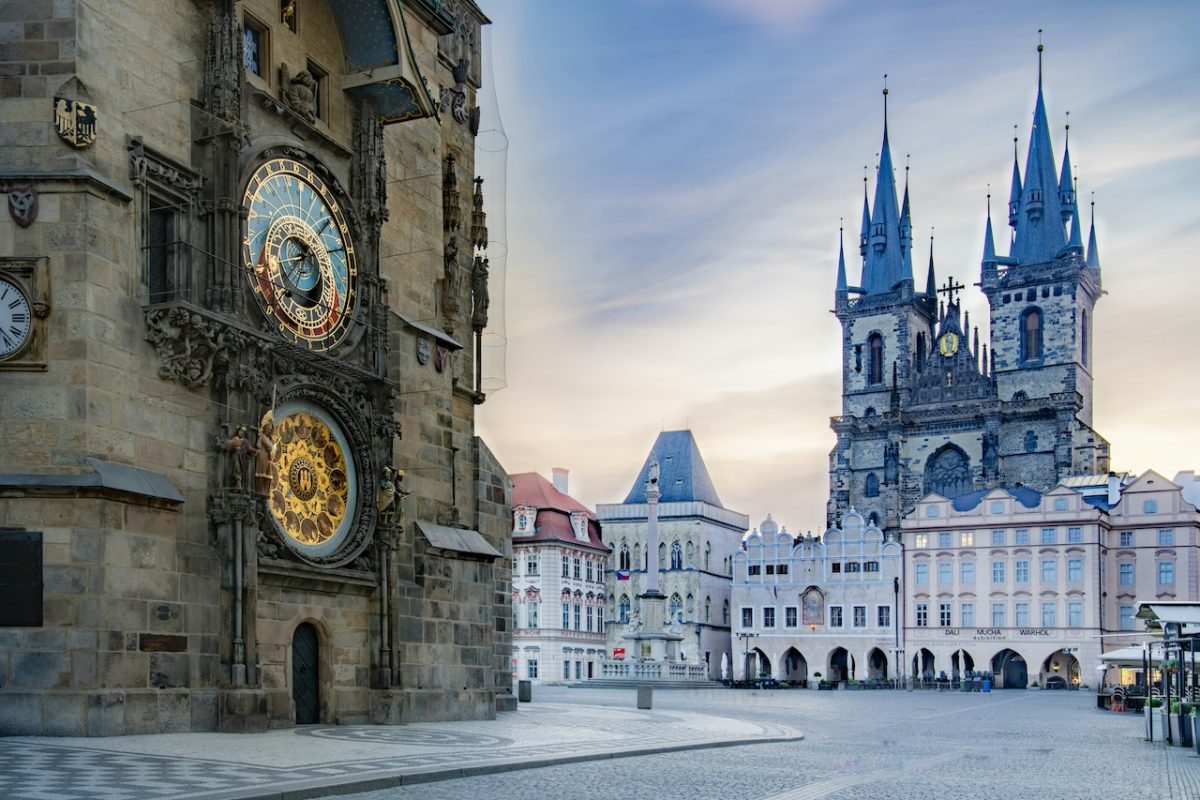
Some cities hit you with their beauty immediately. Others burrow into your memory and refuse to leave. Prague manages both at once, which is why millions keep coming back. The moment you step into the Old Town Square and catch sight of that mechanical astronomical clock ticking away since the 1400s, you realize you've entered a place where centuries aren't behind you, they're walking beside you.
The city's genius is its walkability. Nearly everything that matters sits within arm's reach of the Vltava River, which threads through Prague like a spine connecting its greatest attractions. You can pivot from Gothic spires to Art Nouveau facades to Baroque churches just by turning a corner. This isn't a sprawling metropolis demanding a week of logistical planning. Two days and solid walking shoes get you through the essentials.
The Old Town Square Is Where You Start (Even If You Don't Plan To)
The Prague Astronomical Clock is a trap for tourists, yes. But it's a trap worth falling into. Since 1410, this mechanical marvel has been performing the same hourly show, with apostles sliding across tiny doors while crowds hold their breath. The square itself unfolds around you like a greatest-hits album of Czech architecture, from the severe Gothic lines of the Church of Our Lady before Týn to the symbolic weight of the Jan Hus Memorial.
Hus was an early critic of religious corruption and his monument, unveiled in 1915, carries his defiant legacy in both stone and words. Carved into it are phrases like "Truth Prevails" and "Love one another, wish the truth to everyone." Standing before it, you're not just seeing a statue. You're touching 600 years of resistance.
The Charles Bridge Is Crowded but Still Magic
Built in 1357 under Charles IV, the Charles Bridge isn't quiet anymore. Street musicians, artists, and thousands of daily visitors fill it stem to stern. But here's the secret: go at dawn or just before dusk. The light hits the Vltava differently. The statues of saints lining the bridge seem to wake up. Prague Castle looms at the far end, and for a moment you understand why Dan Brown chose this city as the setting for his novel, The Secret of Secrets. Medieval streets, layered history, and architecture that practically screams "mystery."
Josefov Tells a Harder, Heavier Story
If the tourist path feels too sunny, duck into the Jewish Quarter, known locally as Josefov. This neighborhood survived centuries of restrictions, pogroms, and Nazi occupation. The Old Jewish Cemetery is dense with headstones stacked impossibly high because burial space was rationed. The preserved synagogues hold centuries of prayer and sorrow in their walls. It's one of Europe's most significant Jewish heritage sites, and walking through it feels like moving through living memory rather than a museum exhibit.
Vintage Tram No. 42 Teaches You How to Slow Down
Forget rushing between attractions. The vintage tram No. 42 is an experience in itself, rattling through Prague's neighborhoods at the pace of 1960s Prague. You see architecture from street level, pass locals heading home from work, and catch views of the city that postcards miss. It's both practical transit and time travel wrapped into one.
Prague After Dark Becomes Something Else
When the sun goes down, the city transforms. River cruises ghost past illuminated landmarks, classical music echoes from churches where Mozart himself once performed, and the city's reputation as a place of artistic inspiration feels earned rather than marketed. Franz Kafka lived here and wrote some of the 20th century's strangest, most unsettling prose while staring at these same buildings. You won't write anything Kafka-level during your visit, but you might finally understand why artists can't help being drawn to Prague.
If Prague to Copenhagen is finally connected by direct train again, suddenly the city works as part of a larger Central European route rather than as an isolated destination. But honestly, you'll want to stay longer than a quick train connection allows. Two days minimum. Three if you have them. Prague doesn't rush, and neither should you.