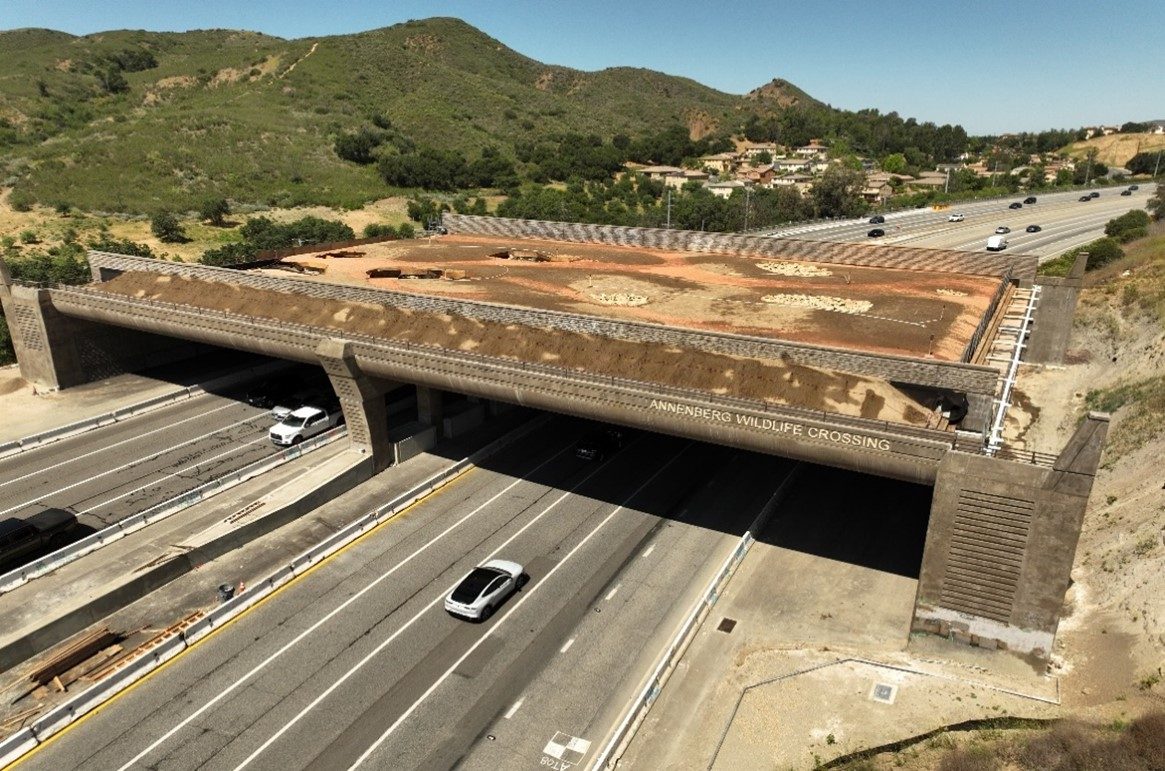
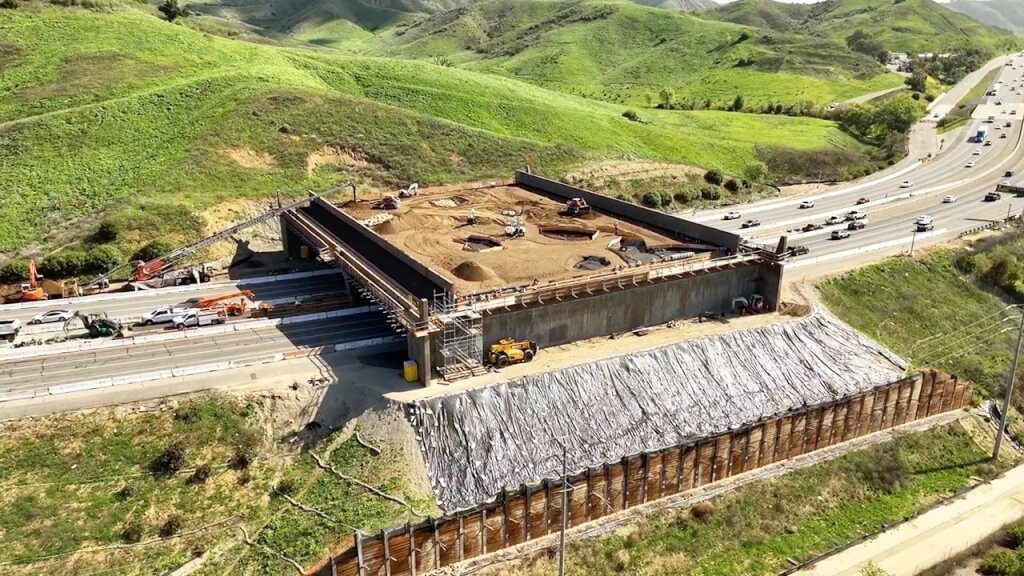
In the hills north of Los Angeles, construction crews are putting the finishing touches on something that would've seemed impossible a decade ago: a bridge built entirely for animals. The Wallis Annenberg Wildlife Crossing, spanning 10 lanes of the 101 freeway near Agoura Hills, is scheduled to welcome its first four-legged travelers on December 2, 2026. At 55,925 square feet, it's the largest wildlife bridge on the planet.
The project costs $114 million and reconnects two fragmented habitats: the Santa Monica Mountains and the Simi Hills. For decades, the freeway has served as an impenetrable barrier, cutting off migration routes for mountain lions, bobcats, deer, coyotes, and foxes. The crossing physically restores what sprawl and development destroyed.
Why This Bridge Matters More Than You'd Think
Seth Riley, wildlife branch chief of the Santa Monica Mountains National Recreation Area, has spent over 25 years studying animals in this region. His research documents the devastating impact the freeway has had on wildlife movement and genetic diversity. "We have been studying wildlife, including bobcats, coyotes, and mountain lions, in the park and in the Liberty Canyon area for more than 25 years now, and we have documented the major barrier effects of the freeway, in terms of movement and gene flow," he explained. "But it is incredibly exciting to see this research turn into conservation action."
The bridge itself is ingenious in its simplicity. Two connected structures span both the 101 freeway and Agoura Road below. But the real magic is in the details. Workers are planting thousands of native species across the bridge to recreate the natural landscape. Sound walls and specially designed barriers muffle the noise and light pollution from traffic below, encouraging animals to use the passage without stress or disorientation.
This project gained urgency from a story that captured the nation's attention. P-22, a mountain lion who became famous for living in Griffith Park after somehow navigating multiple freeways across Los Angeles, embodied the impossible struggle of urban wildlife. The big cat survived to about 12 years old, far longer than typical wild males, but was eventually found suffering from kidney failure, head trauma, and injuries from a car strike. In 2022, he was humanely euthanized. P-22 became the symbol of what happens when wildlife and infrastructure collide.
Watching and Learning
Once animals start using the crossing, scientists will be watching. More than 50 cameras will monitor wildlife movement through the corridor and surrounding areas. Researchers from the National Park Service have already completed a two-year baseline study tracking five key species before the bridge opens. They'll repeat that work afterward to measure whether the crossing actually changes how animals move and whether populations rebound.
Beth Pratt, California regional executive director for the National Wildlife Federation and a driving force behind the project, sees this as bigger than one bridge. "Ensuring that wildlife remain on our landscapes into the future across the Golden State requires that we address the devastation that freeways and roadways have caused to ecosystems, fragmenting them into islands that threaten wildlife large and small with extinction."
Construction began on Earth Day 2022, with hopes of completion by 2025. That timeline shifted as consecutive years of severe rain and flooding delayed progress. Still, when the bridge opens in late 2026, it will stand as proof that big cities can choose to accommodate nature rather than erase it.
The crossing has its critics. Conservative commentators dismissed it as a "bridge to nowhere," and some questioned whether the rising costs and construction delays made sense. But environmental groups, state officials, and urban planners see something different: a global model for how densely populated regions can reduce the ecological damage of their infrastructure. For drivers using the 101 daily (hundreds of thousands do), the bridge offers another benefit too. Fewer animals on the roadway means fewer accidents and safer commutes.
When P-22 was roaming Griffith Park, people were amazed that a wild mountain lion could survive in the heart of Los Angeles. By 2026, the view will shift. The real achievement won't be that animals cross the freeway. It'll be that we finally built them a safe way to do it.