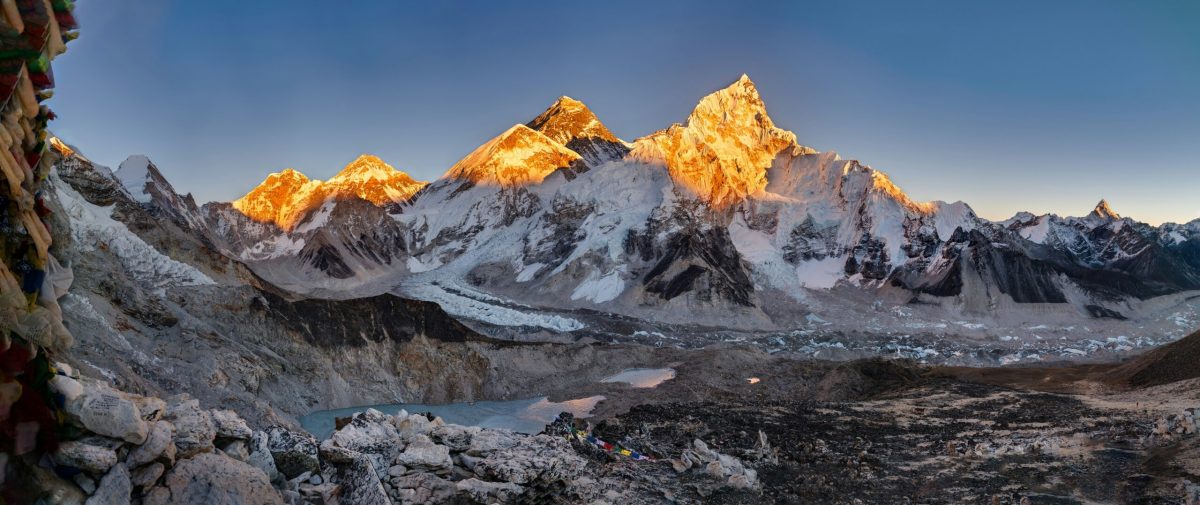
Mount Everest's spring climbing window is officially open, and roughly 410 mountaineers alongside an equal contingent of Nepali guides are camped at Base Camp, sharpening crampons and mentally preparing for what lies ahead. The catch: a colossal serac (a house-sized chunk of unstable glacier ice) is dangling menacingly above one of the route's most treacherous sections, and nobody can guarantee it will stay put.
The Khumbu Icefall has always been Everest's gauntlet. This vertical maze of deep crevasses, rickety ladders, and towering ice blocks shifts constantly, indifferent to human ambition. Some of these formations reach the height of ten-story buildings. This year, the Sagarmatha Pollution Control Committee (SPCC), the team of specialized "Icefall doctors" who fix the climbing route each season, identified the serac as genuinely dangerous. Multiple cracks ran through it. The ice was weakening. And when route planners calculated the safest path upward, they found themselves with an uncomfortable reality: the only viable trail passes directly beneath the unstable formation.
The delay cost weeks. Route preparation typically wraps up by mid-April, giving climbers precious time to move between camps and acclimate to the altitude. This year, ropes and ladders didn't go in until late April, compressing the entire climbing window and raising fresh concerns about bottlenecks higher on the mountain. Memory lingers from 2019, when photos of a queued-up summit crowd went viral and sparked international outrage about Everest's overcrowding crisis.
When Ice Becomes a Weapon
Austrian mountain guide Lukas Furtenbach doesn't mince words: "Anyone who says they're not concerned is either inexperienced or not paying attention. The serac is a real, objective hazard." His counterpart, Nepali guide Ang Tshering Sherpa, adds another layer of danger. Afternoons warm up. Warmer temperatures mean melting ice. Melting ice means collapse risk spikes. The dangers aren't theoretical or dramatized. In 2014, a serac failure in the Khumbu Icefall triggered an avalanche that killed 16 Nepali guides and workers. Recent avalanches have already been documented early in this season.
Climate change is the deeper current running beneath all of this. Himalayan glaciers are disappearing faster each year as global temperatures creep upward. Faster melting creates structural instability in the ice. It increases avalanche frequency. It makes mountains like Everest fundamentally more unpredictable than they were a generation ago. When UN Secretary-General António Guterres visited Nepal in 2023, he warned explicitly about the rapid collapse of Himalayan glaciers and their consequences for the millions of people downstream who depend on meltwater. Climbers on Everest now experience these warnings in real time, at their own peril.
Who's Coming This Year
Despite the hazards and astronomical costs, interest in summiting Everest remains intense. Climbing permits have jumped from 11,000 dollars to 15,000 dollars. Total expedition costs can range from 45,000 to 70,000 dollars per person. Yet hundreds continue to book their spot. The demographic has shifted, however. Western climber numbers have declined slightly due to rising travel costs and geopolitical turbulence affecting flights. Asian climbers, by contrast, are arriving in growing numbers. China has sealed off its northern Everest approach to foreign expeditions, funneling all international attempts through Nepal.
Nepal Tightens the Rope
Authorities in Kathmandu are responding to years of criticism about unqualified climbers and overcrowding. Earlier this year, lawmakers approved new tourism legislation requiring Everest climbers to first summit a 7,000-meter peak in Nepal. Applicants must provide recent medical certificates and detailed climbing plans. The goal is clear: raise safety standards and filter out the unprepared. Officials also want to restore Everest's battered international reputation.
That reputation took a hit recently when investigators uncovered a major insurance fraud scheme spanning 2022 to 2025. Guides, helicopter companies, hospitals, and trekking operators allegedly conspired to fake or exaggerate medical emergencies, triggering unnecessary helicopter evacuations and claiming insurance payouts that totaled in the millions. The scandal exposed how commercialization and weak oversight have eroded accountability in Nepal's mountain tourism industry. Officials worry the controversy will scare away serious climbers at precisely the moment when stricter rules could reposition Everest as a safer, more professionally managed destination.
The 2026 spring season will test whether Nepal's new safeguards work. Climbers arriving at Base Camp now face genuine hazard (the serac), tighter rules (the permit requirements), and a compressed timeline (the delayed route opening). What unfolds over the next few weeks will shape not just this year's climbing window, but the broader future of mountaineering on the world's tallest peak.