Picture this: a former royal capital, nearly erased by war, that chose to reinvent itself rather than fade into history. That's the story of Olomouc, a city in the Czech Republic's Moravia region that feels like it exists in a parallel universe where time moved differently.
King John of Luxembourg made Olomouc the official seat of Moravia back in 1314, and for centuries it hummed with royal power and religious authority. Then came the Thirty Years' War. Between 1642 and 1650, Swedish armies swept through and left the city in ruins. But here's the twist: destruction opened a door. Instead of clinging to what was lost, Olomouc hired Italian architects and local craftsmen to rebuild. The result was something entirely new, a distinctive local flavor of Baroque architecture that still bears the city's fingerprints. Medieval street patterns survived, but new churches, palaces, and civic buildings rose with an unmistakable Moravian character.
Where Baroque Gets Personal
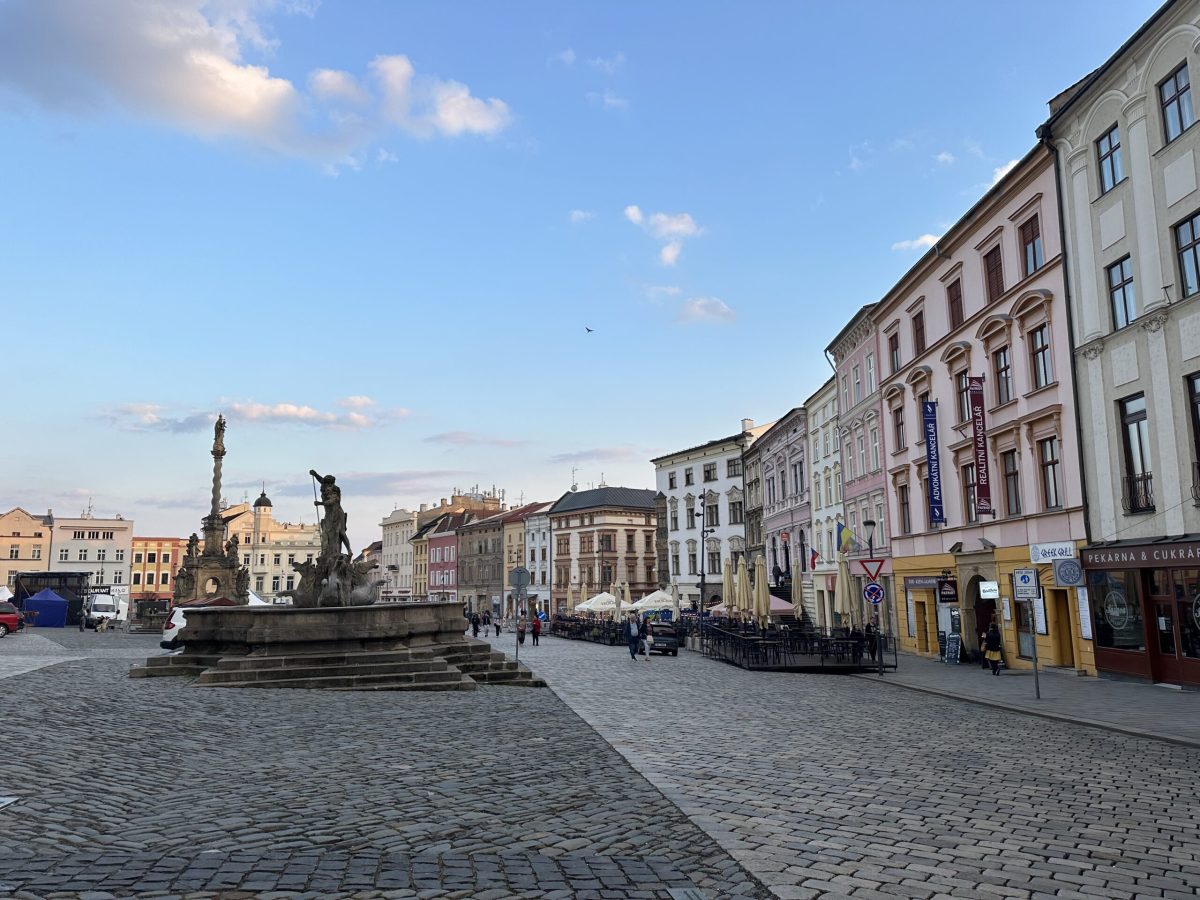
Walk into the main square and the first thing that stops you is the Holy Trinity Column, a UNESCO World Heritage monument that took nearly four decades to complete (1716 to 1754). This isn't just a column. Locals refused to let outside sculptors take the work, so they hired their own artisans, poured their faith and national pride into every stone, and carved Czech saints like Saint Wenceslas right into the skyline. Three tiers stack upward: the Holy Trinity at the top, then archangels and saints, then local patron figures of Moravia. It's a monument that doubles as a statement: we built this, we own this, we remember.
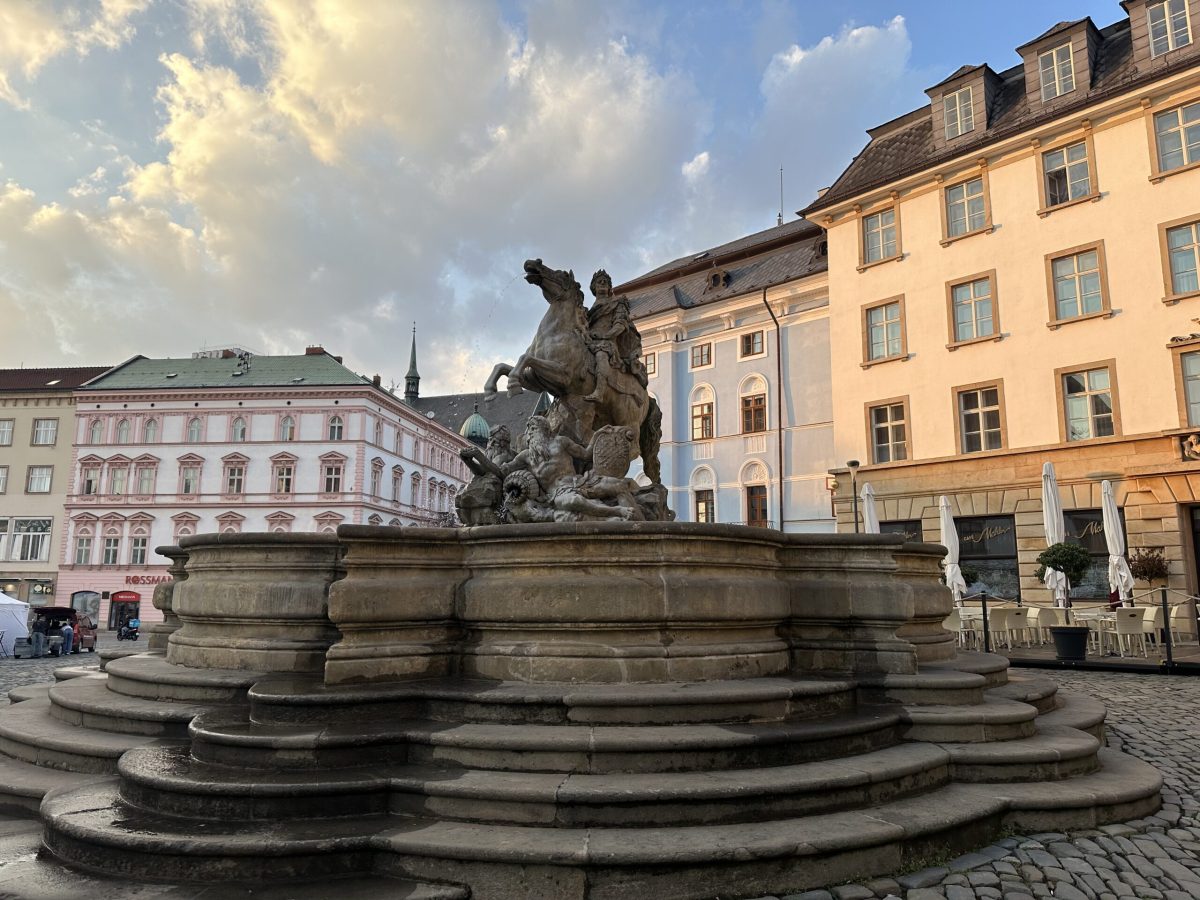
What makes Olomouc truly unusual is its collection of six monumental Baroque fountains, an ensemble so rare that few other European cities can match it. Created in the 17th and 18th centuries, they're not subtle. Neptune, Jupiter, Hercules, Mercury, Triton, and Julius Caesar each get their own elaborate stone stage, complete with muscled companions and mythological swagger. The Caesar Fountain commands the most attention, with a rendering of the Roman general on a rearing horse so dynamic it borrows inspiration from Gian Lorenzo Bernini's Vatican masterpiece. A local legend claims Caesar founded Olomouc, a claim never proven but endlessly useful for making the city feel grander. The fountain faces Michael's Hill, supposedly the site of a Roman camp. Marketing genius, even centuries ago.
Spires and Clocks That Tell Stories
The Cathedral of St. Wenceslas dominates the skyline with twin Neo-Gothic spires that seem designed to poke holes in the clouds. Its southern tower stretches 100.65 meters into the air, the tallest church tower in Moravia and second in all of Czechoslovakia. The structure itself carries layers of history: originally Romanesque in the 12th century, rebuilt Gothic after a 13th-century fire, then given its current Neo-Gothic makeover between 1883 and 1892. It's also the cathedral where King Wenceslas III was assassinated in 1306, a fact that adds weight to those stone walls.
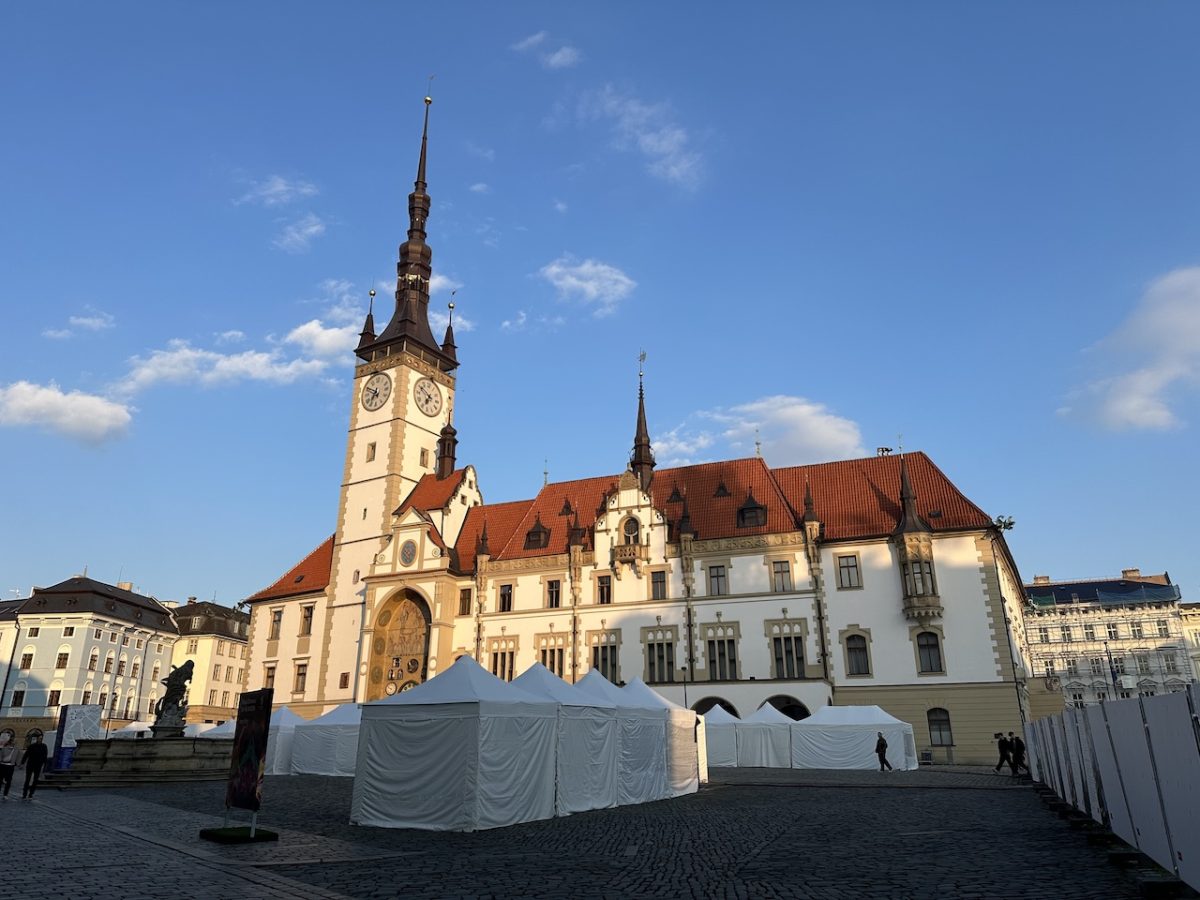
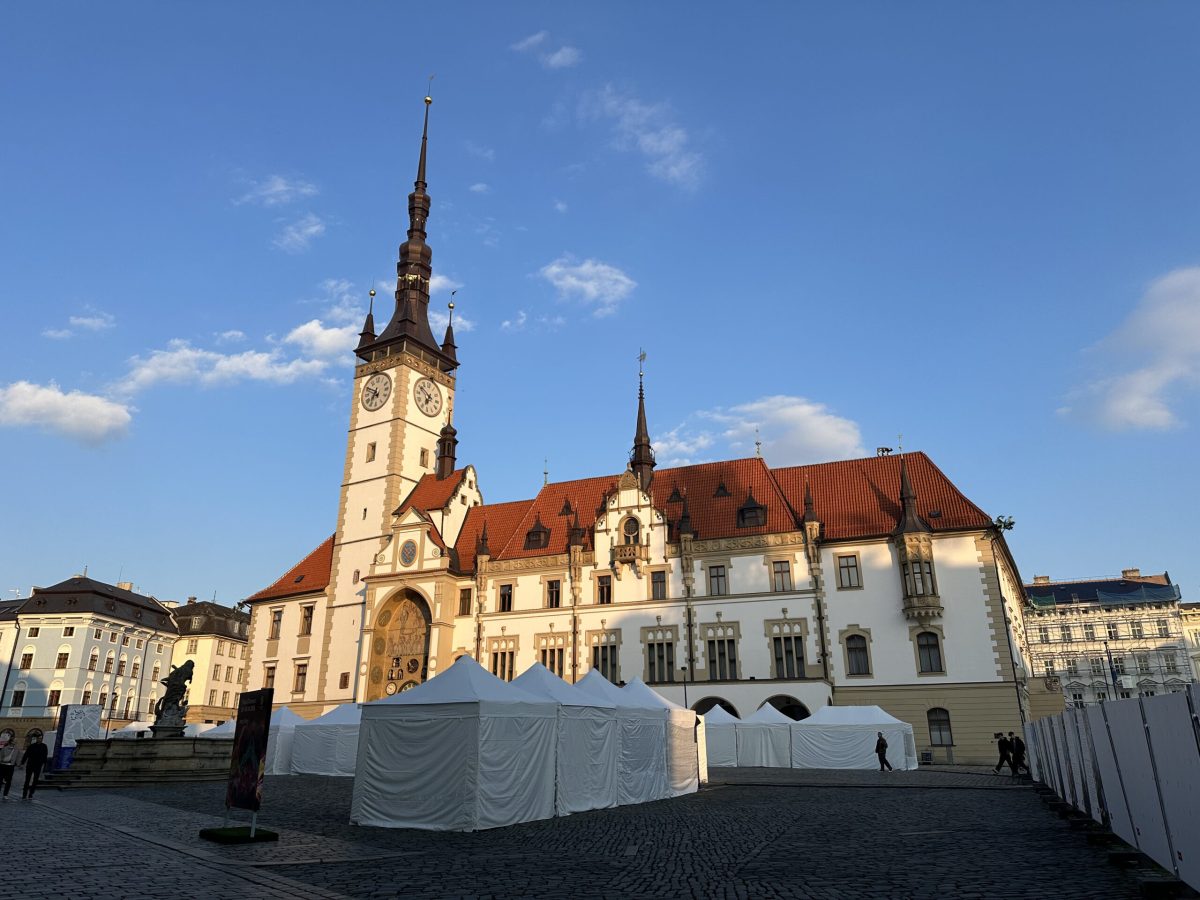
On the town hall facade sits an astronomical clock created in the 15th century. Unlike the religious figures that populate similar clocks across Europe, Olomouc's was rebuilt in the 1950s by Socialist Realists who replaced saints with workers, athletes, and everyday people. It's one of the few of its kind in Europe, a quirky relic of a different ideology that somehow works. The town hall itself, Gothic at heart with later tweaks, still functions as the emotional center of the square, hosting markets, festivals, and seasonal celebrations year-round.
The Smell That Divides a City
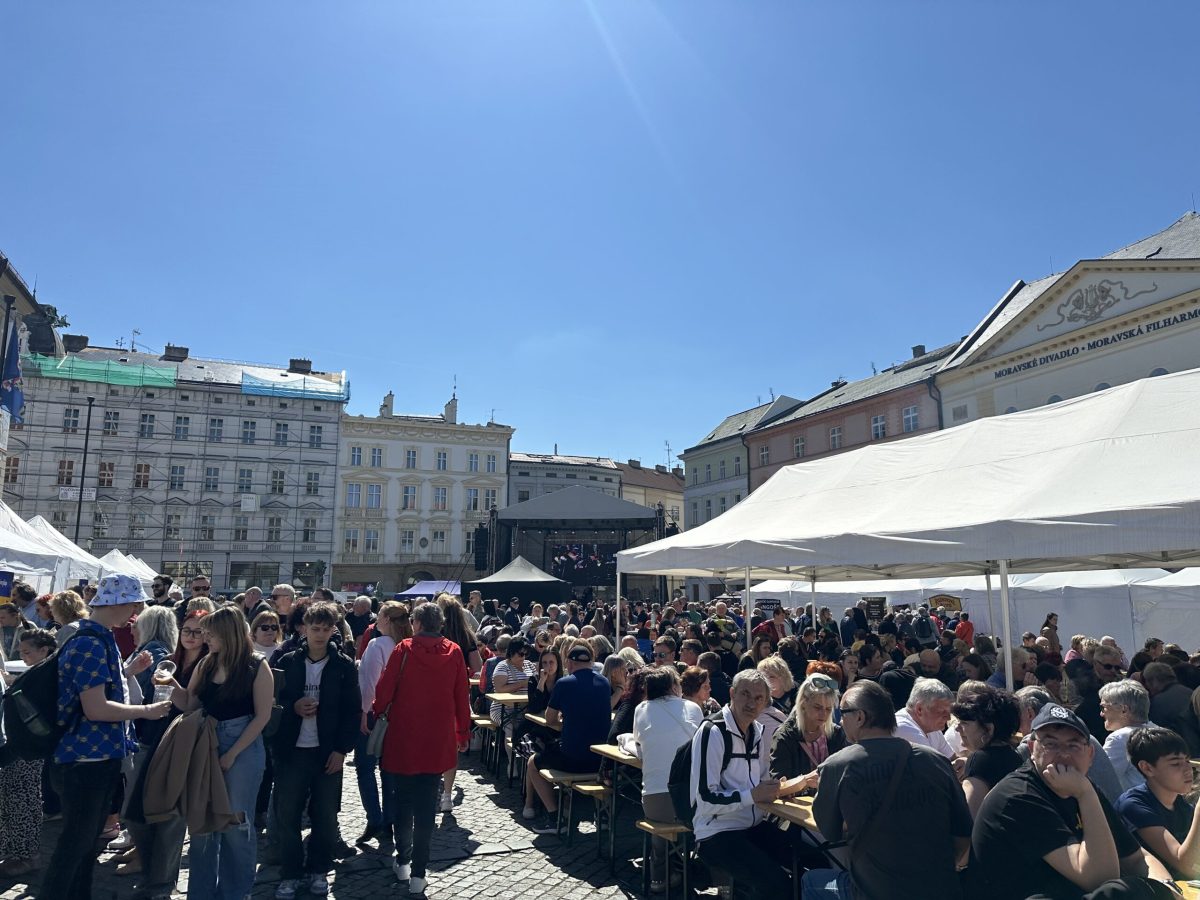
Then there's Olomoucké tvarůžky, a cheese so pungent it arrives with its own reputation. This ripened, aromatic cheese sits at the heart of Moravian identity. The fact that even McDonald's serves a burger featuring it tells you everything about how seriously locals take this dairy creation. Every April, the Upper Square transforms into the Tvarůžky Festival, a sprawling outdoor celebration where food stalls pile high with cheese-laden dishes. If you visit during this time, expect the entire neighborhood to smell like fermented dairy dreams. It's either deeply appetizing or deeply concerning, depending on your tolerance for intensity.
Olomouc rewards travelers willing to step off the Prague-Brno circuit. You can walk the entire historic center in a morning, trace four centuries of architecture before lunch, and still have time for an afternoon wandering cobblestone side streets that most tourists never see. The city doesn't demand much of your schedule but gives back more history, character, and genuine architectural detail than places three times its size.
Like other hidden corners of Central Europe, Olomouc has managed to stay relatively quiet while delivering all the drama. That's changing slowly as word spreads, but for now, you can still experience medieval streets, Baroque fountains, and centuries of reinvention without fighting crowds or reserving tables months in advance.