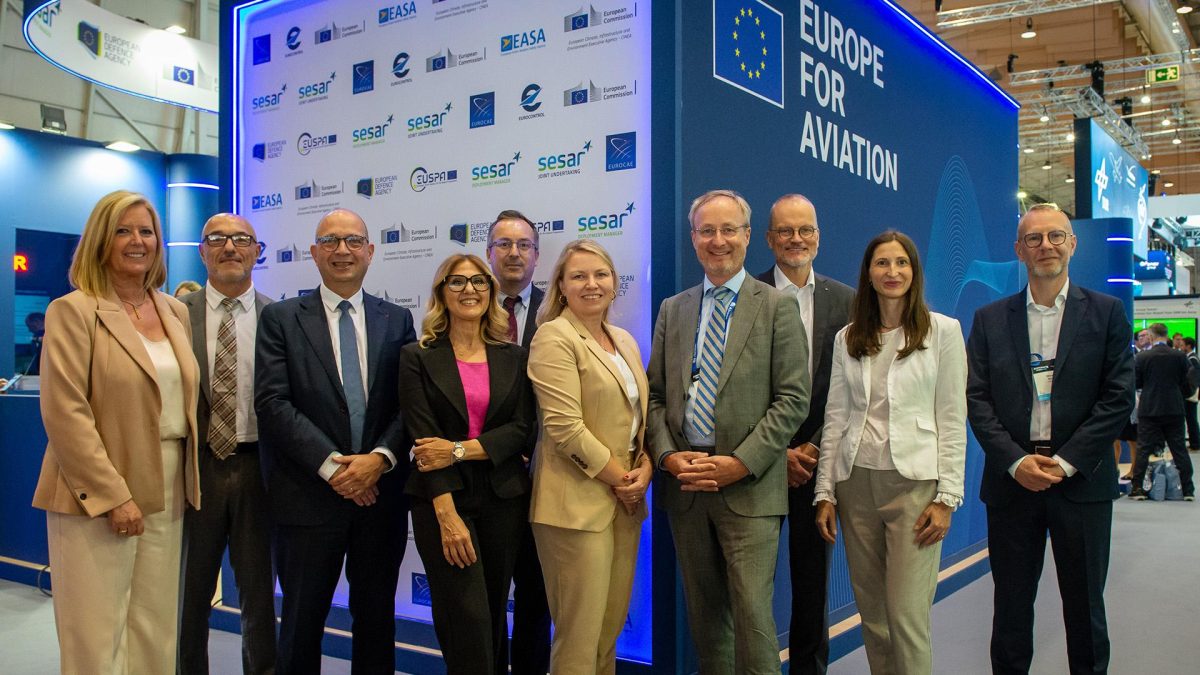
Picture this: you're sitting on a plane in Lisbon, and somewhere in the continental ether, dozens of fragmented air traffic systems are doing their separate, inefficient thing. That messy coordination costs time, fuel, and patience. But in late May, something shifted when nine major European institutions showed up together at Airspace World 2026 with a unified blueprint to change all that.
The gathering in Lisbon attracted 7,000 aviation professionals from 145 countries, all converging on one big idea: Europe's airspace needs a complete overhaul. And not someday. Now. The mastermind behind this push is Europe for Aviation (E4A), a coalition of nine powerhouse organizations that are finally aligned on what a modern European sky should look like.
Who's Actually In Charge Here
The lineup reads like an aviation who's who. The European Commission sets the long-term vision for a digital, sustainable, and interoperable sky. CINEA pumps money into green aviation projects. EUROCONTROL keeps standards high across the entire pan-European network. The EU Aviation Safety Agency (EASA) ensures every system gets proper certification. EUROCAE writes the rulebook for industry standards. EUSPA handles satellite navigation precision. SESAR Joint Undertaking does the research and development work. The SESAR Deployment Manager turns those innovations into reality. And the European Defence Agency makes sure military and civilian operations can work together seamlessly.
What makes this different from the usual bureaucratic theater is that these nine partners actually have complementary roles. They're not stepping on each other's toes. They're filling in the gaps. Filip Cornelis, Director for Aviation at the European Commission, put it plainly: "We represent a united European ATM community working toward one shared goal, a smarter, more connected European sky. We are putting the strategic processes in place to create a more modern and competitive European airspace."
Why Europe's Skies Need This Rescue Mission
Let's be honest. European airspace is stuffed. Planes above, congestion below, and growing geopolitical tensions adding pressure for flexibility. Add climate goals into the mix, and you've got a system groaning under incompatible demands.
Air traffic management sounds boring until you realize it touches every single flight from pushback to touchdown. When that system fragments across borders and uses outdated processes, everyone suffers. Planes burn extra fuel because routes aren't optimal. Delays ripple through the network. Safety margins get tighter than they should be. And sustainability targets slip further away. Europe's airlines and carriers have been screaming for years that the current setup is holding them back.
The modernization challenge boils down to three colliding priorities: keep people safe, cut emissions, and move more planes through the same space. Pick any two, and you'll fail at the third if you're not careful.
What the Fix Actually Looks Like
E4A's vision rests on four pillars. First, apply digital processes everywhere to kill the fragmentation that has haunted European aviation for decades. Second, harmonize standards so a plane doesn't need to change its communication protocol every time it crosses a border. Third, speed up how quickly new innovations roll out to actual airspace. Fourth, get military and civil operations coordinating properly, which sounds simple but has been nearly impossible until now.
During the three-day Airspace World event, organizers didn't just talk. They walked visitors through 13 tours showcasing SESAR innovation projects. They hosted panel discussions designed to make people think. They even quizzed attendees on their knowledge of the digital European sky concept. It was less PowerPoint theater, more hands-on exhibition of what's actually being built.
What This Means for Your Next Flight
So why should travelers care about air traffic management infrastructure? Because smoother skies mean shorter delays, more direct routes, cheaper tickets, and less fuel burn per flight. When you're flying between European cities, these improvements matter for your actual travel experience, not just the planet's carbon budget.
The nine-partner coalition is still in the planning and deployment phase. Change in aviation moves slowly for good reasons: safety comes first. But for the first time in recent memory, the major players aren't pulling in different directions. They're pushing together. Whether that unity holds long enough to actually rewire how planes move across the continent remains the open question. For now, at least, Europe's aviation future looks less fragmented than it did before Lisbon.