A small archipelago with a population of just 560,000 people just became the biggest travel story nobody saw coming. Cape Verde showed up for its first-ever FIFA World Cup appearance, held its own against world champions Spain and Uruguay, and somehow managed to reach the knockout rounds before losing to Argentina. But here's the real plot twist: while the team's historic run captured hearts across the globe, the tourism world watched something equally remarkable unfold on their analytics dashboards.
Travel search engines lit up like fireworks. US searches for "Cape Verde vacation" skyrocketed more than 5,000 percent compared to the previous year. Expedia reported an 800 percent spike in American user searches. Even TUI, which caters heavily to European travelers, saw Cape Verde queries double compared to June 2025. Japan's interest climbed 110 percent. Suddenly, a destination that occupied the periphery of most travelers' consciousness had muscled its way into the mainstream.
How sports put places on the map
What's happening here is textbook psychology mixed with the power of live television. When millions of people watch a country's landscape, hear its anthem, and cheer for its people night after night, familiarity breeds interest. Researchers call this the "mere exposure effect," and it's a phenomenon travel marketers have quietly relied on for decades. Show a place to enough eyeballs in a positive context, and suddenly it stops feeling like a mystery. It starts feeling like somewhere worth exploring.
Andrew Harrison-Chinn, Chief Marketing Officer at Dragonpass, noted that Cape Verde transformed almost overnight from an overlooked destination into one travelers actively researched. The timing worked in Cape Verde's favor, too. The country already had the tourism infrastructure in place: year-round sunshine, extensive beach resorts, and all-inclusive offerings that make booking straightforward. Cape Verde just got its first major resort chain, and Mindelo is the unlikely winner, signaling that investment was already flowing into the islands before the World Cup boom.
A tourism machine ready to accelerate
Tourism matters to Cape Verde's economy. It accounts for roughly a quarter of all economic activity on the islands. In 2025 alone, hotels welcomed more than 1.24 million guests, a 6 percent jump from the year before. Most visitors traditionally come from Europe: Portugal, France, the UK, Spain, and Germany lead the arrivals.
But here's where the World Cup creates genuine opportunity. Americans represented just 1.1 percent of foreign hotel guests in 2025. That's a massive gap between potential and current reality. If even a fraction of those Americans clicking through search results actually book trips, Cape Verde's tourism numbers could shift dramatically. Local travel agencies already report more inquiries about beaches, culture, and the islands themselves, though confirmed reservations haven't surged yet.
Beyond resort brochures
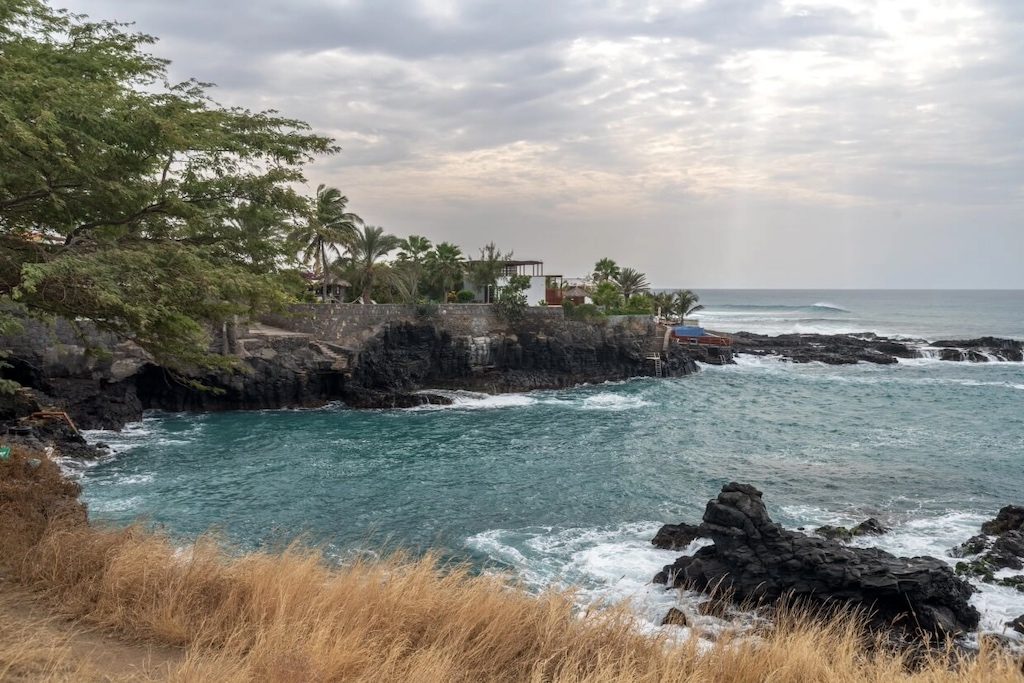
Most travelers know Sal and Boa Vista, the island duo famous for pristine beaches and all-inclusive resorts. But tour operators see the World Cup moment as a chance to introduce visitors to Cape Verde's real depth. Santiago island hosts Praia, the capital, and contains the country's only UNESCO World Heritage Site. São Vicente pulses with live music, carnival energy, and a nightlife scene that draws a different crowd entirely. Santo Antão is a hiker's paradise, with dramatic mountain terrain that rivals more established destinations. And Fogo? It has an active volcano and high-altitude vineyards that produce memorable wine.
Travel professionals increasingly pitch Cape Verde as a sophisticated alternative to overcrowded islands like the Canaries or predictable Caribbean resorts. You get year-round warmth, genuine cultural experiences, outdoor adventure, and authenticity without the tourist mill you'll find elsewhere. How one man's fishing village became the world's most coveted island escape tells a similar story about how underrated destinations can suddenly become desirable once the right eyes turn toward them.
The gap between clicks and arrival numbers
Here's the reality check nobody wants to mention: search volume doesn't automatically equal tourism revenue. Millions of clicks don't guarantee thousands of bookings. People research destinations constantly without ever actually traveling. Cape Verde's tourism industry is aware of this gap and knows the clock is ticking.
The World Cup moment won't last forever. Tourist boards and local businesses need to convert curiosity into actual reservations and repeat visits. That means investing in marketing that reaches beyond the sports audience, improving air connectivity from North America, and offering diverse experiences that appeal to different traveler types. It means capturing this swell of attention and channeling it into sustainable growth.
The islands have had a gift handed to them: global visibility at zero marketing cost. Plenty of destinations dream of that kind of reach. What matters now is whether Cape Verde has the infrastructure, hospitality capacity, and vision to turn a World Cup fairytale into a long-term tourism success story. The searches are real. The interest is undeniable. Whether those curious clicks transform into plane tickets and hotel confirmations will define whether this is just another sports moment or an actual turning point for the islands.