Let's face it: 2025 was rough for American tourism. Trade tensions, border friction, and shifting travel patterns sent international visitor counts tumbling across the country. European and Canadian travelers especially decided to look elsewhere. Most destinations braced for impact and cut projections. Then there's New York City, which just shrugged and kept doing what it does best.
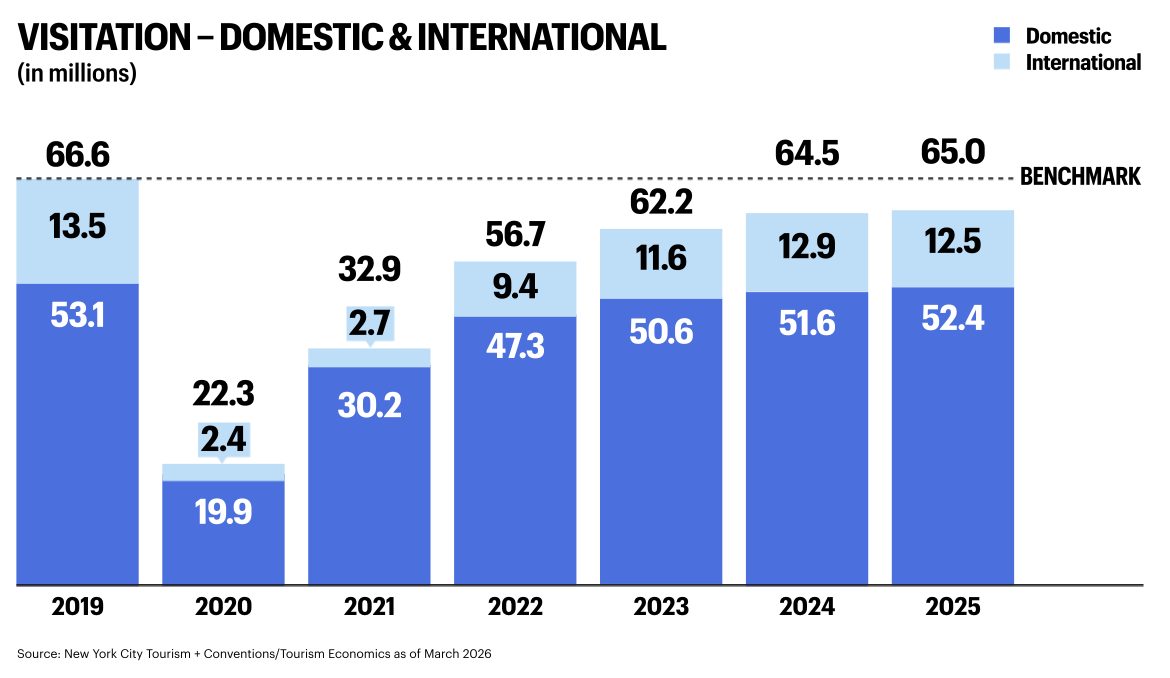
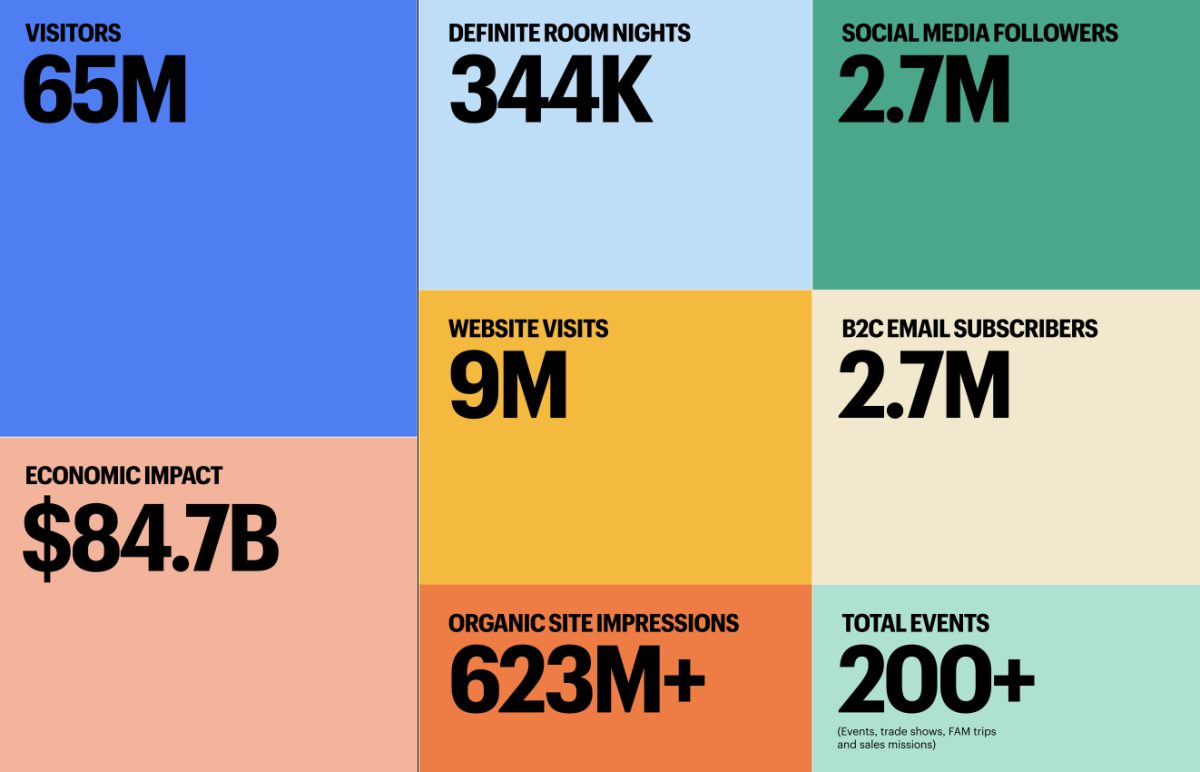
The numbers tell the story. New York City welcomed 65 million visitors last year, up 0.7% from 2024. That modest-sounding bump masks something more important: the city wasn't just holding its ground while competitors struggled. It was actually growing. The total economic impact hit $84.7 billion, with visitors spending more than $55 billion directly in the five boroughs.
Domestic Travelers Saved the Day
The real muscle behind NYC's resilience came from American visitors. Domestic travel surged to 52.4 million visitors, up 1.7% year-over-year. This isn't just volume; it's loyalty. People from the New York tristate area made repeat trips. Philadelphians, Washington DC residents, Los Angelenos, and Bostonians all came more often. Overnight stays climbed 2.3%, meaning people weren't just popping in for a few hours. They were staying in hotels, eating dinner out, catching shows, and spending real money.
Charles Flateman, board chair of New York City Tourism + Conventions, put it plainly: domestic travel is the backbone of the industry. That backbone is strong enough to support the entire city when international markets wobble. Hotel occupancy rates put NYC first in the entire United States, a position that didn't happen by accident.
The International Picture Gets Complicated
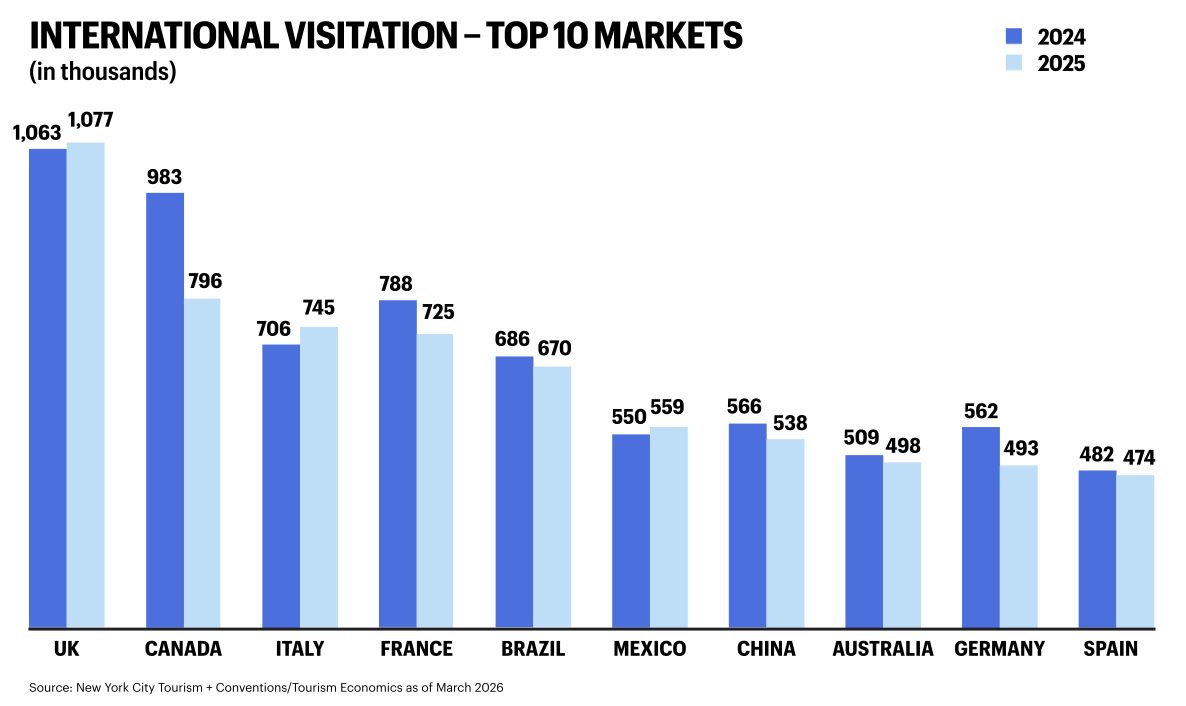
Yes, international visitors declined 3.2% to 12.5 million. For context, that's disappointing but far less dire than forecasters feared. Some markets even grew. Visitors from the UK ticked up 1.3%, Italy jumped 5.5%, and Mexico added 1.8%. Tourism patterns are shifting in unpredictable ways across the world right now, and destinations globally are scrambling to adapt.
What matters is that international spending still accounts for 50% of tourism revenue despite making up just under 20% of visitor numbers. These travelers stay longer, splurge on experiences, and support the city's most sophisticated restaurants, galleries, and theaters. The 2025 Annual Report shows that even with fewer international visitors, they punched well above their weight economically.
Leisure and Business Travel Painting Different Pictures
Leisure travel nearly matched 2019 peak levels, hitting 99% of that record year's numbers with 52.4 million visitors. Business travel, meanwhile, sits at 12.6 million visitors, still slightly behind 2019 highs. This reveals something worth watching: conventions and corporate gatherings haven't fully bounced back. The city that never sleeps occasionally naps during business hours.
But that's changing. Overnight leisure trips now account for 51% of domestic visits, a sign that Americans are planning proper vacations to the city, not just weekend jaunts. They're booking hotels for multiple nights, which means they're actually experiencing the five boroughs instead of catching a Broadway show and heading home.
What 2026 Could Look Like
The outlook is genuinely bullish. New York City is projecting 66.3 million visitors for 2026, a 2% jump. Domestic travel is expected to finally crack above 2019 records at 53.4 million visitors. International arrivals should rebound to 12.9 million. And then there's the FIFA World Cup 26, which will bring about 1.2 million additional visitors and pump $3.3 billion into the regional economy.
Tourism supports 397,000 jobs in New York City. That's not a small number for a single industry. Hotels, restaurants, shops, museums, theaters, and cultural institutions all depend on these visitors. When international tourism struggles elsewhere, some destinations manage to break their own records by understanding their core audiences. New York City seems to understand exactly who wants to visit and why.
The broader American tourism sector may be in trouble, but the city's ability to attract both domestic loyalists and international travelers who refuse to skip it suggests something deeper about New York's place in the travel world. It's not a novelty destination dependent on exotic appeal. It's essential, the place people feel they have to see, regardless of what's happening elsewhere. That's a powerful position to hold in uncertain times.