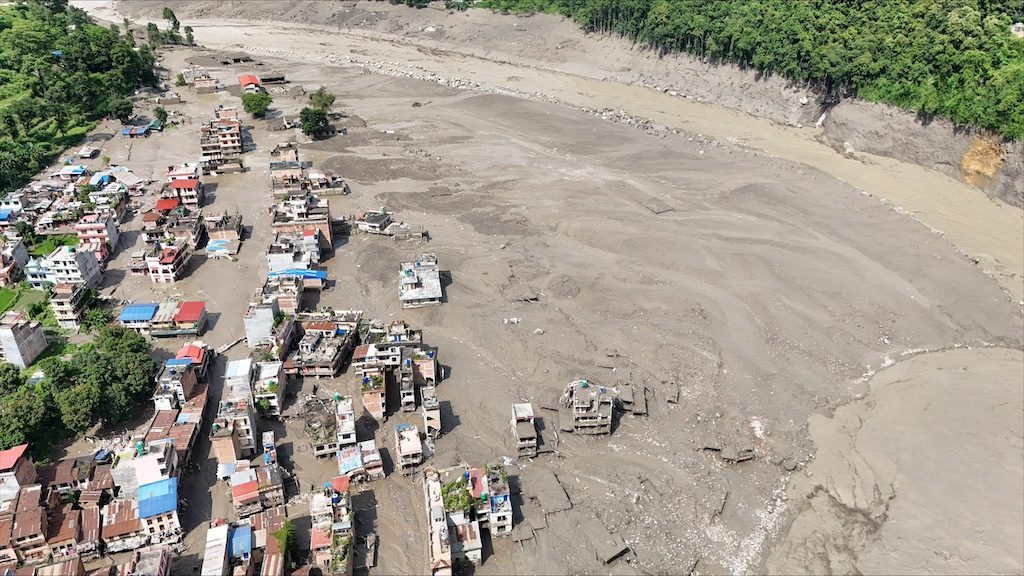
Nepal has been through something unimaginable. On August 26, a catastrophic wall of water triggered by a glacier and mountain collapse near the Nepal-China border tore through communities with terrifying speed. The wreckage left behind tells a brutal story: more than 1,100 confirmed dead, nearly 4,000 people still missing, and entire sections of the country transformed into rubble. Among the missing are 583 foreign nationals from 38 countries, including nearly 250 Indians, 85 Americans, and 36 British citizens.
Yet rather than close its doors, Nepal is doing something counterintuitive. Government officials are actively asking international travelers to keep their plans. Tourism Minister Khadakraj Paudel released a direct appeal to visitors, emphasizing that the country is not closed and that mountain trails and trekking routes remain ready for adventurers. "Your coming to Nepal this time does not mean only a holiday," Paudel said in his message. "It's a big support to the country fighting this catastrophic tragedy."
Why Nepal Needs Visitors Now
This isn't just sentiment. The economic blow from the floods is staggering. The tourism sector alone has absorbed losses estimated at more than 50 billion Nepalese rupees, roughly 300 million euros. The country has lost 142 hotels, 57 restaurants, 141 tourism vehicles, and 27 heritage sites. Across the entire economy, damage estimates hover around $5 billion, representing nearly one-tenth of Nepal's annual gross domestic product.
Tourism supports more than one million international visitors annually, many drawn by legendary treks like those affected near the Nepal-Tibet border and iconic peaks including Mount Everest. Thousands of guides, porters, hoteliers, restaurant owners, and transport companies depend on this income stream. A sustained drop in visitors doesn't just affect business owners in Kathmandu, it impacts entire mountain communities far from the disaster zone that saw little to no damage.
The Geography of Grief and Recovery
This is the crucial detail that changes everything. The disaster, while catastrophic, affected specific areas. Major airports, hotels, and tourist destinations elsewhere in Nepal remain fully operational. The government's strategy acknowledges a difficult reality: regions that escaped physical destruction still desperately need visitors to avoid economic collapse layered on top of the national tragedy.
Climate scientists have sounded alarms that the Himalayan region faces increasing vulnerability to such disasters. Research from the Global Mountain Safeguard Research programme, part of the United Nations University Institute for Environment and Human Security, shows that floods in the region have become five times more common since 1950. As temperatures rise, glaciers destabilize and mountain environments shift in unpredictable ways. This may be the new normal for Nepal, making the case for resilience and recovery even more urgent.
Travel as Solidarity
Paudel's appeal reframes tourism from luxury activity into lifeline. When you book a trek in Nepal right now, you're not just satisfying wanderlust. Your money flows directly to guides whose families depend on regular income, to lodge owners rebuilding after losses, to restaurants and shops that keep communities alive. The minister made this explicit: "Your visit will help sustain our tourism industry. It'll help our guides, hoteliers and all the workers whose livelihoods depend on tourism."
The challenge is delicate. Nepal faces legitimate questions about safety when hundreds of foreign nationals remain missing and rescue operations are ongoing. The government must balance transparency about what happened with honest communication about where travel is actually safe. They're attempting exactly that: acknowledging the disaster's severity while directing visitors to unaffected destinations where their presence creates real economic benefit.
For travelers already considering Nepal, the decision carries weight beyond a typical vacation choice. The country has opened its arms despite unimaginable pain. Whether that's enough to overcome hesitation is ultimately personal. But for those flexible on timing and destination, Nepal's resilience and its direct plea might deserve a second look.