For decades, Southeast Asia's tourism pecking order seemed carved in stone. Thailand dominated the mass market. Singapore captured the high-end business traveler. Bali became the cultural symbol that everyone recognized. But the competition for Chinese tourists, India's emerging middle class, and capital from the Gulf is reshaping the region in real time, and one country is climbing faster than anyone expected.
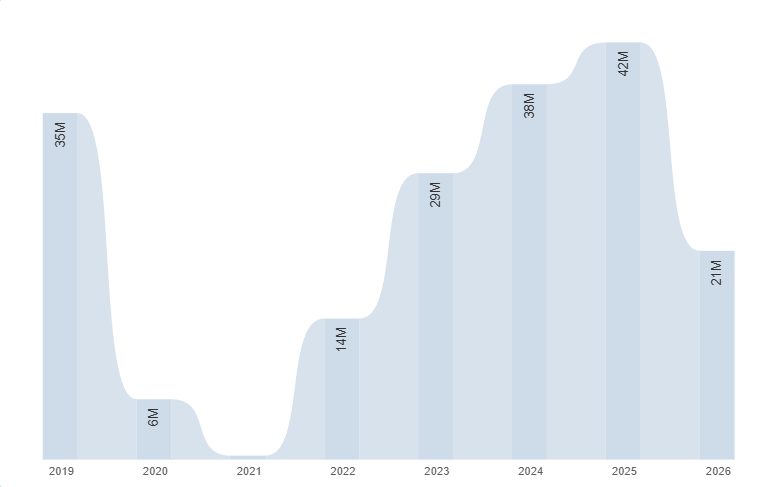
Malaysia is having its moment. The country welcomed over 42 million visitors in 2025, up 11% from the previous year, with momentum accelerating into 2026. The government's Visit Malaysia 2026 campaign is pushing even harder, targeting 47 million arrivals. Those are the headlines. The real story is what comes next: turning tourism into a strategic weapon for investment, soft power, and regional influence.
The Strength of Having No Single Star
Malaysia's greatest advantage might be its lack of a single defining draw. Kuala Lumpur pulls corporate travelers and shopping crowds. Langkawi delivers resort beaches. Penang trades on culinary heritage and street food culture. Sabah and Sarawak offer pristine diving and rainforest experiences. Add medical tourism, family-friendly infrastructure, golf, weddings, and Muslim-friendly services, and you have something that doesn't collapse if one market softens.
Thailand learned this lesson the hard way. Over-reliance on a single traveler type or destination creates vulnerability. Malaysia is spreading risk across multiple segments, multiple regions, and multiple traveler personas. It's a hedge against the unpredictable.
China's Return and the Visa Gamble
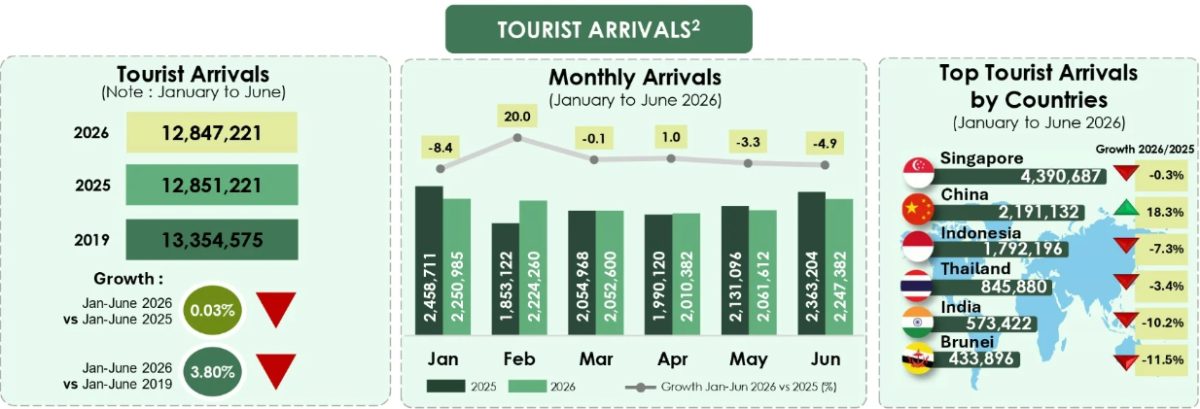
The first wave of Malaysia's resurgence is unmistakably Chinese. Roughly 4.7 million Chinese tourists visited in 2025, a 25% jump. That growth continued into the first quarter of 2026, with nearly 1.4 million arrivals in three months. This didn't happen by accident.
Malaysia made a calculated move: ease visa friction while building airline capacity in lockstep. As of May 2026, the two countries were connected by roughly 744 weekly flights offering nearly 149,000 seats. The logic is brutally simple. Remove visa barriers and demand rises. But demand means nothing without planes to carry people. Malaysia is solving both problems at once, turning the friction out of the system.
India Is the Bigger Prize
If China defined Asian outbound travel over the past decade, India will likely define the next one. The numbers are starting to show it. Malaysia drew about 1.5 million Indian visitors in 2025, up 14.6%, with more than 600,000 arriving in just the first five months of 2026.
Every major destination is chasing this traveler. Dubai wants them. Bangkok wants them. Singapore, Saudi Arabia, and half of Europe are bidding for them. Malaysia's pitch is practical: close geography, lower prices than rivals, widespread English, familiar food options, and resorts designed for families. Indian families planning their escape have fewer reasons to look elsewhere.
The ASEAN Hinterland and Geographic Luck
Geography is something no marketing budget can manufacture. Malaysia logged roughly 21.1 million visitors from Singapore in 2025, up nearly 12%. Much of this consists of same-day excursionists popping over the border for food, shopping, and quick transport, rather than overnight stays. But that still counts. Day-trippers spend money on meals, retail, and rides.
More broadly, ASEAN markets accounted for nearly 72% of Malaysia's inbound traffic in the first five months of 2026. Like Europe has long relied on intra-regional travel to sustain its tourism, Malaysia is cultivating its own captive regional market. The geography of being sandwiched between Singapore and Thailand actually works in its favor.
Building an Economic Backbone
International visitor spending reached roughly 106.8 billion Malaysian ringgit in 2024, with the tourism sector's total economic contribution hitting 291.9 billion ringgit, about 15.1% of GDP. Add another 121.3 billion ringgit from domestic tourism in 2025, and you see a three-layer demand structure: long-haul international travelers, regional ASEAN visitors, and domestic tourism. When one layer wobbles, the others provide cushion. Other destinations are learning this lesson too.
The higher-value play is where Malaysia sees opportunity. Medical tourism is the clearest example. Roughly 1.85 million health-related visitors in 2025 generated about 3.35 billion ringgit in revenue, turning hospital care into something closer to export manufacturing. The same economics apply to conferences, luxury hospitality, high-end weddings, and championship golf courses. Kuala Lumpur has the infrastructure for this: a major international airport, world-class hotels, excellent dining and retail, and connectivity spanning Asia and the Middle East. What it lacks is a clear identity to rally around. Bangkok became a lifestyle destination. Singapore positioned itself as a premium urban hub. Dubai turned the layover into an economic model. Kuala Lumpur remains harder to pin down, a gap that's also an opening if the city can convert transit passengers into stopover tourists and win more premium conference business.
The Gulf's Growing Role
Malaysia already ranks among Asia's easiest destinations for Muslim travelers. Halal food is everywhere, prayer facilities are standard, hotels understand the market, and English is widely spoken. But the bigger play might not be attracting Gulf tourists. It's attracting Gulf money. As capital from the region aggressively moves into global hospitality and destination development, Malaysia is positioning itself as a platform for that investment, not just a destination for their visitors.
After the Campaign Ends
Once the Visit Malaysia 2026 campaign wraps, the real test begins. Did visitors stay longer than before? Did average spending per guest rise? Did tourists using digital tools book experiences they wouldn't have otherwise? Hitting 47 million arrivals means little if the money per visitor stagnates. The country's next move should focus on conversion: turning quantity into quality, and visitors into spenders.