Belgium's design scene has a new beating heart. Design Museum Gent, one of the country's most cherished cultural spaces, reopens this autumn after a four-year, €21 million transformation. The museum throws open its doors from 3 to 11 October 2026, with a free opening weekend and a city-wide festival that promises to be as inventive as the objects inside.
The relaunch kicks off with a pre-party on 2 and 3 October, featuring exhibitions, performances, and creative workshops. Then, for nine more days, Design Fest Gent takes over the city with a design and makers' market, a backyard brunch, and a packed programme of events. You can see the full schedule here.
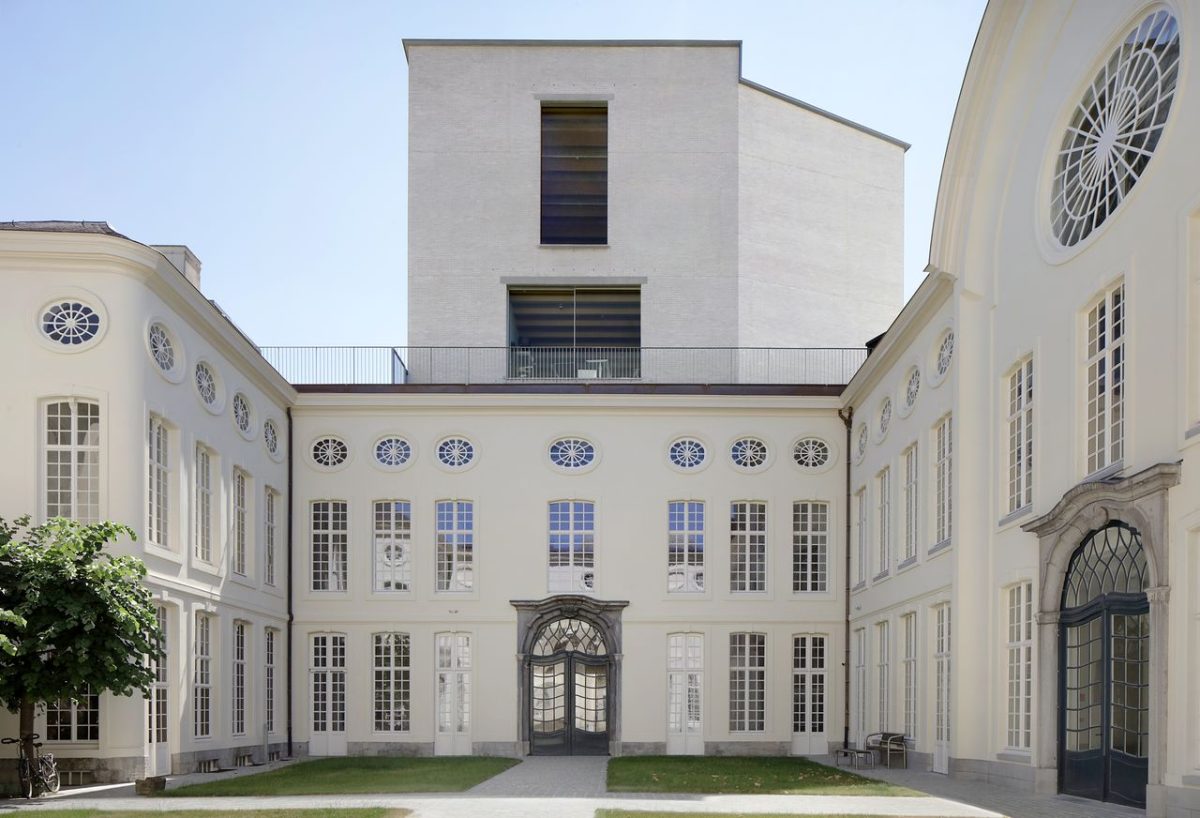
The renovation, led by Carmody Groarke with ATAMA and RE-ST, has done something rare. It has connected the museum's historic buildings with a sleek new wing, but it has also turned the inner courtyard into a proper garden. That garden is now the museum's heart, a clear point of orientation that draws visitors through the space. The result feels less like a museum expansion and more like a civic gesture, a place where the community can gather and interpret the world together, as director Katrien Laporte put it.
The new wing, built from timber and brick, unfolds across six zones. At basement level, the art-handling area offers a peek behind the scenes. From there, you move through the Stadskamer (reception and shop), the Forum (lecture space), the Atelier (workshops), and the Vitrine (temporary exhibitions). On the fourth floor, the Loft awaits, a generous event space with panoramic views over Ghent's rooftops.
Four opening exhibitions set the tone. Models from the Past for the Future, curated by Evelien Bracke, digs into how historical designs can inform tomorrow. Public Matter(s): Design and Democracy, by Amelie Klein and Vera Sacchetti, asks what design has to do with how we govern ourselves. CO-LAB, curated by Siegrid Demyttenaere, celebrates collaborative creation. And Searcher, an AI installation, traces unexpected connections across the museum's 24,000-object collection.
Visitors can roam more than 3,700 square metres of exhibition space, with around 500 objects on display in the new collection. The layout is designed to feel open and adaptable, not like a maze of glass cases. It's a place to linger, to question, to make connections.
Sustainability is baked into the building itself. The facade uses Gent Waste Brick, a lime-cured brick made from locally sourced municipal waste that skips the energy-hungry kiln. More than 82,000 of these bricks were produced at Het Arsenaal in Ghent, and locals could watch the process live. It's a fittingly circular approach for a museum that wants to be part of the city's daily life, not just a destination for tourists.
If you're planning a trip to Ghent, this reopening is reason enough to book. The city's restored post office already turned into a dreamy hotel, and now the design museum gives you another excuse to wander its cobbled streets. For more European cultural fixes, check out how Brussels' Kanal Museum celebrated its own opening, or see why England keeps its national museums free. And if you're in the mood for more Belgian adventures, Ghent's post office hotel is a stay worth splurging on.