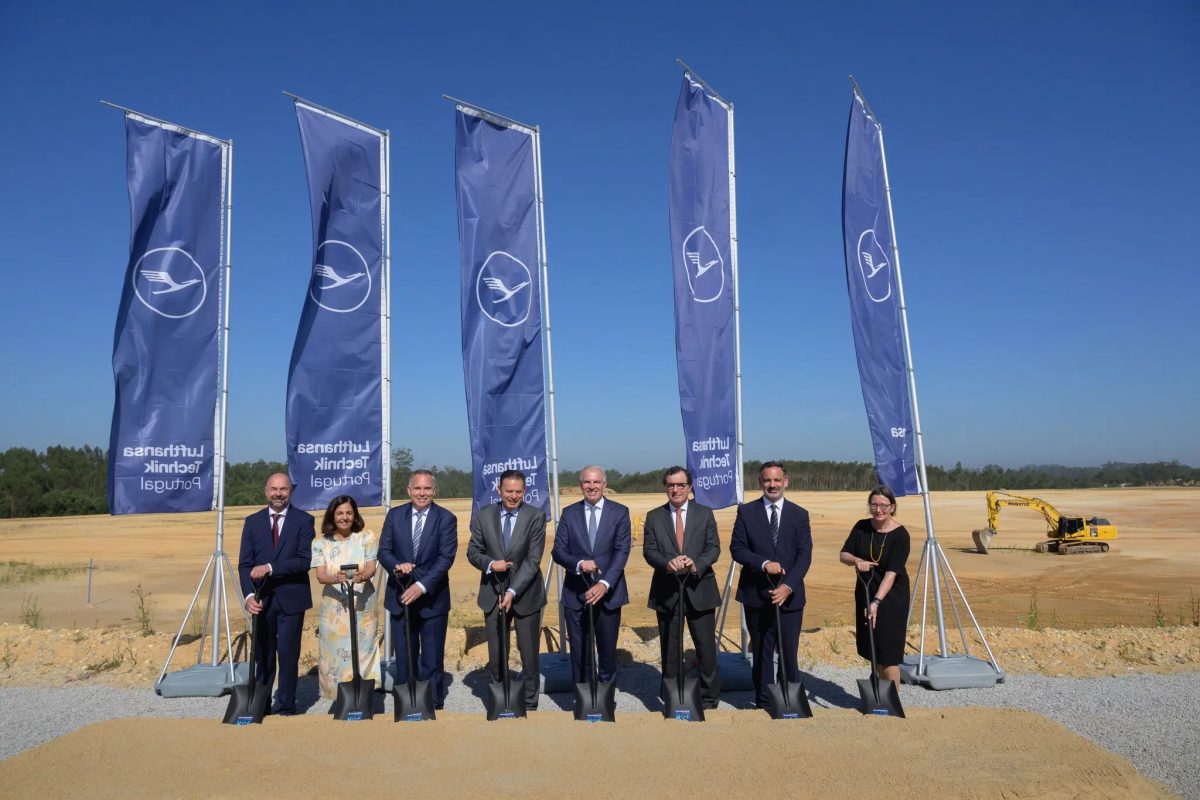
When the head of the Lufthansa Group showed up in Portugal this week to swing a ceremonial shovel, it wasn't just another groundbreaking. Prime Minister Luís Montenegro came too, along with trade officials and local leaders. The signal was clear: this project matters.
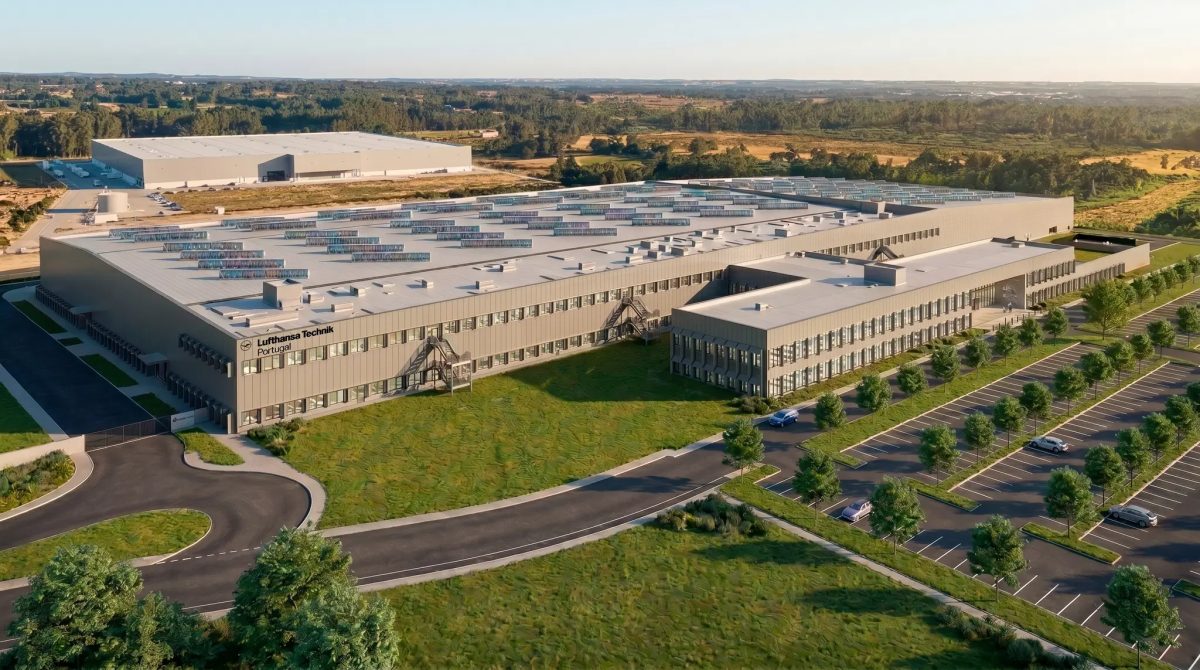
Lufthansa Technik, the maintenance and repair arm of the German airline constellation, has begun construction on a sprawling 55,000-square-meter facility in Santa Maria da Feira, a town south of Porto. The operation will focus on repairing aircraft engines and components starting in 2028. The price tag runs into hundreds of millions of euros, and the company expects to hire up to 700 workers over the next several years.
What makes this more than just another factory opening is the timing and the ambition behind it. Lufthansa is simultaneously bidding to acquire a controlling stake in TAP Air Portugal, the country's national carrier, which the government is currently shopping to private investors. The Santa Maria da Feira facility reads as a declaration of intent: Lufthansa isn't dipping a toe into Portugal. It's planting roots.
A Footprint That Keeps Growing
The maintenance hub is just one piece of a much larger expansion. Lufthansa also plans to build a technology and artificial intelligence hub somewhere in northern Portugal and establish a charitable foundation modeled on similar organizations in Germany. Such a foundation outside German borders would be the airline group's first in Europe, signaling what the company calls its "social commitment" to the Portuguese market.
The numbers speak to scale. Seven Lufthansa Group airlines (Lufthansa, SWISS, Austrian Airlines, Brussels Airlines, Edelweiss, Eurowings, and Discover Airlines) already operate 353 flights per week across Portuguese airports including Lisbon, Porto, Faro, Madeira, and the Azores. More than 500 Lufthansa employees work in Portugal today. The group is aiming to create over 1,000 direct jobs in the years ahead, making Portugal one of the airline conglomerate's most significant strongholds outside Germany.
"This is a visible and powerful symbol of what the Lufthansa Group stands for in Portugal: a reliable, long-term industrial partner," CEO Carsten Spohr told reporters at the ceremony. Lufthansa has been active in Portugal for more than 70 years, which gives that statement weight.
The TAP Prize at the Center
Of course, the real prize is TAP Air Portugal itself. After British Airways parent company IAG withdrew from the bidding process, Portugal asked Lufthansa and Air France-KLM to submit binding offers for a 44.9 percent stake, with an additional 5 percent reserved for employees. The government has described both proposals as roughly equivalent on strategic, financial, and industrial grounds.
Why does TAP matter so much? The Lisbon hub opens the door to routes across Latin America, especially Brazil, plus connections to Portuguese-speaking nations in Africa and the United States. Those long-haul corridors are gold for any European airline trying to compete globally. Lufthansa has a track record of buying stakes in European carriers, having acquired or gained control of SWISS, Austrian Airlines, Brussels Airlines, and Italy's ITA Airways.
Spohr has made clear that Lufthansa's interest in TAP is "very strong." The Santa Maria da Feira investment is essentially the company placing a very expensive bet that Portugal's government will choose it as the new owner.
What It Means for Travelers and the Region
For Portugal's tourism and aviation sectors, the facility adds a dimension that's been missing. Portugal has long thrived as a leisure and business destination, but it has lacked the technical capacity to maintain and repair aircraft on a serious scale. Once operational in 2028, the Santa Maria da Feira hub will anchor that capability on the country's northern coast, at a moment when European airlines are locked in competition over network reach, maintenance infrastructure, and access to intercontinental routes.
The practical upshot for travelers should be more connectivity through Portuguese airports, potentially better service reliability if maintenance happens closer to home, and maybe even more competitive pricing as Lufthansa deepens its Portuguese operations. Whether Lufthansa wins the TAP bid or not, it's already betting the house on Portugal becoming central to its European strategy.