Summer owns European tourism. So thoroughly that in some countries, more than 40% of the entire year's hotel nights happen in just two months. Croatia, Greece, Bulgaria - they all face the same brutal math. Peak season profits feel great until September arrives and half your staff goes home.
This isn't just an inconvenience for hoteliers. Research from the European Commission shows that concentrated tourism creates real economic risk. When that much revenue depends on a narrow window, a single shock - weather, a pandemic, geopolitical tension - can devastate entire regions. Croatia knows this. So does Greece, which keeps trying to extend its season.
But something is shifting. Instead of accepting seasonality as an unchangeable law of nature, European accommodations are testing strategies to pull visitors into the quieter months. The answer isn't just cutting prices.
The Discount Trap
Nearly nine out of ten European hotels offer reduced rates during slow periods. It's the obvious move, the default strategy, the thing everyone does. And it works, sort of. But new research shows that discounting alone won't solve seasonality. A cheaper room doesn't matter if nobody finds it.
The real difference-makers are the ones mixing multiple tactics at once. Some partner with event organizers. Others invest in better marketing channels. A few completely rethink who they're trying to attract during off-peak months. What works for a luxury alpine resort differs wildly from what works for a beachside guesthouse or a rural farmstay.
Online Platforms Are Rewriting the Map
Here's where it gets interesting. More than four in five hoteliers say online travel agencies are their most effective tool for filling winter and shoulder-season rooms. Platforms like Booking.com, Expedia, and Airbnb have done something remarkable: they've made lesser-known destinations discoverable.
Research shows that while only 16% of European accommodation bookings happen in rural areas through traditional channels, that figure jumps to 38% when you include online platforms. That's not just a marketing advantage. It's a complete shift in where tourism actually occurs. A family looking for a quiet autumn escape in Bulgaria or Slovenia can now find exactly what they want without needing to already know it exists.
Events Are Becoming the Real Revenue Driver
Half of European accommodations have benefited from event-driven tourism in the past year. But the numbers tell a deeper story. Two-thirds of those properties saw higher revenue per room during event periods. Six in ten booked more stays during months that would otherwise have been weak.
Think about what this means: a wine festival in October brings visitors in low season, commands full or nearly-full room rates, and gives hoteliers better revenue than they'd make with heavy discounting. A music festival in April, a trade conference in November, a sports tournament in March - these aren't sideline benefits. They're structural solutions to the seasonality problem.
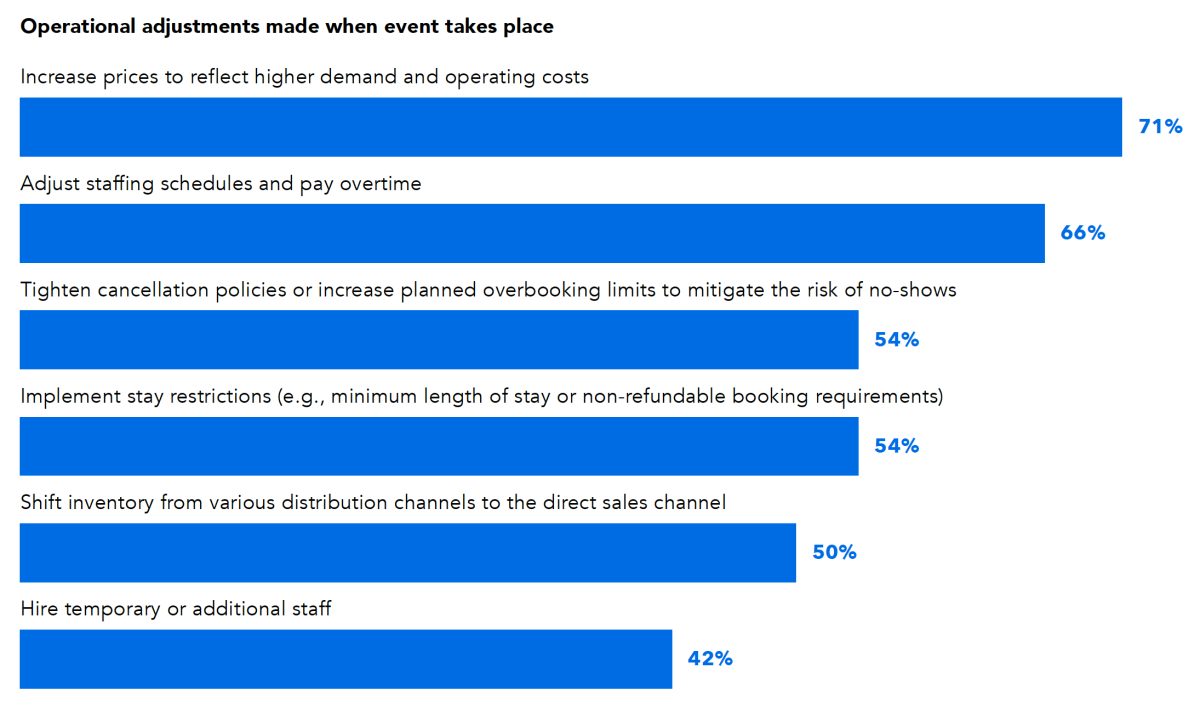
The catch is that events demand more. When a festival hits town, 66% of hotels adjust staffing and pay overtime. Another 42% hire temporary workers. Running at peak capacity for a concentrated event period costs money. That's why higher room rates aren't greed - they're necessity.
What's really compelling is that half of European hoteliers want to coordinate more closely with local government and tourism boards around events. They're starting to see seasonality not as a hotel problem, but as a destination problem requiring collaboration across the entire tourism system.
Local Economy, Local Solution
Hotels aren't islands. They buy food and supplies locally. They employ residents. Many now open their restaurants and gyms to the community year-round. This matters because destinations with strong local economies, active cultural calendars, and genuine community engagement create reasons for people to visit outside summer vacation. A thriving town center attracts shoulder-season tourists. A ghost town during winter does not.
The destinations spreading tourism more evenly aren't doing anything magical. They're simply tying accommodation strategy to everything else happening in their region. Cultural events, local festivals, conferences, seasonal markets - when these run throughout the year, hotels have genuine demand to tap, not just discounted inventory to desperately move.
The transformation happening across Europe isn't revolutionary. No one's inventing new tourism. But the combination of smarter distribution, event strategy, and community-level thinking is making the impossible a little less impossible. Summer will always be busy. But spring, fall, and winter don't have to be abandoned.