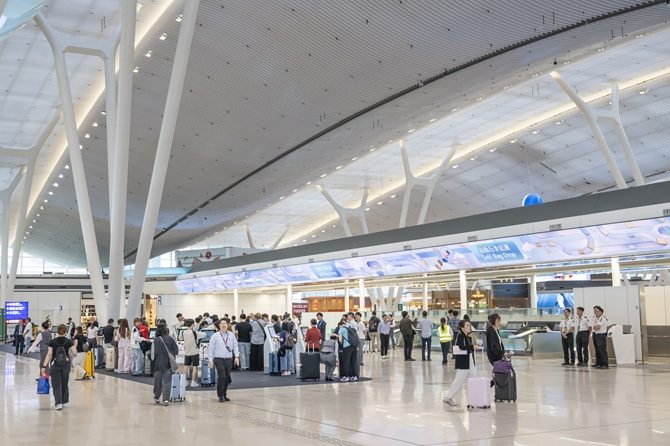
On May 27, Hong Kong International Airport threw open the doors to Terminal 2, a massive 300,000-square-meter facility designed to make airport logistics feel less like a chore and more like the start of an adventure. The stakes? Reclaiming bragging rights as Asia's best aviation hub.
Here's what Terminal 2 actually delivers. Travelers can theoretically blast through check-in in 45 seconds thanks to smart kiosks and self-service baggage drops. The first year expects to handle eight million passengers, ramping up to 30 million annually. Pair that with Terminal 1's existing 70 million capacity, and Hong Kong can now boast a combined 100 million travelers per year, putting it squarely among the world's heavyweight airports.
Fifteen airlines are moving operations into T2, including the three local carriers: HK Express Airways, Hong Kong Airlines, and Greater Bay Airlines. The full transition wraps by June 2026, right before the summer travel rush. Getting there is frictionless too. The Airport Express connects both terminals at the departure level, while 29 bus routes serve the facility. A brand-new six-story car park with over 1,000 spaces sits just a short covered walkway away.
The Instagram factor matters more than you'd think
But here's the real story. Terminal 2 isn't just about moving people faster. It's about competing with Singapore's Changi Airport, which has dominated the Skytrax rankings for two consecutive years. Changi seduced a generation of travelers with cascading waterfalls, lush gardens, climbing walls, and endless photo opportunities. Hong Kong is fighting back with its own appeal to younger passengers.
Inside T2, curved ceilings frame LED screens projecting ocean scenes. Retail tenants lean young and trendy: Filipino fried chicken chain Jollibee sits beside locally designed apparel boutiques. There's even a claw machine arcade because apparently, travelers want to win stuffed animals between flights. Fair point.
The launch hasn't been flawless. Costs overran the initial budget by 37 percent (though post-COVID supply chain chaos and inflation made that outcome almost inevitable). More awkwardly, only two restaurants opened when the terminal debuted, a far cry from the planned one hundred venues. Critics called the rollout sluggish, and the reality didn't quite match the hype.
But momentum is definitely building
Don't count Hong Kong out yet. The airport notched a 19.6 percent year-over-year jump in passengers in March 2026, more than double Singapore's 8.5 percent growth during the same month. Travelers are ditching long haul routes and staying regional, and Hong Kong is positioned to capture that shift. Hong Kong tourism itself is nearly at full post-COVID recovery, and geopolitical uncertainty in the Middle East means more traffic routing through Asia-Pacific hubs.
The city's airport authority is betting that Terminal 2 serves as the launchpad for a comeback story. The facility works as a practical solution to capacity constraints. It also signals that Hong Kong understands what travelers want: efficiency, style, and yes, decent fried chicken. Whether it's enough to reclaim the crown from Changi depends on execution over the next few years. For now, Terminal 2 has raised the bar for what a regional aviation hub should offer.