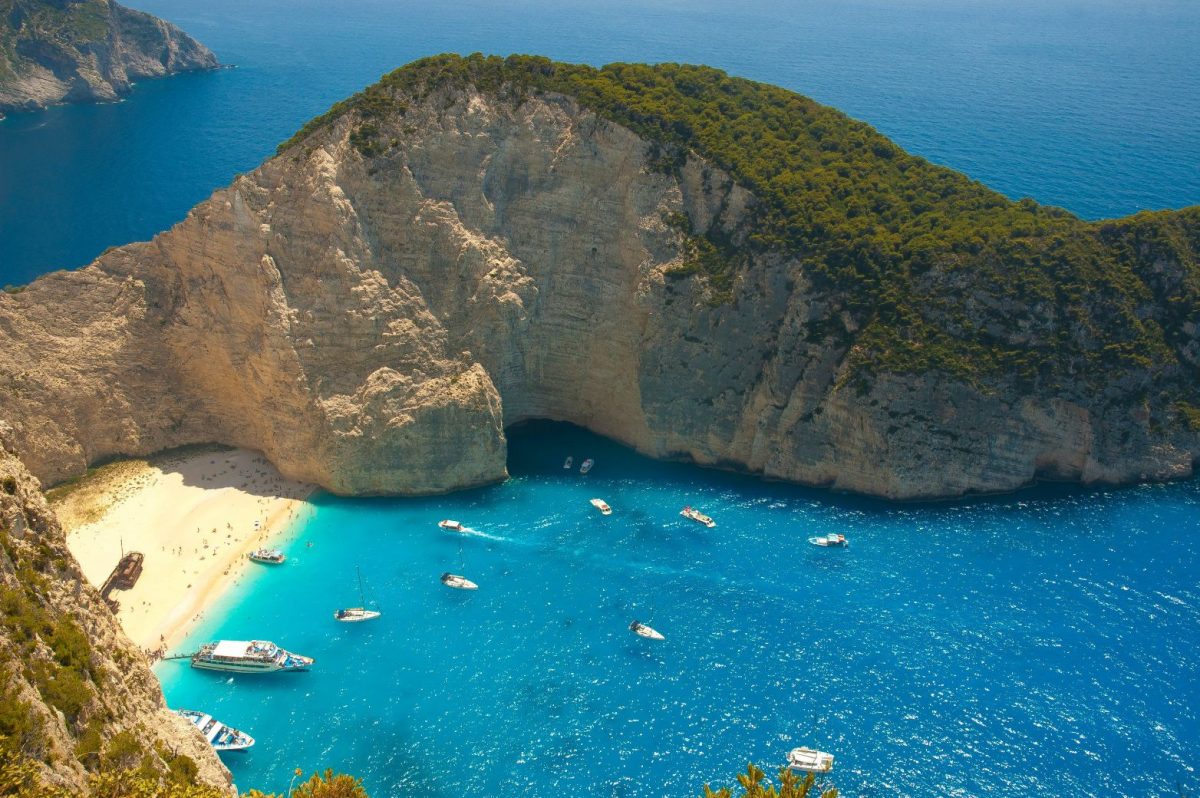
If you've scrolled through Instagram travel feeds in the past decade, you've almost certainly seen Navagio Beach. That haunting image of a rusted cargo ship tilted against white limestone cliffs on the Greek island of Zakynthos? That's become one of the world's most iconic photo opportunities. But there's a problem: the beach itself is disappearing, and unless action is taken soon, so will the ship that put it on the map.
The Panagiotis stranded on this cove in 1980 after running aground during what was allegedly a smuggling operation (hence the alternate name, Smugglers' Cove). For decades, it remained an obscure shipwreck known mainly to locals and a handful of intrepid explorers. Then social media happened. The visual contrast between pristine turquoise waters, towering cliff faces, and the vessel's slow decay created an irresistible attraction. By some estimates, 1.5 million tourists arrive on Zakynthos each summer, and a substantial portion make the journey specifically to see this wreck.
That popularity, though, has come with consequences. Erosion from waves and bad weather is relentlessly eating away at the beach. Visitors have caused additional damage. Cliff collapses in 2018 injured seven tourists. A 5.4-magnitude earthquake in 2022 raised fresh safety concerns about rockfalls. The situation has become serious enough that Greek authorities have implemented a closure on boats and swimmers that will remain in effect until at least October 31, 2026.
A Bold Plan to Buy Time
Enter the Municipality of Zakynthos with what might be the most ambitious beach engineering project Greece has attempted. The plan involves dumping 45,000 cubic metres of gravel into the bay to expand the beach by 30 metres seaward. By moving the shipwreck further from the water's edge, officials hope to shield it from the constant battering of waves and coastal erosion. Once the expansion is complete, the team plans to conduct full conservation and restoration work on the Panagiotis itself, attempting to preserve it for future generations.
"The shipwreck is not only the top tourist attraction of Zakynthos," Mayor Giorgos Stasinopoulos told local media. "It is a global symbol of our island. We must protect and deliver it safely for future generations." The project will be led by the municipality in collaboration with the National Technical University of Athens, lending it credibility and engineering rigor.
The timeline remains unclear, but officials have signalled this is urgent. The ship really is vanishing. Photographs from even five years ago show a visibly more intact vessel than what tourists see today. Once it's gone, so goes a core reason millions of people visit this remote corner of Greece.
What Visitors Can Actually Do Right Now
Here's the reality check: if you're planning a trip to Zakynthos in 2025 or early 2026, you cannot currently visit Navagio Beach by boat or swim there. The closure is firmly in place due to ongoing safety concerns. But the view hasn't vanished entirely. Several designated viewing platforms perch on the cliffs above the beach, offering spectacular vistas of both the shipwreck and the cove. You won't be able to touch the sand or get as close as you might want, but you'll see it.
This closure actually reflects Greece's broader commitment to sustainable tourism. The country has been working to balance visitor access with environmental protection at its most vulnerable sites. Navagio is just one example of how managing overtourism requires difficult decisions.
The gravel expansion project represents a fascinating intersection of engineering, tourism economics, and cultural preservation. It's not a perfect solution. Some conservationists worry about the ecological impact of moving that much material into the bay. Others question whether engineering can truly save a shipwreck from the relentless pull of the sea. But it's a solution nonetheless, born from the recognition that losing Navagio Beach would represent a significant loss not just for Zakynthos, but for global travel culture.
When the beach reopens and the restoration work concludes, expect crowds to rival those at any famous European landmark. Until then, book a clifftop viewing session, bring your camera, and remember that sometimes the most iconic travel destinations need a little help staying iconic.