Imagine crossing the same border every single morning for your commute, passport in hand, knowing that 118 years of separation sit between you and your workplace. For roughly 15,000 Spanish workers, this was daily reality until July 2026.
On July 14, 2026, something remarkable happened in Brussels. The European Commission and the United Kingdom signed a treaty that fundamentally rewrites the relationship between Spain and Gibraltar. Spanish Foreign Minister Jose Manuel Albares and British Minister Stephen Doughty joined Gibraltar's Chief Minister Fabian Picardo and EU Trade Commissioner Maros Sefcovic to put their signatures on a document that will reshape life for an entire region. The agreement takes provisional effect on July 15, pending formal approval by the European Parliament.
To understand why this matters, you need to see the bigger picture. Gibraltar, that tiny British Overseas Territory clinging to the southern tip of Spain, has always been Europe's oddball. Separated by politics, history, and bureaucracy from the Spanish town of La Línea de la Concepción just across the way, it might as well have been on another continent. Brexit made things worse. When the UK left the EU in 2020, every single person crossing the border needed a passport check. What should have been a five-minute walk became a bureaucratic gauntlet.
A Region Divided, Now Coming Together
Picture La Línea de la Concepción. It's a modest Andalusian town with an unemployment rate hovering near 30 percent. According to Juan Franco, the mayor, roughly one-third of the city's business revenue comes directly from customers in Gibraltar. The border fence wasn't just a political symbol; it was an economic stranglehold. Four years of negotiations between Spain, the EU, and Britain finally produced a solution.
The new treaty does something deceptively simple but profoundly important. It aligns Gibraltar with both the European customs union and the Schengen zone. Here's what that means on the ground: EU citizens with government-issued ID can now move freely between Spain and Gibraltar without passport control. Gibraltar residents can use residence cards instead of full passports. On July 15, crowds poured across the border immediately after the agreement took effect, experiencing for the first time what unrestricted movement actually feels like.
Non-EU visitors still need to show their passports to both Gibraltarian and Spanish officials at ports or airports, but even this represents a massive simplification from the grinding checkpoint experience that defined the previous era.
Why This Actually Changes Everything
The European Commission frames this plainly: the agreement secures "shared prosperity and closer and more constructive relations between Gibraltar and Spanish authorities, while fully safeguarding Schengen, the EU's Single Market and its Customs Union." Translation: everyone wins without sacrificing anyone's core interests.
For travelers, the practical upshot is that visiting Gibraltar just became exponentially easier. You're no longer dealing with a semi-militarized zone. The town itself, despite its wealth (Gibraltar has one of the world's highest per capita incomes), has spent over a century in isolation. That's changing. Business will flow more naturally across the border. Tourism between southern Spain and Gibraltar should surge. Spain has been aggressively rethinking how it approaches visitors and regional development, and this treaty aligns perfectly with that shift.
The UK's commitment to Gibraltar remained unambiguous throughout negotiations. Stephen Doughty, the Minister of State for Europe, emphasized that the agreement "delivers certainty for the people and businesses of Gibraltar, protects British sovereignty, our military facilities." Gibraltar's government and parliament backed it unanimously. This wasn't imposed from above; it was genuinely wanted on all sides.
What Travel Here Looks Like Now
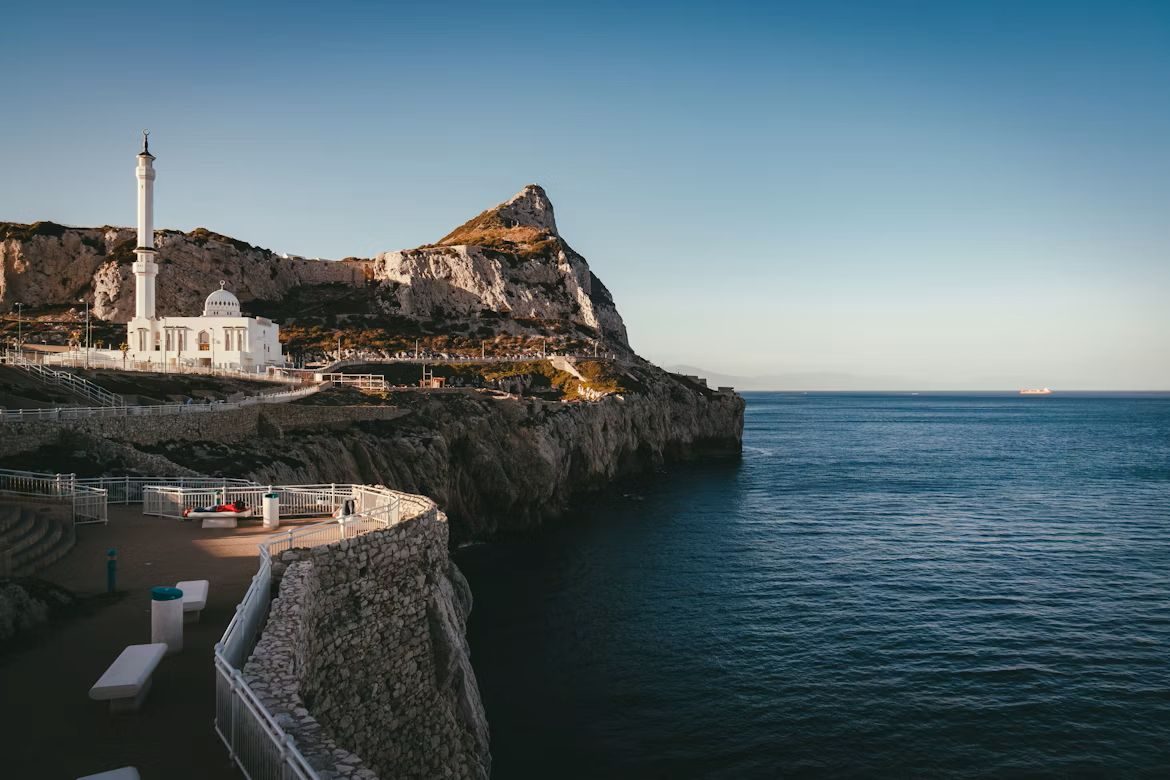
If you're planning a trip to this corner of Europe, the timing is actually brilliant. You're arriving as a region reopens itself. The dramatic Rock of Gibraltar is more accessible than ever. La Línea de la Concepción, long overshadowed, is poised for genuine economic revival. Spanish Andalusia and British Gibraltar are no longer operating as separate worlds. Consider adding both to your itinerary without the logistical headache that would have defined your journey just months earlier.
This treaty represents something larger than just border policy. It's Europe solving a 118-year-old problem through negotiation and compromise rather than confrontation. In a continent sometimes defined by its divisions, watching Spain, the UK, and the EU come together to open a crossing instead of fortifying it feels almost novel. For the 15,000 people who used to waste hours at passport control just to get to work, it's simply transformative.