
You have memorized the phrase for "thank you" in four languages, you know which fork to use, and you would never dream of cutting in line. But Europe's social rules are a minefield of unspoken expectations, and getting them wrong can turn a lovely trip into a cringe-worthy memory. A new study by language learning platform Preply surveyed 1,600 people across 27 European nations to uncover the continent's most surprising etiquette norms. The results might just change how you greet, dine, and even take off your shoes.
Punctuality Is a Moving Target
Forget the stereotype of the laid-back Mediterranean. In Greece, being on time is considered essential, according to the study. But in Czechia, France, Germany, and Poland, arriving exactly on time is already seen as late. The majority in those countries prefer to show up early. Meanwhile, in 23 of the 27 countries surveyed, punctuality is the gold standard. So, when in doubt, aim to be on time, but if you are in Prague or Berlin, consider arriving a few minutes early to show respect.
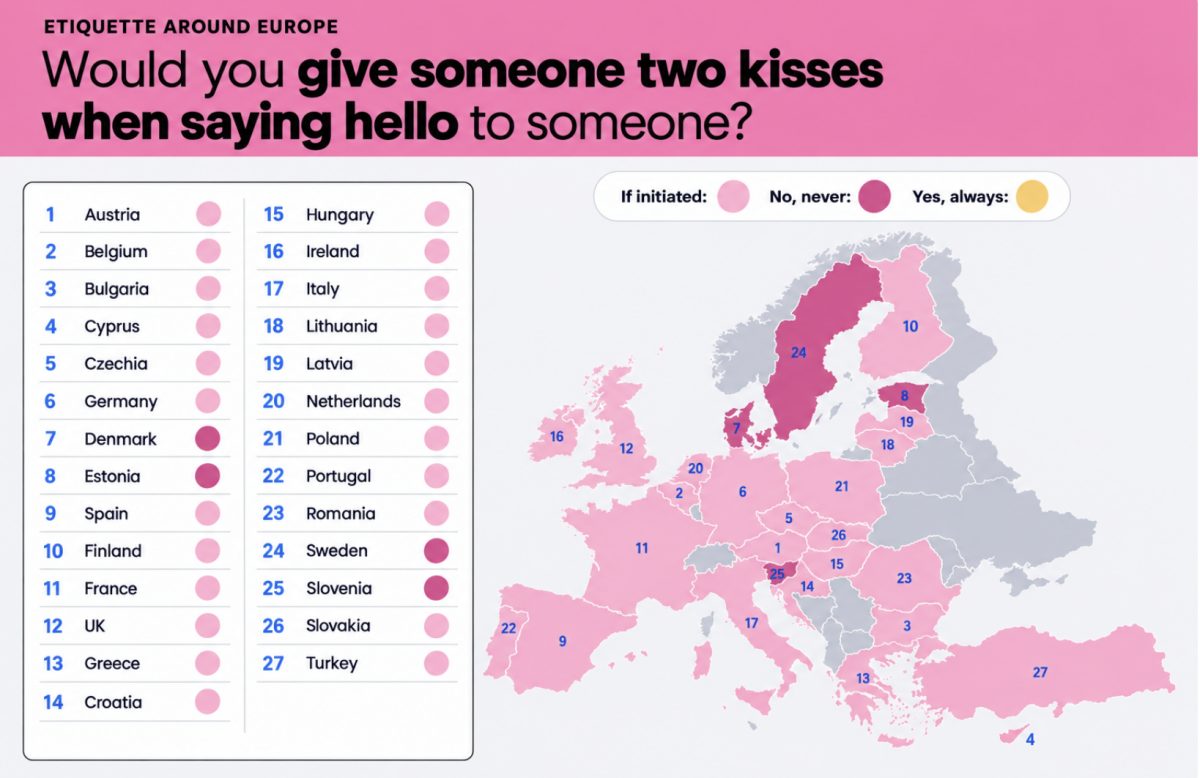
The Cheek Kiss Conundrum
How many kisses? Which cheek first? The study reveals that in most of Europe, the safest move is to wait and see what your host does. A whopping 85% of respondents said they would let the other person initiate the cheek kiss. But in Denmark, Estonia, and Sweden, the double kiss is a definite no-no. And in Slovenia, some people go so far as to refuse any kiss as a greeting. So, keep your lips to yourself unless you are sure it is welcome.
Shoes Off or Not?
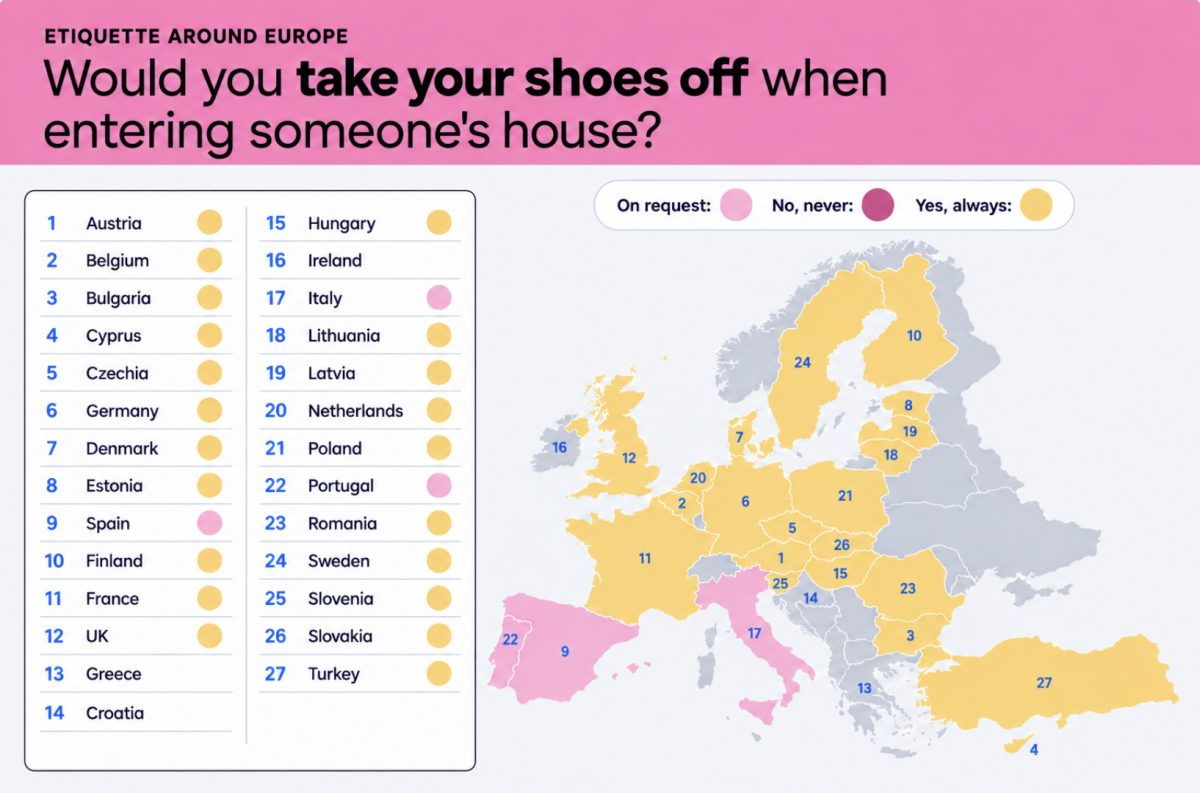
If you are invited to a Swede's home, take your shoes off at the door. A unanimous 100% of Swedish respondents said outdoor shoes should never be worn inside. This is not just a Scandinavian quirk. The majority of people in every European country except Italy, Portugal, and Spain agreed that shoes should be left at the entrance. So, pack your best socks and make sure they are hole-free.
The Gift-Giving Trap
Bringing a small gift for your host is common in many places, but in Finland, it might be seen as over the top. The majority of Finns said they would never bring a house gift. Meanwhile, in Austria, the UK, and Spain, a third of people would bring a gift for a special occasion. The lesson? Read the room. If you are unsure, a bottle of wine or a box of chocolates is usually safe, but in Finland, you might want to skip it.
Clean Plate or Not?
Finishing everything on your plate is generally seen as polite across Europe, but the study found a gender split. More men (82%) than women (75%) said they would clean their plate to show appreciation. Women were more likely to leave a little food to show decorum. So, if you are a guest, follow your host's lead. If they clean their plate, you can too.

The Bottom Line
Feeling overwhelmed? You are not alone. But Preply's language trends expert, Madeline Enos, says the key is not to memorize every rule. "Good travel etiquette doesn't require memorizing every rule," she says. "It's about having good situational awareness, reading the room, and recognizing that what's considered polite in one culture might be different in another."
So, as you plan your European adventures, keep these insights in mind. And if you are worried about other travel faux pas, check out our guide to Europe's visa maze or the latest on Europe's new tourism strategy. For those heading to colder climes, remember that etiquette is about respect, not perfection. A genuine smile and a willingness to adapt go a long way.