Picture this: you're sipping coffee in Zurich and in two and a half hours you're in Milan. A decade ago, that journey took four hours. The Gotthard Base Tunnel made the impossible routine. Now Europe wants to repeat this trick across the continent, boring through mountains and under seas to create a faster, cleaner rail network that could finally challenge flying.
The ambition is massive. Since January 2025, when the European Court of Auditors did the math on eight major rail projects, reality hit hard: costs have ballooned an average of 82 percent beyond original budgets, and most are running about 17 years behind schedule. But those building these tunnels aren't backing down. Nick Brooks, who leads the European rail operator group ALLRAIL, calls projects like the Brenner Base Tunnel and the Lyon-Turin link "game-changers." He's not wrong.
The base tunnel revolution
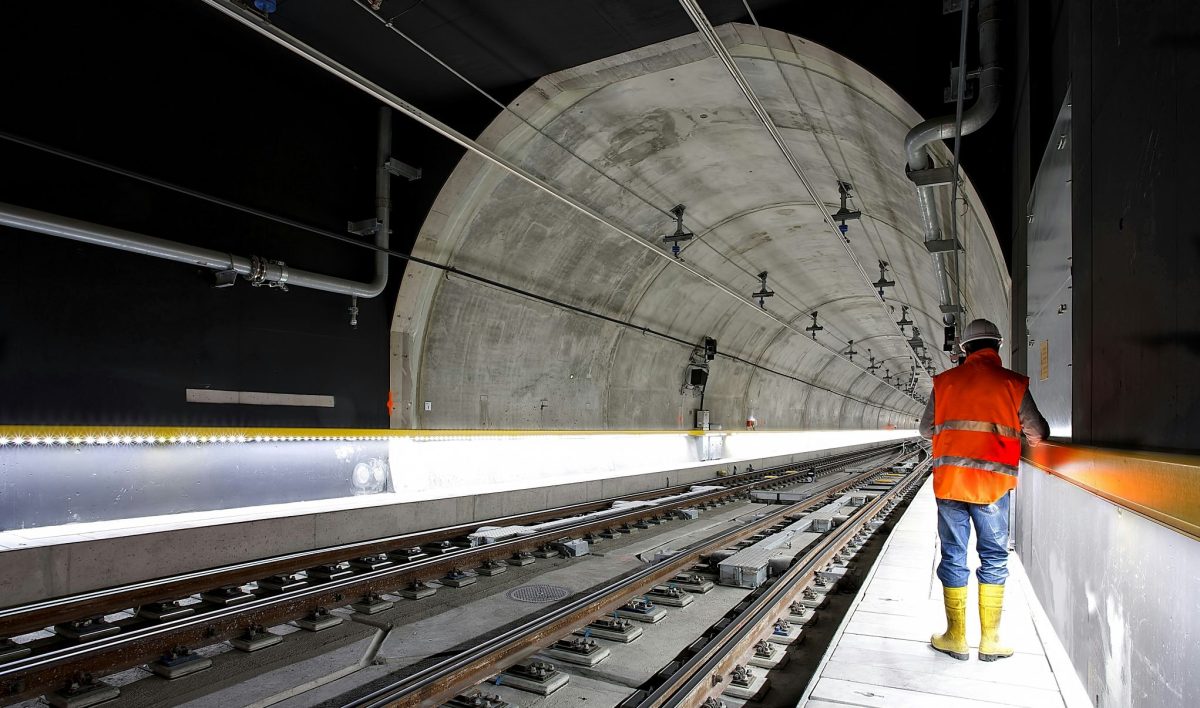
Here's why these aren't just bigger versions of old tunnels. Traditional mountain routes twist and climb, adding hours to trips. Base tunnels burrow straight through at a lower altitude, slicing through the bedrock in direct lines. The Gotthard set the template: its twin tunnels cost $9.7 billion and sit 2,200 meters below the surface. The payoff was worth it. That's how Zurich to Milan became a weekend jaunt instead of an all-day hassle.
The Gotthard feeds into something bigger: the New Trans-Alpine Railways (NEAT), a high-capacity corridor that stitches Italy to northern Europe and connects the North Sea to Italy's industrial heartland. Travelers can move north to south without the Alpine obstacle that's defined the region for centuries.
The tunnels reshaping the Alps
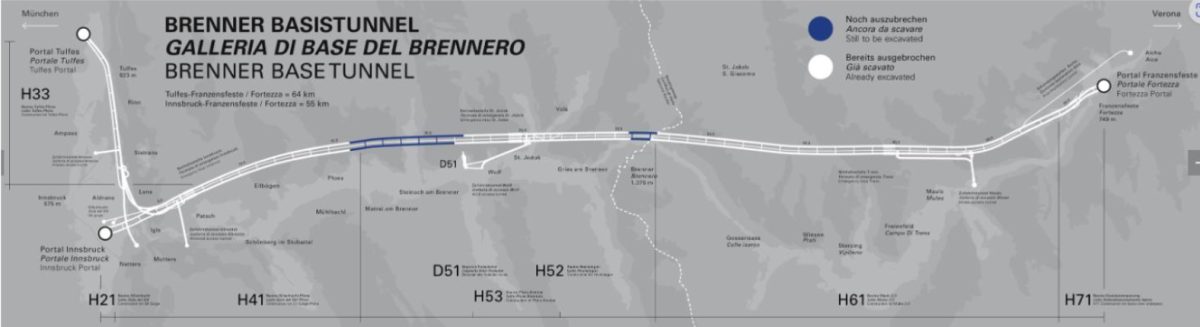
Austria and Switzerland are leading the charge. Austria's Brenner Base Tunnel will link Innsbruck to Bolzano when it opens in 2032, after 38 years of construction and 225 kilometers of digging. It costs 8.5 billion euros but cuts the journey from two hours to 50 minutes. South of Vienna, the Semmering Base Tunnel will open in 2030, connecting Graz and Villach and acting as a gateway to Italy, Slovenia, and the Adriatic. At 27 kilometers long, it's the shorter sibling in this family of mega-projects, but at 4.3 billion euros, it's no bargain.
Germany and France, though, are dragging their feet. Bavaria's new high-speed lines aren't ready to mesh with Austria's network. France's Mont Cenis tunnel through the Alps has faced legal battles and has reverted to traditional blasting techniques, pushing the opening date back to 2045. But when it finally opens, it could cut the Paris-Milan journey to four hours and replace roughly one million truck trips per year with trains. That alone would be transformative for traffic and emissions across the region.
Meanwhile, new rail corridors are reconnecting cities across Europe in ways that seemed impossible a decade ago.
Under the Baltic and beyond
To the north, innovation takes a different form. The Fehmarnbelt tunnel, budgeted at 7.7 billion euros, will slide 18 kilometers beneath the Baltic Sea between the German island of Fehmarn and the Danish island of Lolland. Using submerged tubes to carry both trains and cars, it eliminates a two-hour ferry crossing, stitching Germany and Denmark together by rail for the first time. Opening is expected before the end of this decade.
The ticketing problem nobody's solving
Here's where the story gets complicated. Building tunnels is hard. But making them useful is a different puzzle entirely. Ursula von der Leyen, the EU's top official, has pushed for seamless cross-border ticketing. Brooks echoes this warning: "Concrete and steel alone won't deliver better journeys." The European train booking system remains fragmented, and without reform, operators won't compete fairly. Track access charges, rolling stock financing, and genuine competition between carriers all need fixing.
Brooks is blunt about the stakes. "If the conditions are put in place, these projects will deliver faster journeys, more trains, lower fares and better cross-border connections. Without them, there's a real risk that the mega-projects remain underused rather than transformative." Translation: Europe could build these magnificent tunnels and then squander them with broken booking systems and unfair competition rules.
The engineering is happening. The politics? That's still being negotiated. For travelers, it means patience. But when these tunnels finally carry you from Paris to Milan faster than a flight, you'll understand why Europe dug so deep.