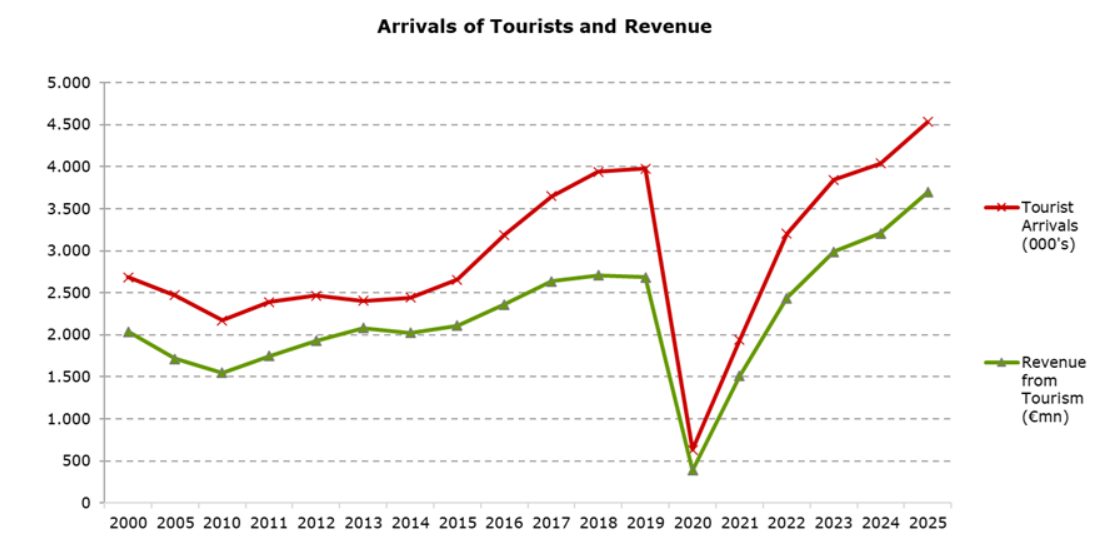
Sometimes a single event ripples across continents faster than any traveler ever could. In April 2026, Cyprus discovered this painful truth when tourism revenues plummeted 35.1% compared to the same month a year earlier. The culprit: escalating conflict in the Middle East that scared travelers away from an island that usually thrives on stability and Mediterranean sunshine.
The numbers tell a stark story. Cyprus pulled in just €197.5 million in April 2026, down from €304.2 million in April 2025. Per-person spending also dipped, from €726.42 to €651.77. For an economy that depends heavily on visitor dollars, this wasn't a minor stumble. It was a crisis.
The trouble began in February when Israeli and US military actions against Iran set off a chain reaction. A drone strike on the British Sovereign Base Area in Cyprus in early March prompted the US State Department to issue a level-three travel advisory, essentially asking Americans to reconsider visiting altogether. European governments followed suit, amplifying the warning signals. Suddenly, a destination known for peaceful beaches and ancient ruins felt unsafe, whether or not that perception matched reality.
March itself proved even worse than April. Arrivals dropped 30.7% and revenues fell 33.8% as the advisory's shock waves hit hardest. By April, the damage was already done. Bookings had evaporated. Flights went half-empty. Hotels that usually overflow with guests during spring found themselves struggling to fill rooms.
The breakdown by visitor nationality reveals which markets suffered most. British tourists, who normally make up Cyprus's bread-and-butter client base, accounted for 39.2% of April arrivals and spent an average of €86.43 per day. Polish visitors came second at 8.4% of arrivals, spending €81.89 daily. German travelers rounded out the top three. None of these markets recovered fully, suggesting the advisory hit hard across Europe.
Deputy Minister of Tourism Kostas Koumis acknowledged the crisis but framed it as an external shock rather than a Cyprus problem. He pointed to broader issues including what he called the "Jet Fuel Crisis" and subsequent instability rippling through European travel markets. The government responded with its usual toolkit: bringing foreign journalists to showcase the island's safety, ramping up promotional campaigns abroad, and strengthening partnerships with tour operators. Whether these measures actually moved the needle remains unclear from the data alone.
There was a silver lining tucked into the statistics. From January through April, the downturn averaged 23.9% rather than the brutal 35% seen in April alone. The first two months of the year, before the conflict escalated, actually saw year-on-year growth of about 7% in both visitors and revenue. That cushion made the overall quarterly impact less catastrophic than it could have been.
Looking ahead, Cyprus faced a strategic question. As the closest EU territory to Israel, the island had benefited enormously from Israeli tourists, who typically made up 13% of visitors. With flight schedules in and out of Tel Aviv beginning to normalize, officials were banking on a rebound during the second half of 2026. The record-breaking 2025 season felt like a distant memory, but recovery seemed possible if geopolitical conditions stabilized.
For travelers thinking about booking Cyprus, the practical takeaway is straightforward: monitor travel advisories and don't assume a destination remains unsafe simply because headlines scream about nearby conflict. Cyprus itself wasn't under attack. Its beaches remained as beautiful as ever. But in the age of instant communication and cautious travel planning, perception often matters more than reality. The island's tourism sector learned this lesson at significant cost. Other Middle East-adjacent destinations have faced similar battles to win traveler confidence back after regional unrest.