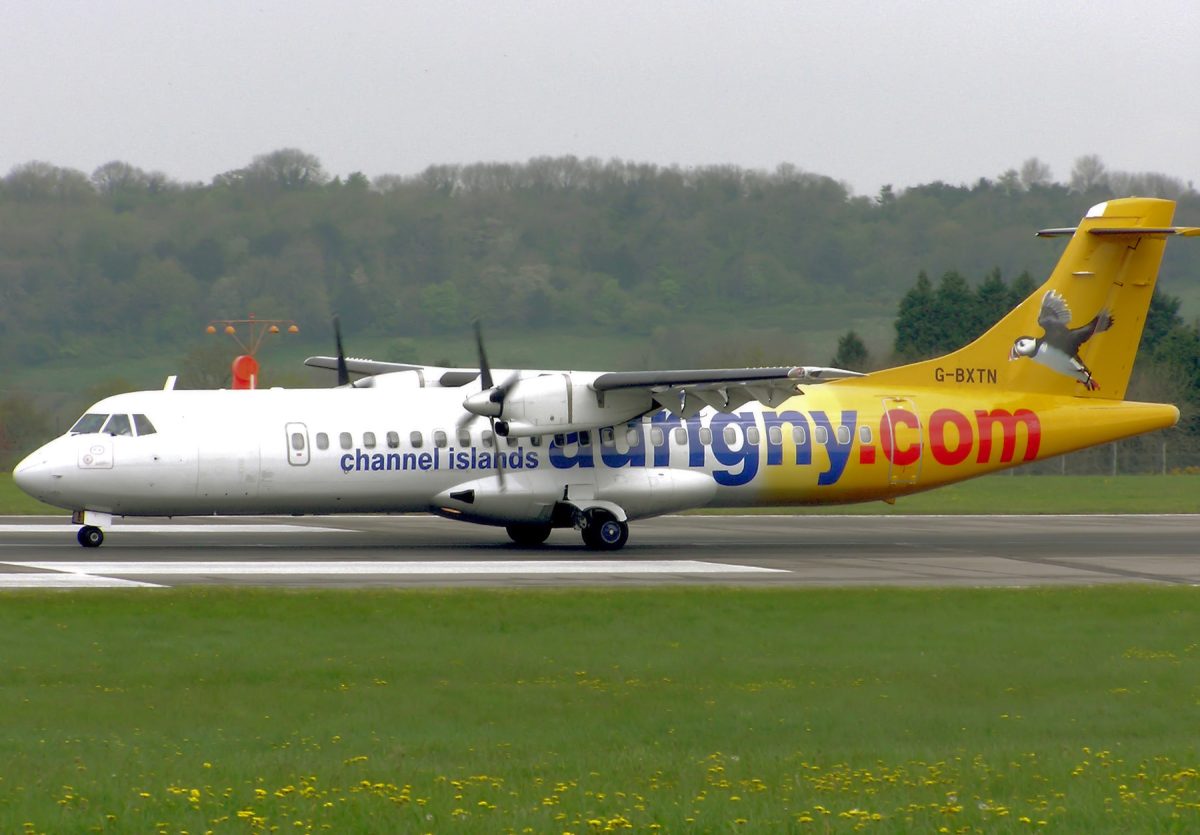
Picture this: you're 30 minutes into a one-hour flight from Guernsey to Manchester on a sunny Sunday afternoon. The cabin is calm, the coast of England is coming into view, and then the crew spots something alarming. A crack in the cockpit windscreen. On June 7, 2026, this scenario became real for passengers aboard Aurigny flight GR678.
The ATR 72 turboprop took off from Guernsey at 5:17 pm that Sunday, heading northeast across the English Channel toward Manchester. But somewhere near Basingstoke in Hampshire, about 45 minutes into the flight, pilots noticed the damage. Following standard safety protocols, they immediately turned the aircraft around and diverted to Southampton Airport, landing safely just minutes later. All 72 passengers and crew walked away without incident.
"In line with standard operating procedures, the flight crew carried out a precautionary emergency landing. Passengers and crew are safe and well," Aurigny stated in a brief statement. There's something reassuring about the matter-of-fact tone. This is exactly what the safety systems are designed for.
What Happens Next for Stranded Passengers
Rather than leaving 72 travelers stuck in Southampton, Aurigny arranged coach transportation to Manchester. It wasn't the arrival they'd planned, but it got them there. Meanwhile, the airline prepared a different aircraft to complete the return service from Manchester back to Guernsey later that evening, ensuring operations could continue. For a small regional carrier serving a self-governing Crown Dependency in the English Channel, this kind of disruption hits harder than it might at a major hub airport.
The incident underscores just how much happens behind the scenes to keep regional air routes running. Regional routes like this one connect remote islands to the mainland, and when something goes wrong, there's no quick alternative. Guernsey sits less than an hour by air from London, making Aurigny's routes essential infrastructure for locals and visitors alike.
2026 Has Been Rough for This Regional Carrier
This emergency landing came at a particularly tricky time for Aurigny. Earlier in the year, geopolitical tensions caused many airlines to reroute and reduce capacity. Aurigny was no exception. In late March, the carrier announced schedule adjustments across several routes between April and early June, citing slower-than-anticipated bookings. Services to London City Airport were cut back, Southwest England routes were consolidated, and Paris flights were delayed. By May, bookings sat about 13 percent below the previous year.
But there was a silver lining. On May 1, Aurigny and Visit Guernsey launched a joint marketing campaign positioning the island as "The Simplest Way to Feel a World Away." The partnership proved potent. A similar effort the year before had boosted visitor numbers by 12 percent, and early signs suggested 2026 might follow suit. The two organizations working in tandem offered something rare: a national airline and national tourism board united behind a single vision.
Then came May 12. Despite global fuel price pressures hitting the entire aviation sector, Aurigny announced an expansion of its Southampton operations. The airline grew its ground handling team there to 18 staff members, signaling confidence in the route and the demand it would serve. It was a bold move in an uncertain year.
The cracked windscreen incident is a reminder that even as carriers expand and invest, safety remains non-negotiable. The pilots made exactly the right call. The systems worked. Passengers got home safely, just with a longer journey than they'd bargained for. That's how regional aviation should function, even when it doesn't go exactly to plan.