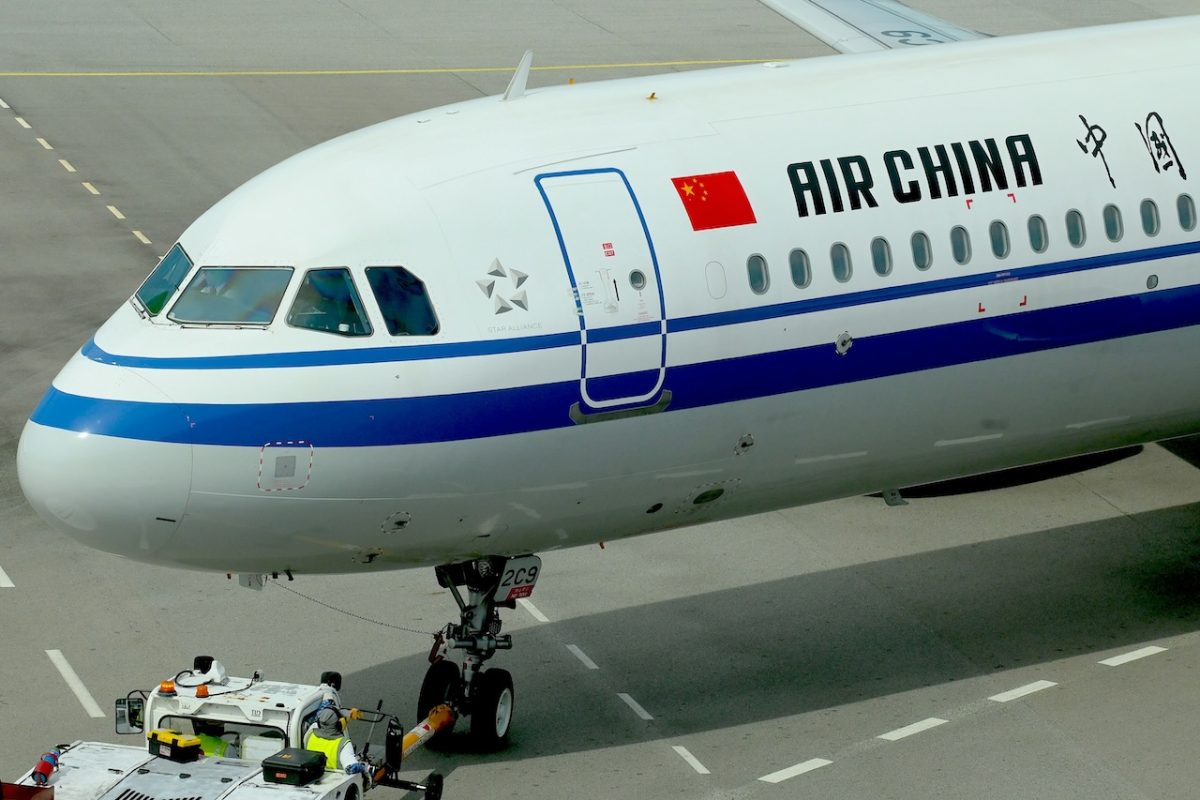
China's aviation market is on a spending spree that would make any travel enthusiast sit up and take notice. Air China, Hainan Airlines, and Shenzhen Airlines have collectively ordered 95 new Airbus aircraft, with a combined list price tag of €15.3 billion. This isn't just corporate spreadsheet shuffling. These orders signal something bigger: the world's second-largest aviation market is preparing for a future of expanded routes, faster connections, and more available seats.
The breakdown reveals how each carrier is positioning itself. Air China and its subsidiary Shenzhen Airlines will receive 55 jets for €10.7 billion combined. Hainan Airlines is acquiring 40 more for up to €4.6 billion. The timing matters too. Most deliveries fall between 2028 and 2032, giving these carriers breathing room to phase in modern aircraft while retiring older models.
What's Actually Getting Delivered
Air China is taking delivery of 15 wide-body A350-900 jets between 2030 and 2032, valued at around €5.2 billion. These are the big dogs of the sky, designed for long-haul international routes where comfort and efficiency matter equally. That order alone will boost Air China's total capacity by 7.1 percent.
Shenzhen Airlines is betting on narrow-body efficiency with 40 A320neo-family aircraft coming between 2029 and 2032 (worth approximately €5.5 billion). Hainan is following suit with its own order of 40 A320neo jets, scheduled to arrive between 2028 and 2032 for up to €4.6 billion. These smaller, fuel-efficient planes are the workhorses of modern aviation, perfect for connecting China's sprawling network of regional hubs.
Beyond the headline numbers, Air China Cargo is deepening its commitment to long-haul freight with additional A350F freighter aircraft to support international cargo operations. Every order reflects a deliberate strategy to modernize aging fleets while preparing for continued growth.
Why Now, When Times Are Tough
Here's where the story gets interesting. These orders arrive at a genuinely difficult moment for Chinese carriers. Elevated fuel prices are crushing margins. Route disruptions over the Middle East have lengthened journeys and inflated operating costs. Unlike many Asian competitors, Chinese airlines hedge relatively little of their fuel exposure, making them particularly vulnerable to price swings.
Air China alone forecasts a net loss of up to 2.6 billion yuan (roughly €327 million) for the first half of the year. Air China, China Eastern, and China Southern combined warned of potential losses totaling 9 billion yuan (€1.14 billion) due to higher fuel costs and weakening passenger demand. Yet they're still ordering hundreds of jets. It's a confidence bet on tomorrow, despite the storms of today.
The Bigger Picture
China is Airbus's largest single-country market, accounting for around 20 percent of the manufacturer's annual deliveries in recent years. More than 2,200 Airbus aircraft already operate across Chinese mainland carriers, representing 55 percent of the market. Airbus is expecting passenger traffic in China to grow by roughly 5 percent annually over the next two decades, which explains why major carriers aren't hesitating to lock in orders now.
The buying spree extends beyond Air China and its affiliates. China Eastern Airlines recently announced plans to purchase 25 A330neo jets for approximately €8.0 billion, following its March announcement to buy 101 A320neo aircraft for around €13.6 billion. In April, China Southern Airlines and its subsidiary Xiamen Airlines agreed to purchase 137 aircraft for €18.4 billion. These numbers barely fit on a spreadsheet.
What does this mean for travelers? More flights, better aircraft, and increasingly competitive pricing as carriers ramp up capacity. Airlines flood markets with new capacity to drive down fares, and Chinese carriers are no exception. Travelers between Asia and Europe, or connecting through Chinese hubs, should expect improved schedules and modernized cabins within the next few years.
Airbus has also woven itself into China's aviation infrastructure in ways beyond selling aircraft. The company operates A320-family final assembly lines in Tianjin, alongside training, engineering, and research facilities across the country. This deep integration means these orders ripple through local supply chains and manufacturing operations. China isn't just buying foreign planes. It's building the capacity to maintain and eventually manufacture them domestically.