Thailand is making a bold move to reshape who visits and for how long. On September 15, 2026, the kingdom will cut the visa-free window in half for passport holders from 59 nations, reducing their stay from 60 days down to just 30. For countries that have been enjoying the expanded access since July 2024, this represents a significant shift in how Bangkok approaches tourism.
The Land of Smiles attracted nearly 33 million foreign visitors in 2025, and tourism has become the lifeblood of the economy. The sector generates about 13 percent of Thailand's GDP, supports 12 percent of jobs, and pumped 1.54 trillion baht (roughly 40 billion euros) into the economy. The government is betting those numbers will climb even higher this year, forecasting around 33.5 million arrivals for 2026. But with success comes friction.
Cracking down on trouble and loopholes
Rising visitor numbers have exposed problems Thailand wants to eliminate. Thailand is drawing a hard line against misbehaving tourists, and the new visa rules are part of a broader enforcement push. In August 2026, the government introduced stricter deportation regulations targeting foreigners who violate local laws or pose security risks. The shorter visa window fits into this larger strategy to maintain order and prevent abuse.
The real target here is what locals call "visa runs." Travelers have been gaming the system by leaving and re-entering Thailand repeatedly to extend their stays indefinitely without a proper long-term visa. The new rules ban this by limiting overland arrivals to twice yearly per person. That makes it much harder to bounce back and forth across borders just to reset the clock.
Who gets 30 days and who doesn't
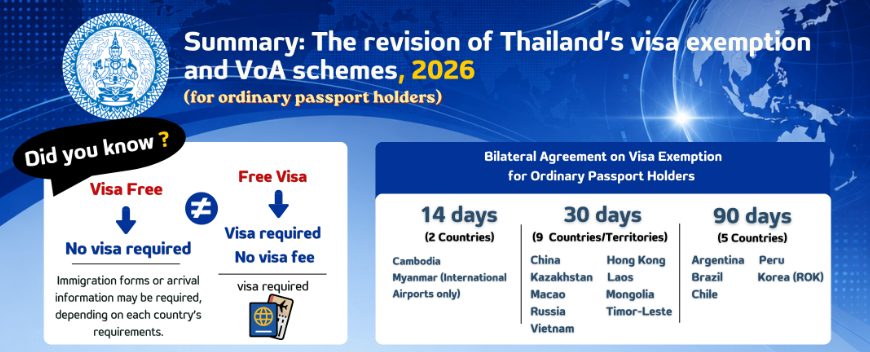
The new 30-day window applies to citizens of Australia, Canada, Japan, South Korea, most of Western Europe, and a long list of other nations. The full roster includes around 60 countries ranging from Italy and France to New Zealand and the United States. But there are wrinkles.
Citizens of Malaysia, Brunei, Indonesia, and Singapore retain special treatment and are exempt from the twice-yearly limit on land crossings. Travelers from the Seychelles and Mauritius get only 15 days visa-free. India loses its Visa-on-Arrival privilege altogether, while Azerbaijan, Belarus, and Serbia gain it. Thailand is ditching cheap thrills for travelers with real money, and that philosophy extends to how it's restructuring its visa tiers.
Prime Minister Anutin Charnvirakul's office framed the changes as necessary for managing tourism "more fairly." The government says the new rules prevent misuse of visa privileges, respect the principle of "one country, one entitlement," and factor in economic, security, and diplomatic concerns. Bangkok also hopes shorter tourist stays will help negotiate better Schengen visa access for Thai nationals and unlock new trade deals.
Staying longer still possible but pricier
Anyone who wanted more time in Thailand before these rules took effect can keep their original allowance for the remainder of their stay. That's a small grace for those already there or arriving before September 15. But for extended stays going forward, travelers have one main option: the Destination Thailand Visa.
The DTV is a five-year multiple-entry visa that allows stays of up to 180 days per entry (renewable once for another 180 days). The catch is financial proof: applicants must show a bank account with at least 500,000 baht (roughly 13,000 euros). Remote workers need employment verification from outside Thailand. It's not prohibitively expensive by global standards, but it's a clear signal that Thailand prefers quality over quantity when it comes to long-term guests.
The September 15 deadline gives travelers a few months to adjust plans or decide whether to chase a longer-term visa option. For casual tourists and digital nomads who liked the old 60-day window, it's a wake-up call. Thailand is no longer playing host to everyone equally. The kingdom is getting pickier about who stays and for how long, betting that paying more for quality tourism experience will serve its interests better than managing endless stream of budget travelers.