Getting bumped to a later flight is travel's most frustrating consolation prize. You're stuck with a confirmed seat on a departure that's hours away, but somewhere in the sky, there might be an earlier flight with space. The usual move? Stare at your phone and refresh obsessively, or hunt down an agent at the gate. United Airlines just made that exhausting game obsolete.
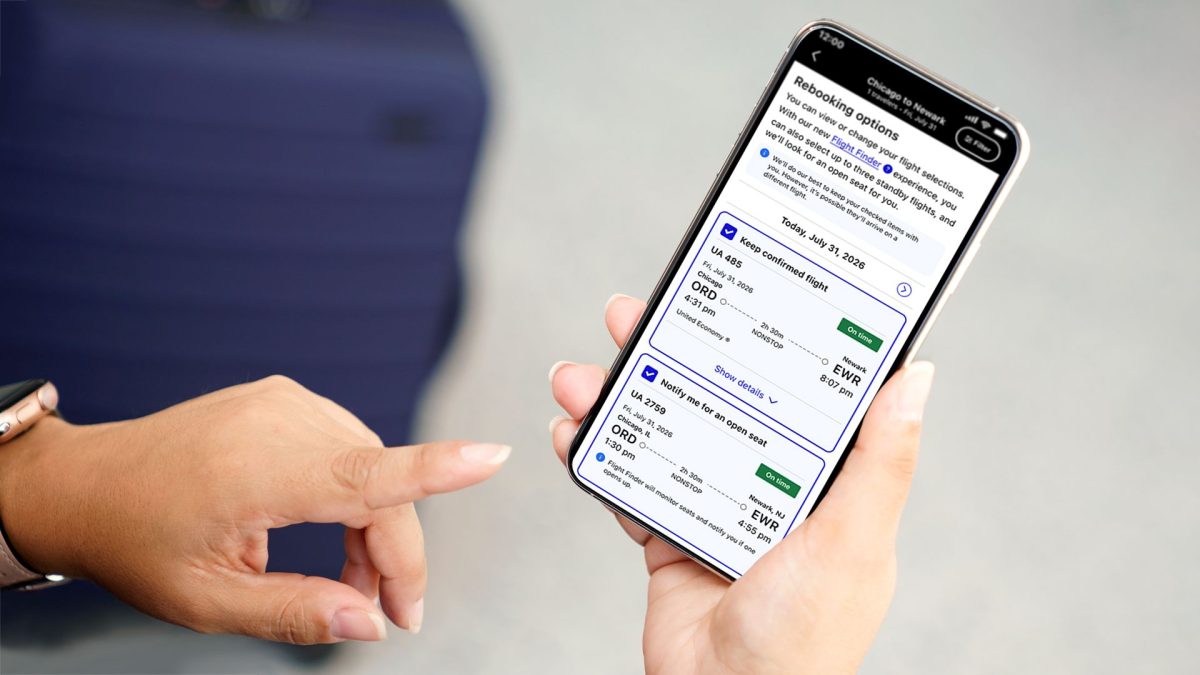
The carrier rolled out a new mobile app feature in early September 2026 that fundamentally changes how disrupted passengers can fight back. If you've been rebooked onto a later flight due to a delay or cancellation, you can now request standby status on up to three earlier flights heading to the same destination. Here's the part that matters: your original confirmed seat doesn't disappear while you wait. It stays locked in. Only if a seat opens up on an earlier flight, and you choose to take it, does your rebooking change.
How the standby hunt actually works
Most standby situations leave passengers hanging. You're essentially on an invisible waitlist with no guarantees and no real-time information. You have to manually check the app, call the airline, or camp out at a service desk. United's new system flips this. You pick up to three earlier flights through the app and then set it down. The airline's systems continuously scan for available seats in the background. When one materializes, you get a text message. You can accept the new flight, reject it and stick with your original booking, or ignore it entirely and keep your confirmed seat. No refreshing required. No frantic gate sprints.
"This feature reflects our commitment to making travel more seamless and less stressful for our customers," said Jennifer Schwierzke, United's Vice President of Customer Operations, Strategy and Execution. The airline calls this combination of multi-flight standby protection plus a guaranteed backup reservation an industry first.
The timing is strategic. United rolled this out right before the heavy Labor Day travel period in early September, when the carrier alone expected to move 3.4 million passengers between September 3 and 8. That's roughly 300,000 more travelers than the same window the year before. During those crush periods, you might have five flights to your destination in a single day, but exactly zero available seats on any of them. This tool can't magic up empty seats on a full aircraft, but it saves you from wasting mental energy and battery life hunting for a solution that doesn't exist.
Why this matters most for hub travelers
The feature becomes genuinely powerful if you're flying through one of United's major hubs like Chicago, Houston, or Denver. A missed connection at those airports can mean waiting six, eight, even ten hours for the next departure to your destination. Instead of joining a queue at the customer service desk that could rival a theme park line, you tap your phone, submit your standby requests, and go grab coffee. If a seat opens, you're already armed with the information you need to make a split-second decision.
This is part of a bigger app overhaul United has been building. The mobile tool already handles flight rebooking, delivers eligible meal and hotel vouchers, tracks checked baggage, and shows live security wait times at major hubs. There's even integration with Apple AirTag and Find My network accessories, so you can share your bag's location with customer service if it gets delayed. Other carriers are investing in passenger experience upgrades too, but United's focus on the disruption management side reflects where real frustration happens.
The app also runs ConnectionSaver technology, which assesses whether a connecting flight can hold for passengers arriving late without cascading delays across the network. When that calculation gets tricky, the new standby feature becomes another escape route.
What this doesn't fix
Apps are powerful, but they have hard limits. If your itinerary is complex, you need wheelchair assistance, or there are no additional flights to your destination, you still need a human agent. Weather delays, crew shortages, air traffic restrictions, and mechanical issues require real intervention, not notifications. The standby tool gives you more agency over the options that technically exist. It doesn't create options where none exist.
One practical note: your phone needs battery and a working text connection. Keep the device charged and make sure United can reach your number. If you're boarding the earlier flight and your hands are full with luggage, you need to be ready to move.
As air travel continues expanding at record volumes, handling disruptions smoothly becomes a competitive advantage. United is betting that giving passengers real visibility and control, even within constraints, beats the old model of uncertainty and manual intervention. For your next delay, that's one less reason to rage at the customer service desk.