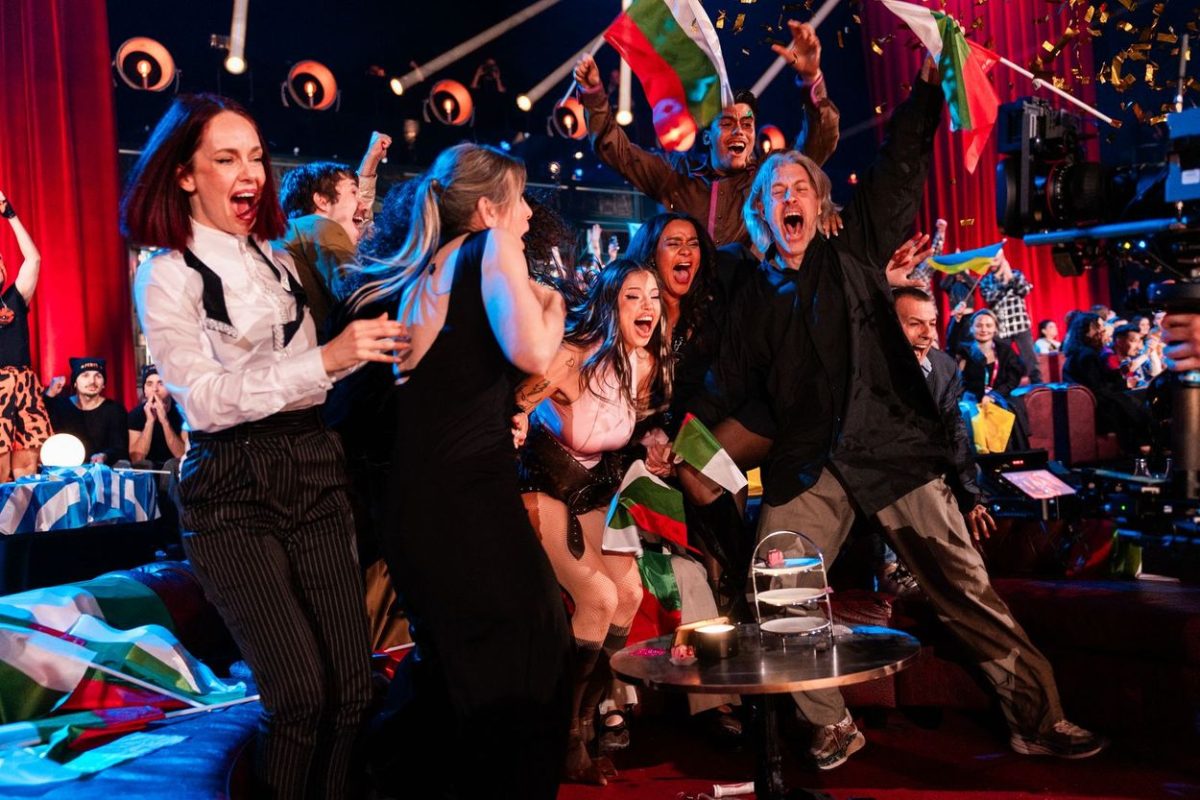
Vienna's Wiener Stadthalle erupted on the night Bulgaria finally broke through. Pop sensation Dara delivered what can only be described as a career-defining moment, commanding the stage with her relentless earworm "Bangaranga" and walking away with 516 points to claim the 70th Eurovision Song Contest. For a nation that has been competing since 2005, this felt less like a victory and more like a long-overdue coronation.
The final moments were genuinely nail-biting. For most of the evening, Israel's Noam Bettan looked destined to win with his rock ballad "Michelle," a multilingual track delivered in Hebrew, French, and English that had secured robust support across Europe. The arena was split when he performed, with enthusiastic cheers mixed alongside boos from sections of the crowd. His jury scores were strong, and many expected him to hold on. Then the public vote came in, and everything shifted.

What makes Dara's triumph especially notable is how thoroughly she dominated. "Bangaranga" swept both the jury and the public vote, a double victory that hadn't happened since 2017. The track's infectious energy and precision choreography cut through a crowded field of 25 finalists. Despite entering the night as something of an underdog, Dara built momentum with every performance segment. Her winning margin ranks among the largest in Eurovision history, suggesting the public and the professional judges were singing from the same hymn sheet.
The contest itself was a production spectacle befitting the milestone year. Nearly 11,000 spectators packed the Vienna venue, while viewers from 148 countries cast votes from home and abroad. Austrian broadcaster ORF designed the event around the theme "United by Music," an aspiration that felt both earnest and somewhat tested by the week's political backdrop. Five European nations (Spain, Ireland, the Netherlands, Iceland, and Slovenia) boycotted the contest entirely, citing concerns over Israel's participation and the broader geopolitical tensions affecting funding and audience sentiment. Demonstrations took place in Vienna in the days leading up to the final, a reminder that music contests operate in the real world, complete with its complexities.

Australia's Delta Goodrem finished fourth with "Eclipse," followed by Italy's Sal Da Vinci in fifth place. Finland's Pete Parkkonen and Linda Lampenius, despite their reputation as contenders, landed in sixth. The United Kingdom's Sam Battle completed another frustrating streak for British Eurovision fans, collecting zero points from the public vote for the fourth consecutive year. That's a statistic worth paying attention to if you're tracking the continent's music preferences.
For travelers planning a trip to Vienna or looking to explore Bulgaria's growing appeal, Bulgaria's wellness boom is rewriting what Europe expects from a bargain destination, making it an increasingly attractive post-contest destination. The victory will likely amplify interest in Sofia and the country's cultural scene, especially among music fans and Eurovision enthusiasts.
The technical side of Eurovision 2026 also deserves mention. Organizers invested heavily in energy-efficient lighting systems and upgraded broadcast technology, demonstrating how the contest continues to push the boundaries of live television production. When you're coordinating a live show with millions of simultaneous viewers across continents and handling real-time voting from dozens of countries, the infrastructure behind the curtain matters as much as the performances in front of it.
Bulgaria's breakthrough represents something genuine in an age of music streaming and algorithmic recommendations: a competition where surprises still happen, where a performance can shift the room's energy mid-evening, and where a nation gets its moment after two decades of trying. Eurovision remains gloriously unpredictable, and Vienna's final proved that premise hasn't worn thin.