Brussels has a problem that's getting worse every summer. As heatwaves grip the continent with increasing ferocity, Europe's only major capital city with over a million residents still lacks a permanent outdoor public swimming pool. That gap is finally about to close, though patience will be required.
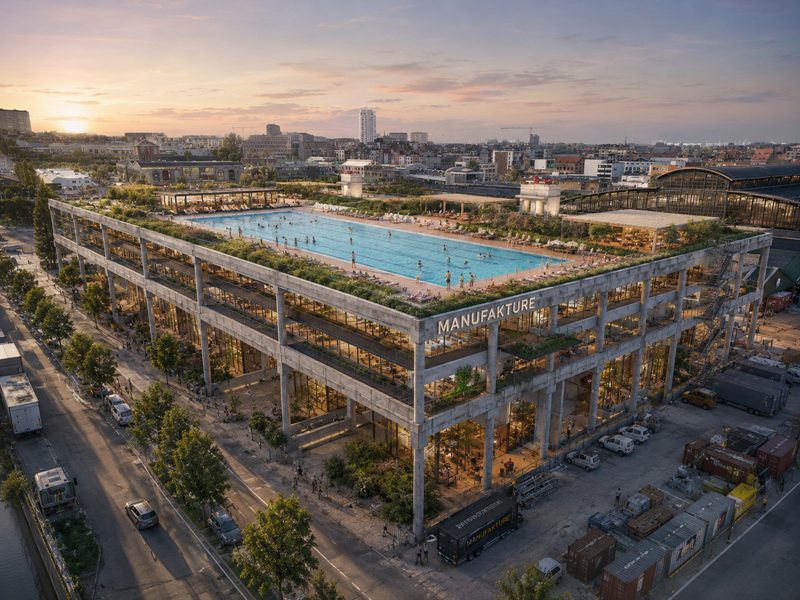
The Brussels-Capital Region has officially approved the tender process for a sprawling rooftop pool complex set to rise above Manufakture, a new food production hub being constructed on the historic Abattoir site in Anderlecht. The project has spent years in development, but regional officials announced this year that momentum is building again. Secretary of State for Urban Renewal Ans Persoons emphasized the stakes: "Cooling down should not be a privilege for those who have the space or the means. The city is only getting hotter, so this project is becoming increasingly important."
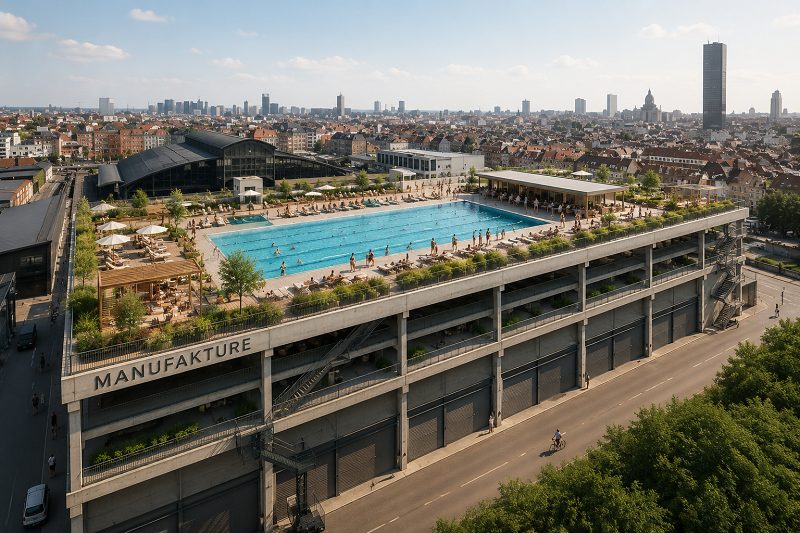
The vision is ambitious. Three separate pools will occupy the rooftop: a 25-metre indoor facility reserved for schools and sports clubs, a smaller teaching pool, and a 25-metre outdoor pool open to the public throughout summer. Around the water, planners envision recreational and relaxation areas offering sweeping views across the Brussels skyline. The complex expects to welcome nearly 400,000 visitors annually during at least 3,500 operating hours across 50 weeks per year. Admission will match other public pools in Brussels, with discounted rates for schools and select groups.
What makes this project clever goes beyond the pools themselves. Manufakture's refrigerated chambers, designed to keep food cold, naturally generate heat and energy as a byproduct. Rather than waste that thermal energy, engineers plan to channel it directly into heating the pool water. It's the kind of practical efficiency that defines smart urban development.
Why Brussels took so long
Historically, Brussels offered swimmers plenty of open-air options scattered across the city. By the second half of the 20th century, most had disappeared, leaving residents dependent on private clubs or facilities outside town. Brussels finally gets its rooftop pool, but you'll wait until 2029 captures the long saga of this particular project, which dates back to 2022 when Pascal Smet (then Secretary of State for Urbanism) first proposed transforming the Abattoir site.
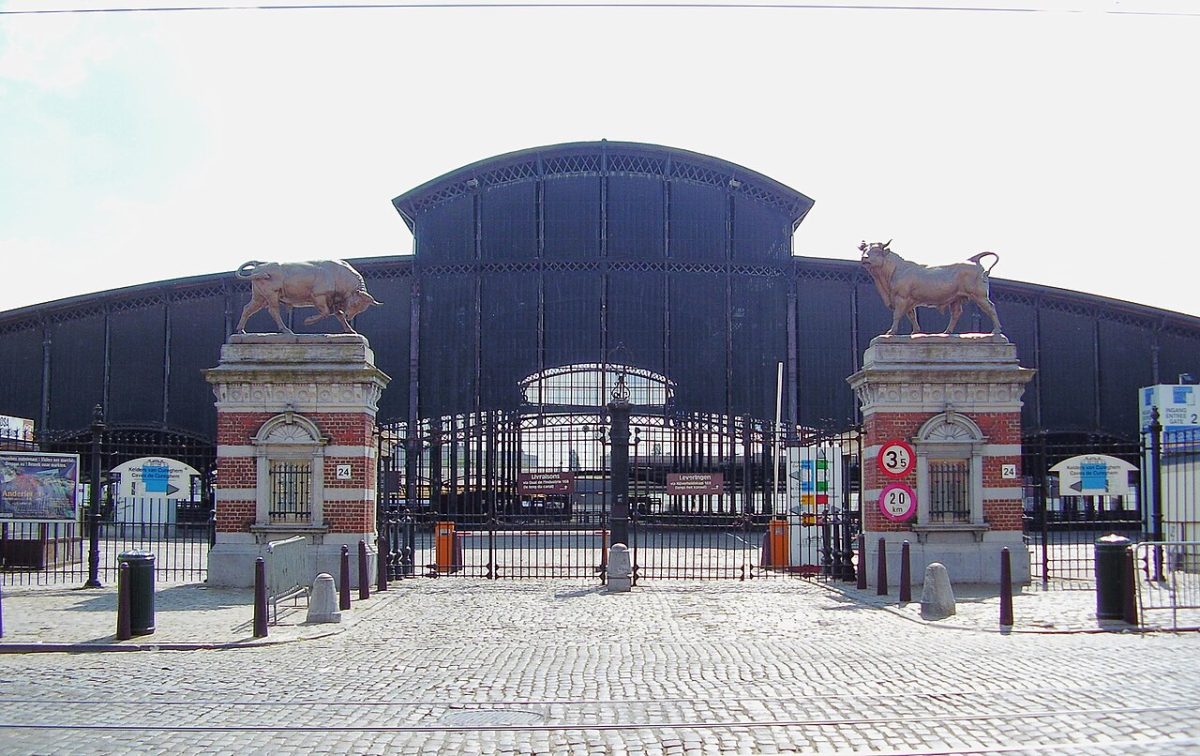
The Abattoir itself is worth noting. The former slaughterhouse evolved into something unexpected over the decades: a vibrant marketplace for local producers, food artisans, and cultural events. The underground Cureghem Cellars became legendary for hosting unforgettable gatherings before pandemic closures interrupted that chapter. Adding a public pool to this mixed-use neighborhood represents the next phase of its renaissance.
Previous attempts to expand Brussels' swimming options have stumbled. A natural swimming pond proposed for Neerpede encountered fierce local opposition centered on noise and wildlife concerns. An earlier 350-metre pool concept at Quai des Péniches collapsed under funding shortfalls. Currently, Brussels and Port authorities are exploring a more modest alternative: a supervised swimming lane carved into the canal itself. Until those smaller projects materialize, swimmers seeking relief from summer heat must venture to spots like Renipont beach in nearby Lasne or IJsevijver in Overijse.
The timeline and partnership
Here's where patience enters the picture. Construction is not expected to begin before 2029, with the winning contract likely awarded in 2028. The project operates as a design-build-finance-maintain-operate (DBFMO) partnership, meaning the successful bidder handles everything from initial design through ongoing maintenance and operations. Around 4 million euros has already been secured from regional and community funding bodies, and preparatory work including roof reinforcement is complete.
The partnership bringing this to life spans multiple government layers: the Brussels-Capital Region, the Flemish Community Commission (VGC), the municipality of Anderlecht, and the Brussels Urban Development Corporation. That complexity explains some of the delays, though it also reflects the genuine commitment across jurisdictions to making this happen.
For travelers and residents alike, this pool represents something bigger than just a place to swim. It signals a capital city finally addressing one of Europe's most glaring urban gaps. When those diving boards eventually rise above the Abattoir in the late 2020s, Brussels will join the ranks of truly livable European cities.