Brussels is sweating. Literally. As heatwaves hit harder and more often, Belgium's capital finds itself in an awkward predicament: it's the only European city with over a million residents that doesn't have a permanent public outdoor swimming pool. That gap in infrastructure is finally getting plugged, though anyone hoping for a quick dip will need to exercise patience.
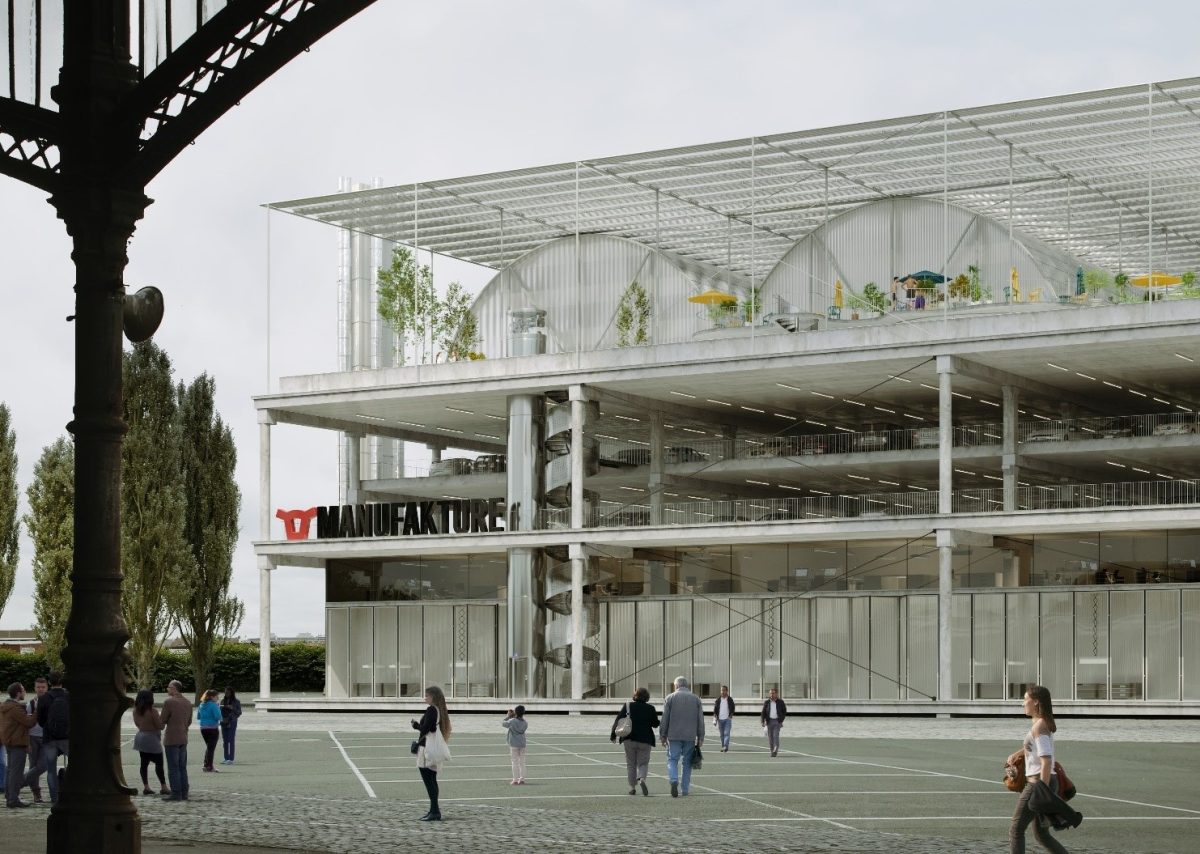
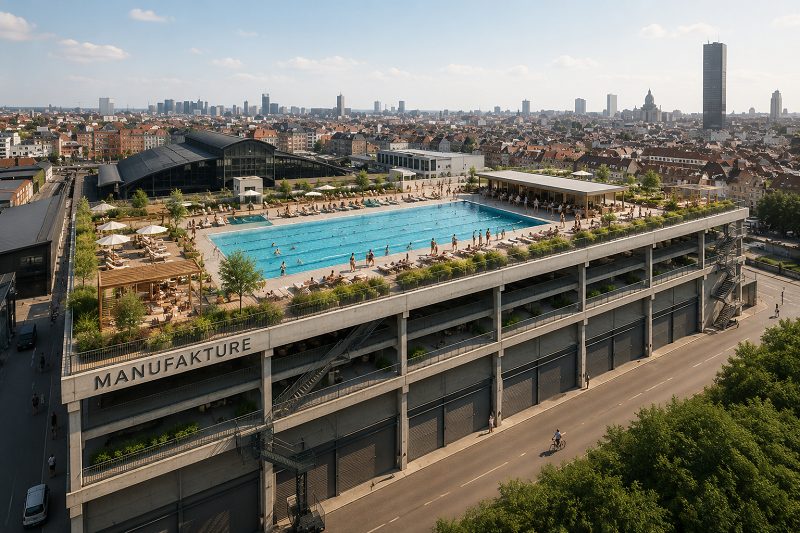
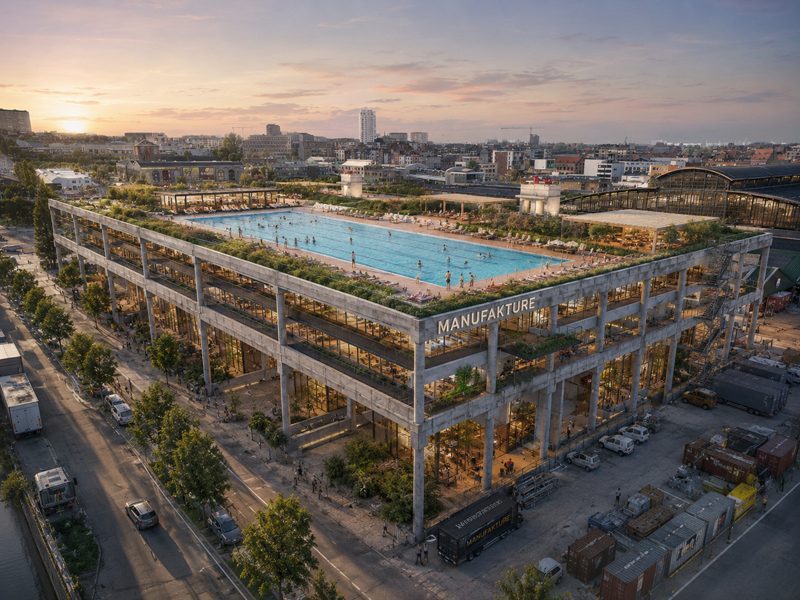
The regional government just greenlit the tender process for an ambitious rooftop pool project in Anderlecht, turning an old industrial site into something that could reshape how locals cool off during summer. The transformation centers on the historic Abattoir district in Cureghem, a former slaughterhouse that has already reinvented itself as a cultural and food production hub. The pool will sit atop Manufakture, a new food production facility currently under construction on the same grounds.
This isn't a sudden idea. Plans were first approved back in 2022, pitched by then-Secretary of State Pascal Smet as part of a broader rejuvenation of the neighborhood. But like many ambitious urban projects, it got tangled in paperwork. Years of negotiating between the Brussels-Capital Region, the Flemish Community Commission, Anderlecht's municipality, and the Brussels Urban Development Corporation meant progress stalled. Now, with infrastructure investments gaining momentum across the Belgian capital, the pool is moving forward.
Secretary of State Ans Persoons made the announcement clear: "Cooling down should not be a privilege for those who have the space or the means." It's hard to argue with that logic as summer temperatures continue climbing. The city isn't getting cooler anytime soon, making public access to swimming essential.
What you'll actually get
The design is thoughtful. Plans include a 25-metre lap pool for serious swimmers and sports clubs, a smaller teaching pool for kids, and a 25-metre outdoor pool that opens seasonally. Visitors will also find recreational lounging areas with views across the Brussels skyline, the kind of spot that transforms a swim session into an actual experience rather than just utility.
Here's a clever bit of engineering: the refrigerated storage rooms used by food producers below naturally generate heat while keeping products cold. That waste heat gets recaptured to warm the pool water, making the whole operation more sustainable. Around 3,500 hours of annual operation is planned across 50 weeks, welcoming schools, clubs, and the general public. Admission will track with other Brussels public pools, with discounts for students and specific groups.
Nearly 400,000 visitors annually are expected once it opens, potentially making it one of the city's busiest public facilities. That number reflects just how desperate Brussels residents are for decent outdoor swimming options.
The long wait ahead
Here's the catch: construction won't begin before 2029 at the earliest. A public-private partnership model means a single company will handle everything from design and financing through operation and maintenance. The contract goes to tender now, with the winning bid expected in 2028. About 4 million euros is already committed from local authorities, with preparatory work (including roof reinforcement) completed.
This timeline frustrates many, but it reflects the complexity of building quality public infrastructure in a densely packed capital. Previous pool proposals in Brussels haven't fared well. A natural swimming pond in Neerpede stalled after neighbors complained about noise and wildlife disruption. An ambitious 350-metre pool at Quai des Péniches was scrapped due to funding shortfalls. Now city planners are considering a more modest option: a single supervised swimming lane in the canal itself.
If you're visiting Brussels before 2030 and need to escape summer heat, your options outside the city are limited but doable. Renipont beach in Lasne, IJsevijver in Overijse, Hofstade beach, and the provincial domain in Kessel-Lo all offer relief, though none are convenient for casual trips into central Brussels. For now, private sports clubs and hotel pools remain the main refuge for swimming.
The Anderlecht rooftop pool won't solve everything overnight when it finally arrives, but it will signal a genuine shift in how Brussels manages public space and quality of life. Sometimes progress just takes time, even in a city that desperately needs to cool down.