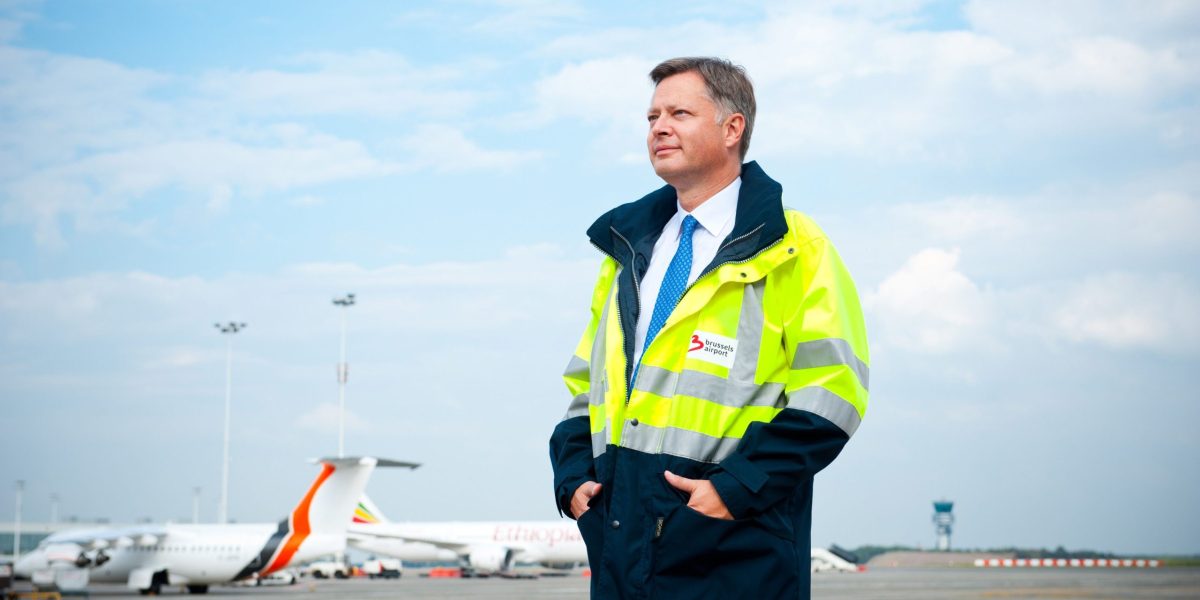
Arnaud Feist, the man who guided Brussels Airport through financial crises, terror attacks, and a global pandemic, is calling it quits. He will step down as CEO at the start of 2027, ending a 17-year run at the top and a 20-year career at the airport. The news broke on Wednesday via Belgian business daily De Tijd, which reported that his departure follows tensions with the Flemish government, now the airport's largest shareholder.
Feist's exit was discussed at a board meeting the evening before the announcement. According to De Tijd, the disagreement centers on how the airport is run day to day. Since the Flemish government took its stake, pressure on the company's dividend policy has grown. The newspaper also noted that the airport, led by French-speaking Feist, has become more exposed to political and linguistic tensions since the N-VA party came to power. Neither Feist nor the Flemish government commented on the report.
The official announcement makes no mention of any dispute. Instead, Feist's statement is full of warmth. "Leading Brussels Airport has been one of the greatest privileges of my career," he said. "For me, it has always been more than a job. It is a passion. And what has kept that passion alive is the people here. It has been an honour to lead Belgium's second-largest economic engine and help connect people and businesses here with the rest of the world."
Feist joined Brussels Airport Company as CFO in 2005, shortly after privatization. When he became CEO, his first priority was to restore the company's finances after the 2008–2009 financial crisis. Under his leadership, the airport added new intercontinental routes, and annual passenger numbers rose from 17 million to around 25 million. He also made pharmaceuticals a priority for cargo, and Brussels became one of the world's leading pharma hubs.
The terminal changed dramatically during his tenure. The Connector project opened, and the historic 1958 terminal was renovated and reopened as the Skyhall. Last year, the airport presented its Hub 3.0 programme, which includes larger departure and arrival halls and a new hotel and office complex. "We have laid strong foundations for the airport's future," Feist said. For travelers, these upgrades mean more space, better connections, and a smoother experience, something that matters as Europe's airports face record crowds.
The board also paid tribute to his role after the terrorist attacks of 22 March 2016, one of the darkest periods in the airport's history. It said Feist would "undoubtedly be remembered for the leadership, determination and compassion he showed" as he helped organize support for victims and get operations running again. That crisis tested his mettle, and his response earned respect across the industry.
Feist will stay on as CEO until the end of 2026 and will work with Davy Vreys, currently the airport's CFO, on the handover until early 2027. Vreys will become interim CEO on 1 January 2027 while the board searches for a permanent successor. "Our immediate priority now is to work with the Executive Committee to ensure continuity and a smooth handover," the board said. It added that it has "full confidence" in Vreys and the airport's team.
For travelers, the change at the top shouldn't disrupt plans. Brussels Airport remains a major hub, and its expansion plans are on track. If you're flying through soon, you might also want to check out the new free Starlink Wi-Fi on Brussels Airlines, a nice perk for your journey. And if you're curious about what else is happening in the city, Brussels is also becoming a hotspot for tourism deals.
Feist's legacy is one of resilience and growth. He took over during a financial crisis and leaves the airport stronger than ever. The next CEO will have big shoes to fill, but the foundations are solid. As Feist himself said, "We have laid strong foundations for the airport's future." The question now is whether the political tensions that reportedly pushed him out will shape that future in unexpected ways.