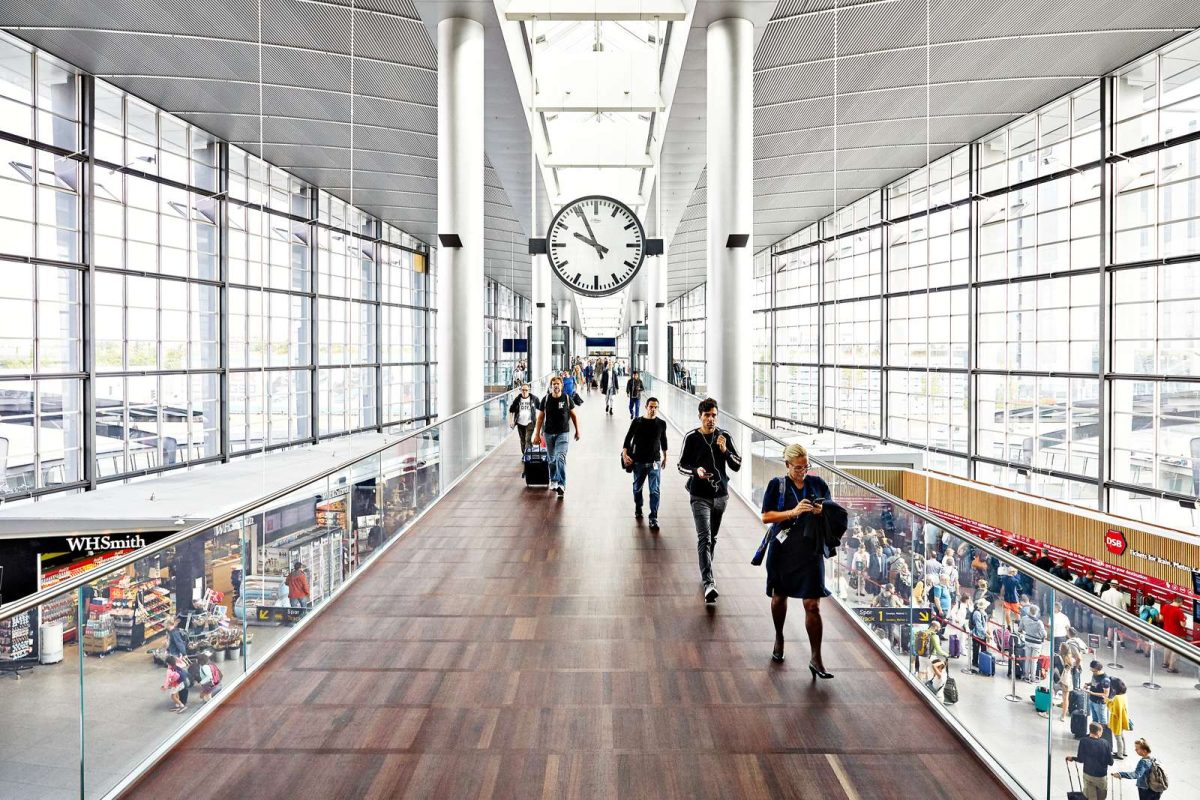
Copenhagen Airport is thinking big. On Monday, the airport's operator announced a sweeping expansion plan that could boost its capacity to 55 million passengers a year, a jump of nearly 60% from the 34.5 million expected by the end of 2026. The move comes as global air travel demand continues to climb, with IATA projecting it will double by 2050.
The Danish Planning and Rural Authority is currently drafting a new planning basis for the airport, which sits just eight kilometers from the city center. The plan outlines a major overhaul of the existing footprint, not a move to a new site. It includes space for larger aircraft in the northwestern area, a repositioned and shortened transverse runway, and expanded terminals and passenger facilities. The goal is a flexible design that can adapt to future needs in safety, sustainability, and technology.
“As a small country with an open economy, Denmark is deeply dependent on connections to the rest of the world,” said Christian Poulsen, CEO of Copenhagen Airport. “They give Danish companies access to markets, bring tourists and investments to Denmark, and connect us with the world.” That sentiment echoes a broader trend across Europe, where airports are scrambling to keep up with record passenger numbers. If you've flown recently, you know the squeeze. Europe's airports are busier than ever, and this expansion is Copenhagen's answer to that pressure.
But the plan isn't just about cramming more people through the gates. The airport is also committing to limit its environmental impact. New aircraft stands will accommodate next-generation planes that carry more passengers while producing less noise and fewer emissions. The airport will also expand its noise barriers and add noise-canceling cladding to buildings. And they're designing the layout to minimize the time planes spend taxiing with engines running, which cuts air pollution on the ground.
“We are very aware that the many benefits of a strong airport come with a disadvantage for the environment,” Poulsen said. “Therefore, we must continue to find new ways to reduce our footprint. It is our responsibility to ensure that the increase in routes and passengers does not mean a corresponding increase in noise and pollution.”
For travelers, the expansion could mean smoother journeys through one of Scandinavia's busiest hubs. The airport has already been working on improving the passenger experience, though not without hiccups. Earlier this year, new security checks caused 550 people to miss their flights, a reminder that growth comes with growing pains. Still, the long-term vision is clear: more gates, more space, and a more efficient flow.
The planning basis is expected to be completed by 2028. Once approved, the airport can start implementing individual elements, though a final timeline for construction hasn't been announced. If you're planning a trip to Copenhagen, don't expect to see cranes overnight. But the city's iconic airport is preparing for a future where it's not just a gateway to Denmark, but a major European hub. And with Copenhagen's new water house drawing visitors, the city is clearly betting on more arrivals.
For now, the message is one of cautious optimism. The airport wants to grow, but it wants to do so responsibly. As Poulsen put it, the framework must be flexible enough to evolve with Denmark's needs. That means balancing economic benefits with local quality of life, a challenge many airports face. Brussels' fight against airport noise shows how tricky that balance can be. Copenhagen's plan, with its emphasis on quieter aircraft and better insulation, is an attempt to get it right.
So, what does this mean for you? If you're flying into Copenhagen in the next few years, expect some construction and possible disruptions. But the end result could be a world-class airport that handles the surge in travel without the chaos. And if you're worried about the environment, the airport's commitments are a step in the right direction. The future of travel is coming, and Copenhagen wants to be ready.