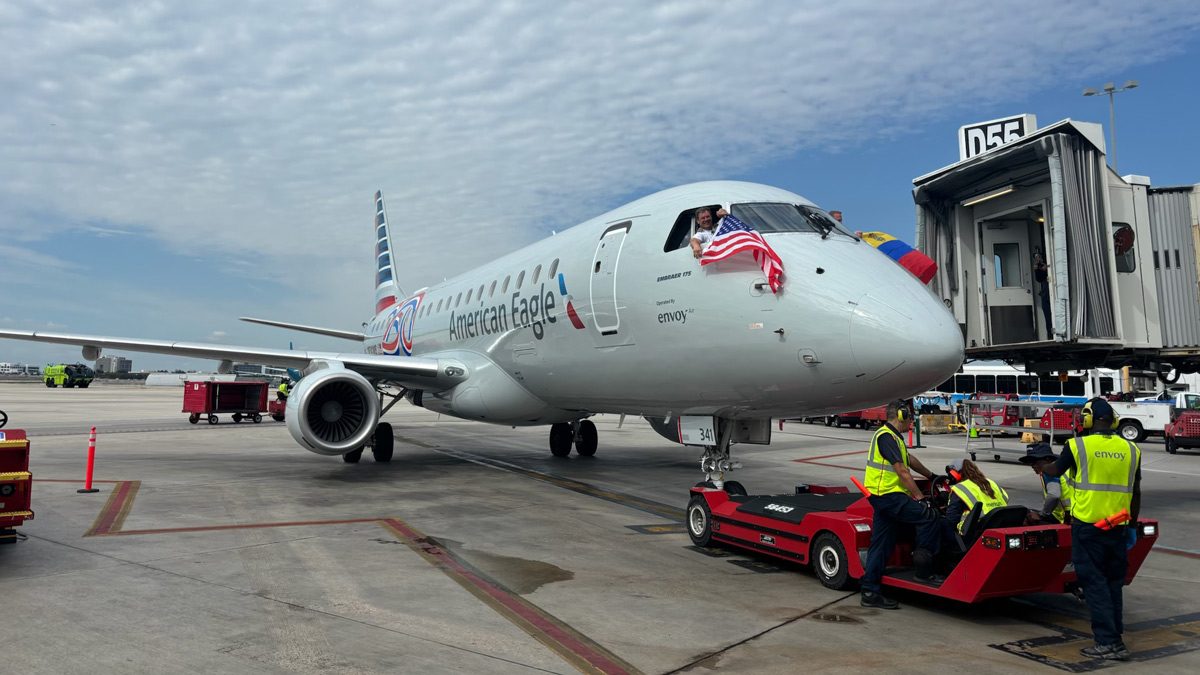
On April 30, an American Airlines flight touched down in Caracas after a three-hour journey from Miami. It was a moment laden with symbolism: the first direct commercial flight between the two cities in seven years, complete with government officials, ceremonial flags, and arepas served in coach. Yet beneath the celebratory atmosphere sits a more complicated picture of economic opportunity, geopolitical shift, and the very real cost of reconnection.
The suspension had lasted since 2019, when American Airlines became the last US carrier to withdraw amid Venezuela's deepening political crisis. Delta and United had already departed in 2017. Now, daily service has officially resumed, with plans for a second daily flight beginning May 21. This time, the journey came with clearance from the US Department of Homeland Security and a notable passenger list: Jarrod Agen from the National Energy Dominance Council led the US delegation, while Venezuela's newly appointed ambassador to the US, Felix Plasencia, was aboard.
The context matters. Former Venezuelan leader Nicolas Maduro was arrested in a high-profile US operation this January on drug trafficking charges, which he denies. His removal has fundamentally shifted the political landscape. Some celebrated it as an end to authoritarian rule that had devastated the economy and sent roughly seven million people fleeing the country. Others condemned it as unlawful interference in a sovereign nation's affairs. The Biden administration's approach and Trump's current strategy differ markedly, with the new administration actively rolling back sanctions to encourage investment.
The business case gets real fast
The reopened route isn't just about tourism or family reunions. US energy interests see opportunity. Venezuela sits atop massive reserves of oil, gold, iron ore, bauxite, coltan, and industrial diamonds. Companies like HKN Energy and Hunt Energy are already exploring re-entry into markets that have been largely closed for years. Chevron, notably, never fully left. The Trump administration is negotiating energy agreements with PDVSA (Venezuela's state oil company) and positioning itself to capitalize on what officials frame as an economic recovery.
But here's where the celebration encounters reality. Return fares for early May flights started at over $1,200 when booked through Miami. Prices drop significantly if you're willing to take a detour through Bogota (between $390 and $900), but that defeats the purpose of a direct connection. Meanwhile, Venezuela's average monthly salary sits well below $200. Years of hyperinflation have crushed purchasing power. For most Venezuelans, airfare represents an impossible expense.
Family reunion or exclusive escape
Miami-Dade County Mayor Daniella Levine Cava framed the resumption as a human triumph: "Parents to reconnect with children, grandparents with grandchildren, and families with the place they once called home." That vision has merit. The diaspora is massive, and for those with resources, direct flights to Caracas offer something precious. But access requires money Venezuela's citizens don't have.
Then comes the US visa requirement. Americans can board relatively freely (though Homeland Security vetting is required). Venezuelans wanting to reverse the journey face the full immigration apparatus, compounded by years of economic collapse that make it difficult to demonstrate ties or means to return home. The one-way journey is achievable; round-trip mobility remains a luxury.
Democracy at a different speed
Former US official Juan Gonzalez captured the tension neatly during an interview with CBS News: "The economic opening in Venezuela is like a bullet train. The democratic process is on a chicken cart." Venezuela's acting president, Delcy Rodriguez, leads the interim government. The administration is pushing for reforms to attract investors, but political transformation moves slower than commerce ever does.
The route opens a door, certainly. It signals that major international carriers now see Caracas as viable again, that US policy has shifted toward engagement, and that something has shifted in the political moment. But who passes through that door, and whether the journey strengthens Venezuela's recovery or merely enriches extractive interests abroad, remains very much unsettled. For travelers, the route now exists. Whether it's accessible or advisable depends entirely on your position in the world's economics.