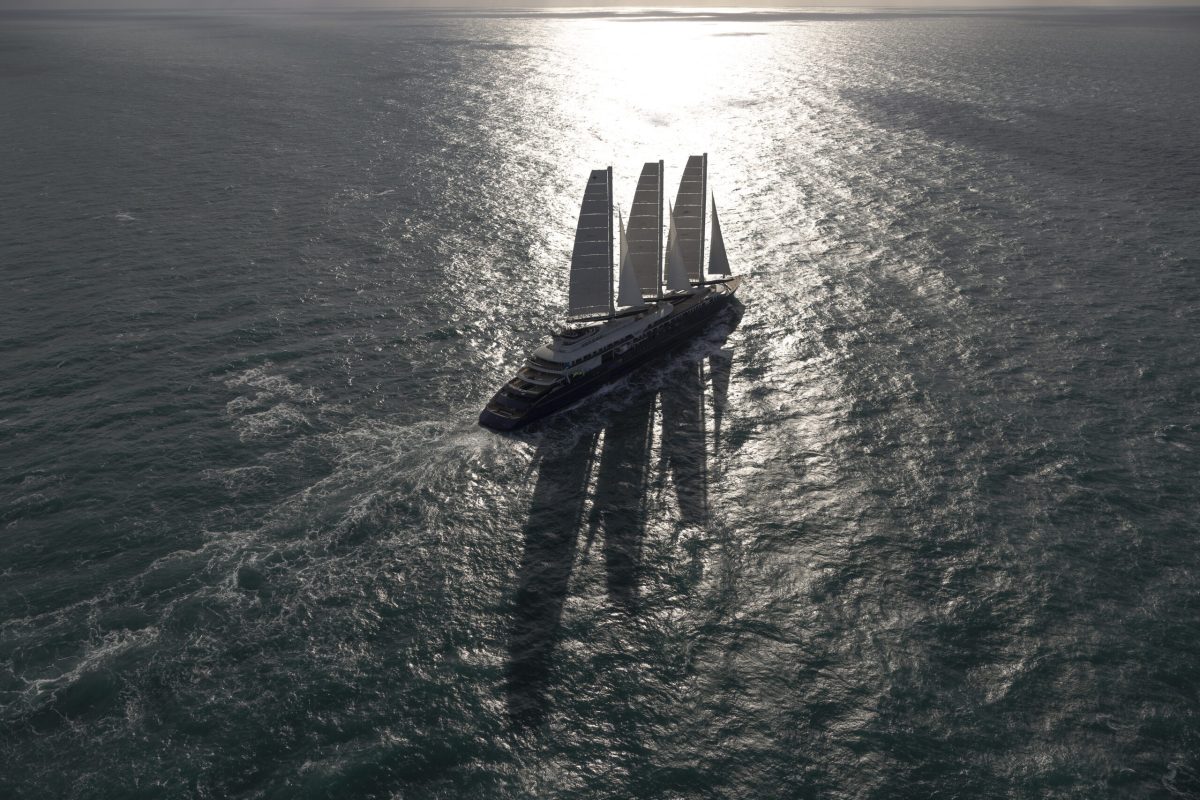
Saint-Nazaire had a moment worth remembering on April 29. As four French jets screamed overhead trailing the tricolour, workers unveiled the Orient Express Corinthian, a 220-metre vessel that weighs 15,000 tonnes and fundamentally challenges what a luxury ocean voyage should be. This isn't just another mega-yacht. It's the first ship of its size designed to sail primarily on wind power, a radical rethinking of how we travel across water.
The Corinthian took a decade of research and development to reach this point. Chantiers de l'Atlantique, the legendary French shipyard that built the SS Normandie back in the 1930s, handled the construction. That historical precedent matters. The Normandie represented the golden age of grand travel, and the Corinthian wears that legacy openly. Its three rotating SolidSail units capture wind from any direction automatically, while tilting masts let the ship pass under major bridges. During February 2026 sea trials, the Corinthian hit 12 knots on wind power alone. For a ship this size, that was unprecedented.
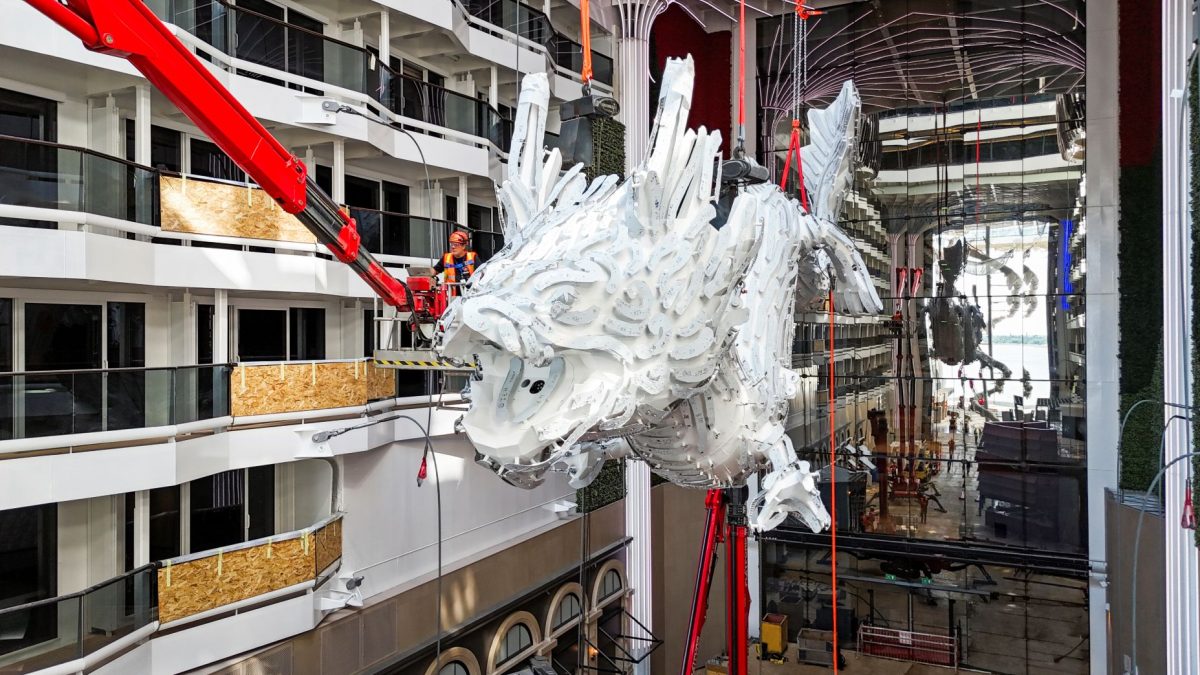
Interior design borrows heavily from the art deco playbook. Architect Maxime d'Angeac oversaw the vision, and nearly 2,000 craftspeople, artists, and workshops brought it to life. Three monumental bas-relief panels inspired by 1930s lacquerwork dominate the public spaces. Each one required a full year to complete. Like other ultra-luxury yacht properties, the competition is pushing boundaries too, but the Corinthian's engineering feat sets it apart from pure aesthetic excess.
Accommodations spread across four decks, with 54 suites ranging from 45 to 230 square metres. Every suite gets a 3.6-metre panoramic window and ceiling heights a full 25 centimetres higher than industry standards. Furnishings blend leather, wood veneer, and marble. Each guest receives dedicated butler service. This is the kind of detail that separates mere comfort from genuine refinement.
The culinary operation brings serious credentials. Chef Yannick Alléno, who carries multiple Michelin stars, oversees five restaurants and private dining rooms. He calls the ship "travel in its noblest essence." After dinner, passengers can drift through eight bars, including an art deco speakeasy, catch a 115-seat cabaret performance, or spend time in a recording studio. There's also a Guerlain spa, a pool, and a marina onboard. The onboard experience mirrors what made the original Orient Express transcendent in rail travel.
But here's the genuine innovation beneath the luxury veneer. The hybrid liquefied natural gas propulsion system backs up the wind power, making the Corinthian what maritime engineers call "a concrete technical response to decarbonisation challenges facing ocean transport." Luxury travel doesn't have to mean environmental recklessness anymore, and this ship proves it.
The maiden voyages run through the Mediterranean and Adriatic from May to October 2026, with itineraries ranging from one to four nights. Everything's included in the price, which starts at €17,700 in July. Later that year, the Corinthian heads across the Atlantic and winters in the Caribbean. A sister vessel, the Orient Express Olympian, is being fitted out in the same shipyard and will launch in 2027.
What makes this feel genuinely significant isn't just the engineering or the luxury appointments. It's the statement that ocean travel can reclaim some of the romance and intentionality that defined the golden age of travel. No rushing. No guilt about carbon footprints. Just passengers, the sea, and a ship designed to move with the wind rather than against it.