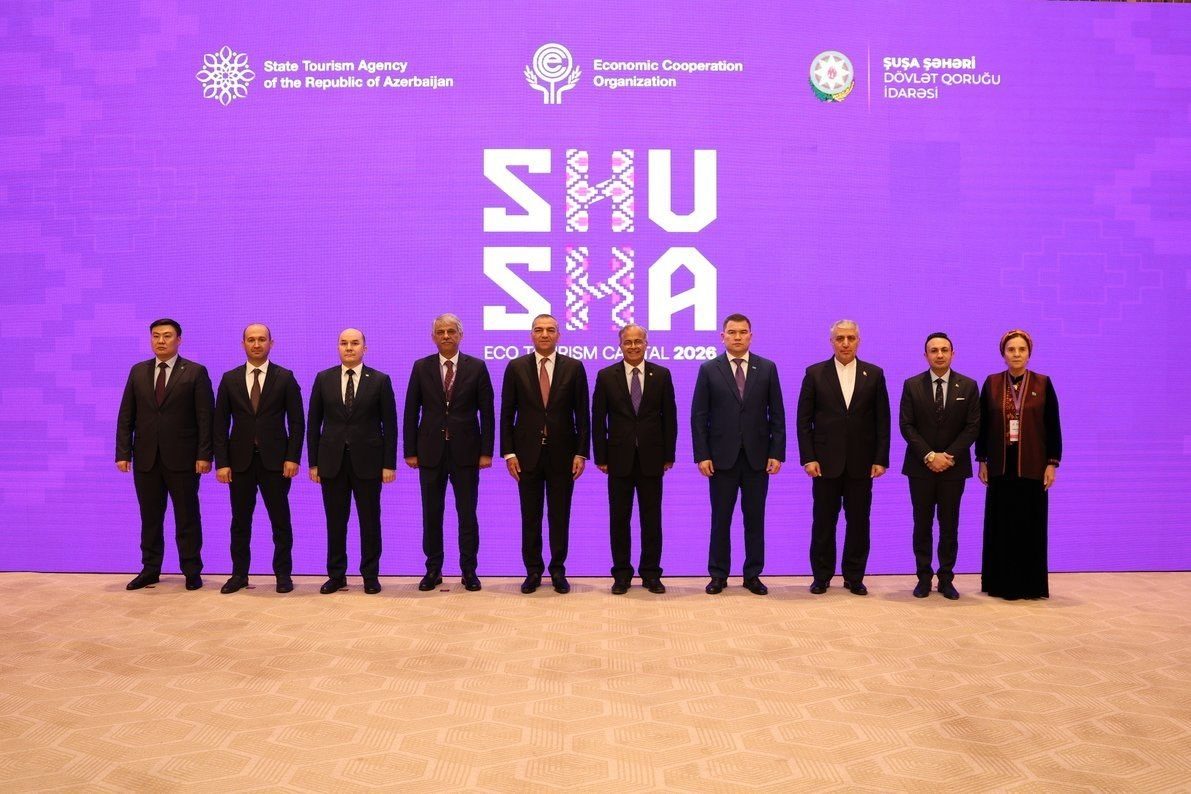
For years, Central Asia has lived in the shadow of better-known travel destinations. But that's changing fast. Last month, ministers from the Economic Cooperation Organization (ECO) gathered in Shusha, Azerbaijan, for their seventh tourism summit, and what emerged was a regional commitment to remake how the world thinks about this corner of the map.
The headline: Shusha is now ECO Tourism Capital for 2026, and Aktau has already claimed 2030. These aren't merely ceremonial titles. They come backed by the Shusha Declaration, a roadmap that commits member states to aggressive investment in sustainable tourism, education, and cross-border routes.
A city rebuilding its identity through travel
Shusha sits at the crossroads of history and ambition. The city carries immense cultural weight in Azerbaijan, and officials are betting that tourism can help write its next chapter. Fuad Naghiyev, head of Azerbaijan's State Tourism Agency, framed the ECO designation as symbolic recognition of Shusha's heritage and its potential as a modern destination.
What makes this moment significant is timing. Azerbaijan itself is on a tourism upswing. The country welcomed 2.57 million foreign visitors in 2025, a 2.1 percent jump from the year before, with international spending hitting 3.4 billion manat. President Ilham Aliyev has positioned tourism as a pillar of the nation's future, upgrading infrastructure and simplifying visa procedures to make entry smoother.
The country is also betting big on event tourism. It hosted COP29 in 2024, will welcome the UN-Habitat World Urban Forum in early 2026, and is preparing Shahdag Mountain to host winter sports competitions that same year. This backdrop explains why Shusha's year as Tourism Capital isn't a symbolic gesture but a strategic move in a larger vision.
Aktau emerges as the Caspian's gateway
Four years out, Aktau is primed for its moment. The Kazakhstani port city sits along the Caspian Sea, a body of water that confuses many travelers. Despite its name, the Caspian is technically the world's largest inland sea, yet it functions as a seaside destination in every practical sense. In Aktau, beach season runs from May through September or October, with summer heat regularly climbing toward 45 degrees Celsius.
Aktau won the ECO designation partly because of its natural assets, including proximity to Lake Karakol, which went viral in 2020 when massive flamingo flocks gathered there. That kind of ecological draw matters as wildlife tourism continues to reshape travel patterns. The city is also investing in infrastructure, adding hotels and expanding transport connections to support the incoming waves of visitors.
What this means for travelers right now
The ECO declaration emphasizes not just volume but quality. The focus on sustainable development and ecotourism signals that these regions want tourism that doesn't hollow out local culture or strain resources. For travelers, that means access to experiences backed by regional cooperation. The plan includes developing cross-border tourism routes, something that historically hasn't been easy in Central Asia.
When governments align on tourism standards and infrastructure, visitors win through smoother logistics and richer offerings.
Shusha's valleys, regional cuisine, and reconstructed old city are genuine draws for travelers curious about the Caucasus. Aktau's position on the Caspian and its role as a transport hub between Central Asian countries make it a practical jumping-off point for a wider exploration of Kazakhstan and neighboring regions.
The bigger picture
What's happening across the ECO isn't isolated to Azerbaijan or Kazakhstan. These designations reflect a broader regional strategy to diversify economies away from energy exports and toward visitor spending. It's working. The numbers prove it. And as infrastructure improves and marketing campaigns reach further, expect these cities to start appearing on more travelers' radars.
For now, Shusha offers the chance to explore a lesser-known destination during its moment in the regional spotlight, while Aktau represents the emerging frontier of Caspian beach and desert tourism. Both are betting that travelers are ready for something beyond the usual circuits. The question isn't whether these cities can attract visitors. The question is whether travelers are ready to discover them.