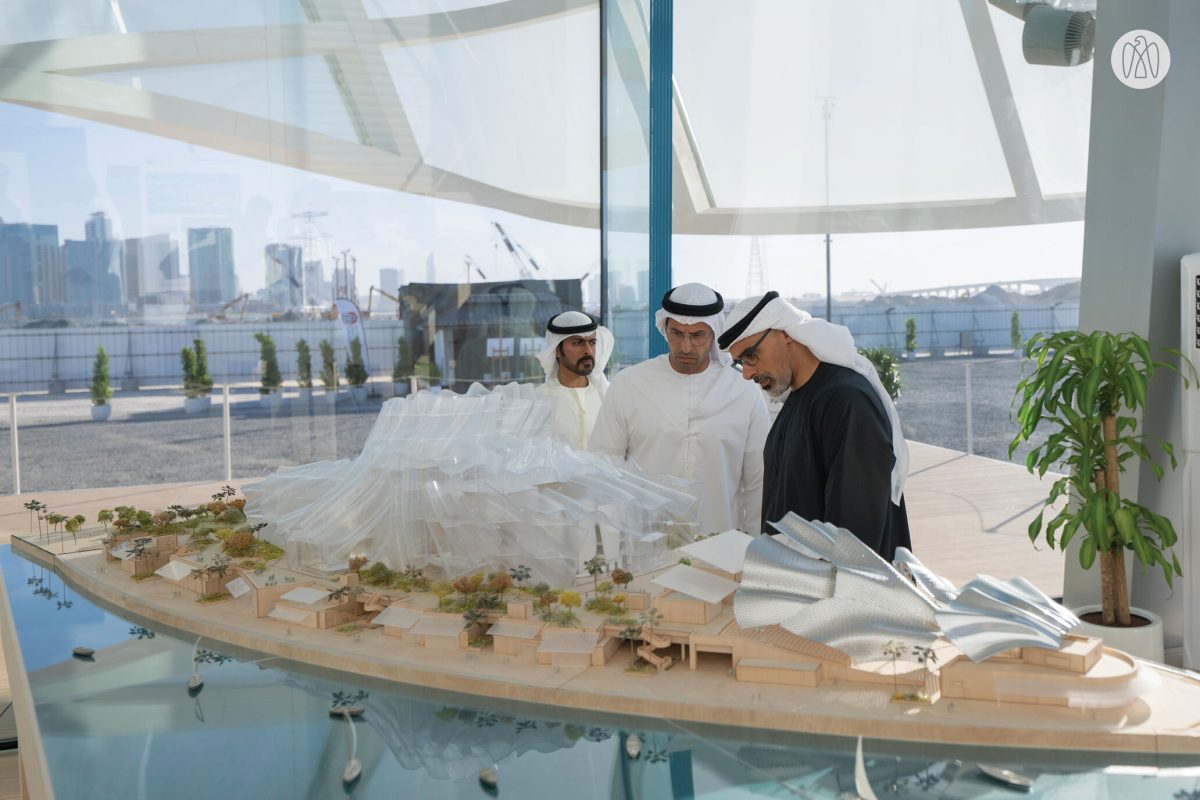
Abu Dhabi just greenlit one of the most visually arresting arts buildings on the drawing board. Dar al-Funoon (House of the Arts) will land on Saadiyat Island by 2030, designed by Frank Gehry in what amounts to the final chapter of his legendary career. The man passed away in December 2025 at 96, leaving behind a body of work that redefined how buildings can look and feel.
The timing feels deliberate. Saadiyat has already become something rare: a cultural district that doesn't feel like a corporate theme park. The Louvre Abu Dhabi, Zayed National Museum, and Natural History Museum are open and thriving. TeamLab Phenomena draws crowds. The Guggenheim Abu Dhabi will open this year (Gehry designed that one too). So when Dar al-Funoon arrives, it won't be breaking ground on a blank canvas. It'll be joining a conversation already in motion.
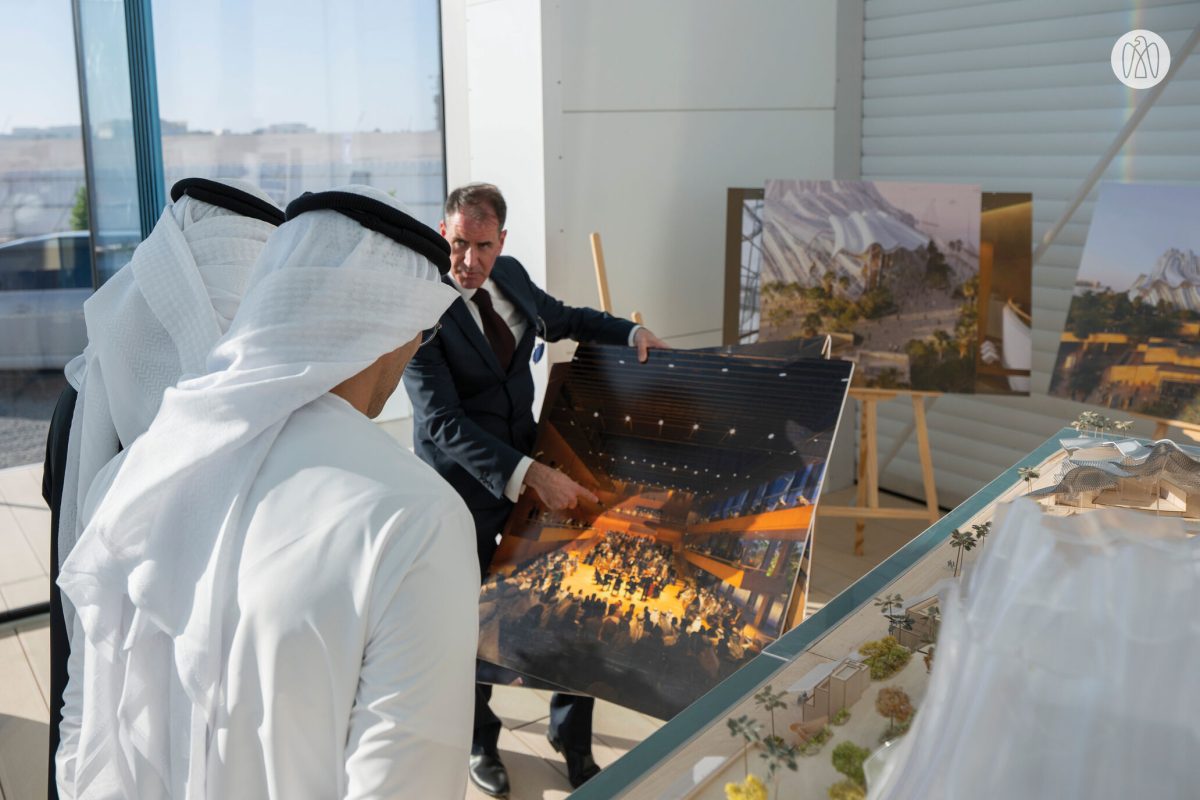
A Building That Looks Like It's Moving
Gehry's architecture doesn't whisper. The exterior ripples like wind caught fabric or waves frozen mid-roll, the same restless energy you see at the Guggenheim Bilbao or Walt Disney Concert Hall in Los Angeles. It's unmistakably his signature: sculptural, surprising, slightly defiant. Walking toward this building, you won't mistake it for anything else on the island.
Inside, the Department of Culture and Tourism has left nothing to chance. The main hall seats over 2,000 and comes equipped with an orchestra pit that can accommodate 120 musicians. Every technical detail, from acoustics to sightlines, has been engineered for world-class productions. But a single large room isn't enough for what Gehry and Abu Dhabi have in mind.
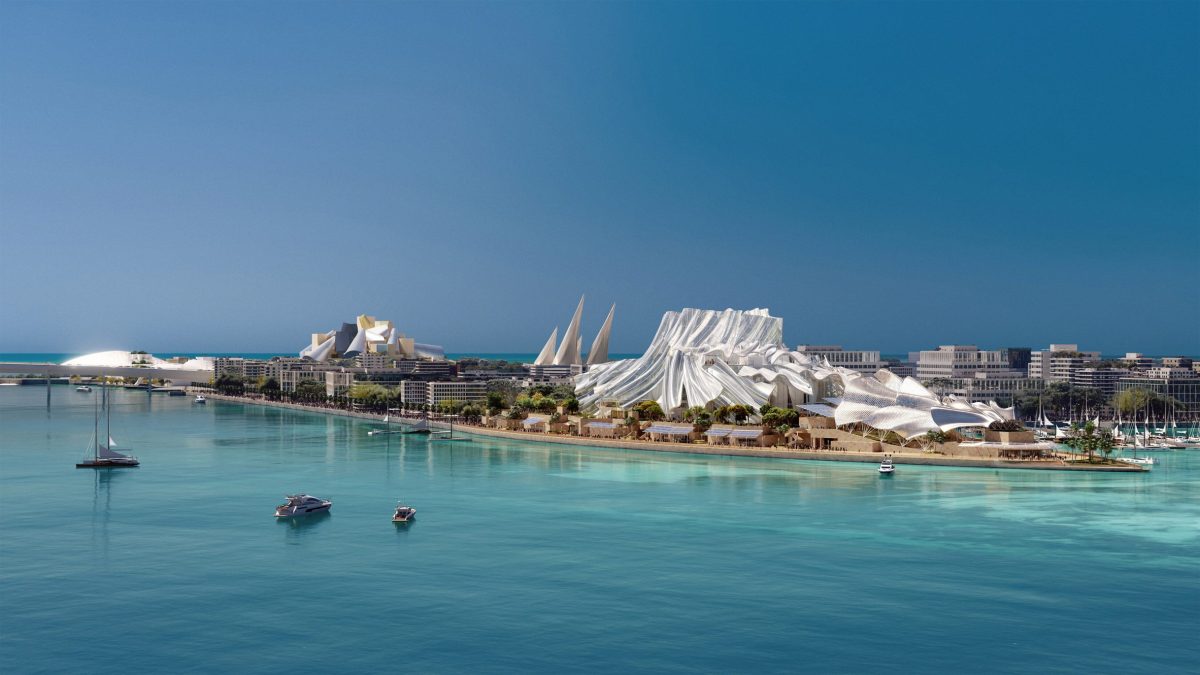
Spaces Built for Every Type of Sound
Opera. Ballet. Theatre. Symphonies. Musicals. Rock concerts. Jazz sets. Each gets its own home. A 3,500-seat outdoor amphitheatre will host festivals and large-scale events. A 400-seat studio theatre doubles down on experimental work and community productions. Jazz gets special treatment in a 250-seat venue designed specifically for the intimacy that genre demands. This is architecture that respects what happens inside it.
Then there's the food and retail space. Five thousand square metres of it. Because even the best performance deserves a drink beforehand and a place to linger afterward. The whole complex opens year-round, not just for one-off events, but as a permanent home for residencies, international touring productions, and co-productions with arts centres around the globe.
Mohamed Khalifa Al Mubarak, who runs Abu Dhabi's Department of Culture and Tourism, framed this project as proof of long-term ambition. "This will be a permanent home for performance," he said, "bringing together leading artists, companies and creative talent from the UAE, the region and across the world." It's the kind of statement that either sounds like marketing speak or signals something real. In Abu Dhabi's case, the infrastructure is backing up the rhetoric. Even transport is improving to connect the region.
Why This Moment Matters
There's a reason LinkedIn commenters got excited about this announcement. Someone pointed out that the strongest cities in history weren't built on roads and towers alone. They succeeded because they gave people reasons to return, to remember, to belong. In other words, culture is infrastructure too.
Abu Dhabi has been doubling down on this idea for years. Even amid regional turbulence, the emirate keeps pushing forward. Dar al-Funoon represents the kind of long-view thinking that takes decades to pay off, the kind only governments with serious capital and patience can afford.
When it opens in 2030, it won't just add another landmark to Saadiyat. It'll complete a cultural cluster that puts most Western cities to shame. Gehry's final building will be there to see it all happen, rippling and breathing on the island's skyline, a last gift from an architect who never stopped believing that buildings could be bold.