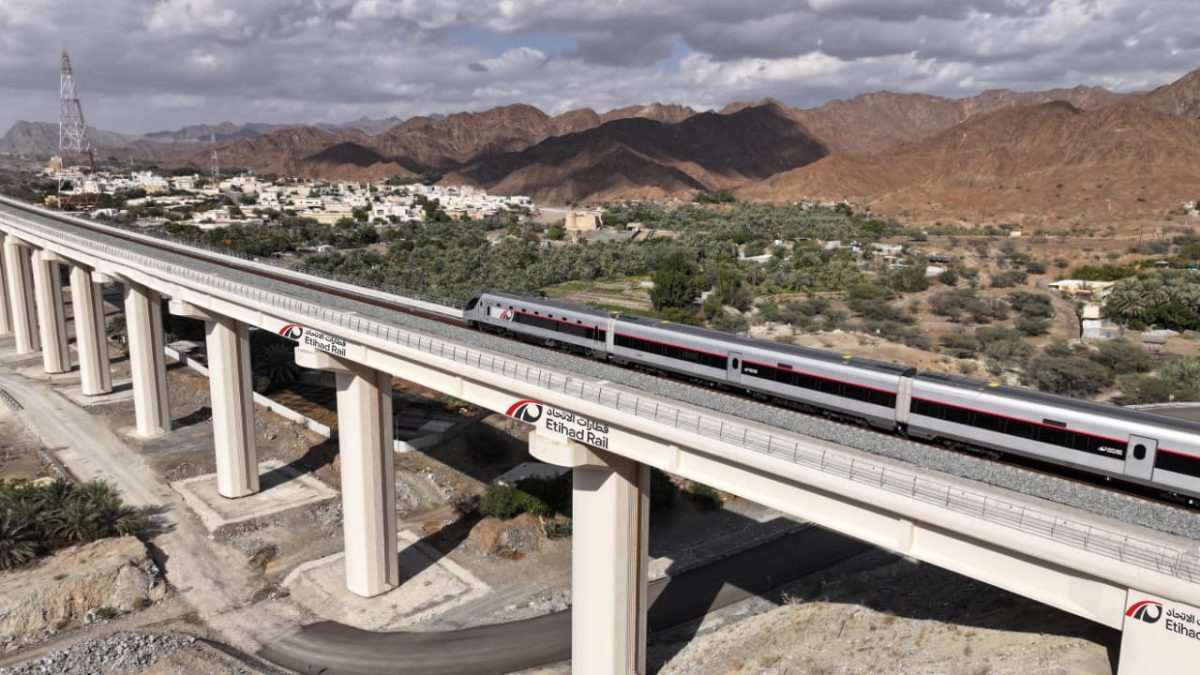
Picture this: you're boarding a modern train in Abu Dhabi, settling into ergonomic seating with Wi-Fi already connected. Fifty minutes later, you're stepping onto the platform in Dubai. No traffic jams. No stress. Just smooth travel between the UAE's two most essential cities.
This isn't a daydream. Etihad Rail, the national railway operator, is launching its long-awaited passenger service in 2026, and it's poised to become the fastest connection between Dubai and Abu Dhabi. For context, the drive currently takes around 90 minutes on busy highways. The train cuts that in half.
A massive undertaking eight years in the making
While Etihad Rail has been moving freight since 2016, the passenger side is entirely new territory. The first phase of this network stretches over 900 kilometers and knits together 11 emirates, with Abu Dhabi, Dubai, Sharjah, and Fujairah leading the rollout.
The scale of this operation is staggering. Over three years of intensive planning and construction involved more than 7,000 experts and workers logging 24.5 million hours. Ten of the 13 trains have already arrived and passed rigorous international safety certifications. The remaining three should be in service by launch time.
What you'll actually experience on board
Each train carries up to 400 passengers in a setup designed for comfort and utility. Think individual power outlets at every seat, reliable Wi-Fi throughout, and interiors that feel contemporary rather than utilitarian. At speeds reaching 200 kilometers per hour, you're getting genuine intercity rail, not a regional commuter line.
This is meaningful for business travelers who currently split their time between the two cities, tourists covering both urban centers in one trip, and anyone who's spent an afternoon crawling through Dubai's notorious highway congestion. The train eliminates that friction entirely.
Economics and environmental payoff
Project leaders at the Abu Dhabi Passenger Station have emphasized that this network supports broader economic activity across the emirates while offering a congestion-free alternative for regional travel. Beyond convenience, the railway cuts carbon emissions significantly compared to cars and buses, aligning with the UAE's sustainability goals.
The numbers are ambitious. By 2030, officials project the service will handle 36.5 million annual travelers. That's not just locals hopping between cities. It's a signal that the UAE views this rail corridor as transforming how the entire region moves.
Practical details for travelers
The full network eventually runs from Abu Dhabi through Dubai and Sharjah to Fujairah, opening in phases. The Abu Dhabi-Dubai route should be first, making it possible to base yourself in one city and explore the other without renting a car or relying on ride-sharing apps. Journey time is so short that day trips become genuinely feasible.
The exact opening date hasn't been confirmed yet, but officials target completion before the end of 2026. This means next year travelers planning a UAE itinerary should watch for announcements about ticket sales, schedules, and pricing. Given the investment and attention to detail, this won't be a cramped budget operation. Expect it to be premium but worth the fare.
For travelers, this changes the calculus of exploring the UAE. Suddenly, Dubai and Abu Dhabi aren't separate destination decisions. They're part of one coherent experience, linked by transport that's faster, cleaner, and more enjoyable than anything currently available.