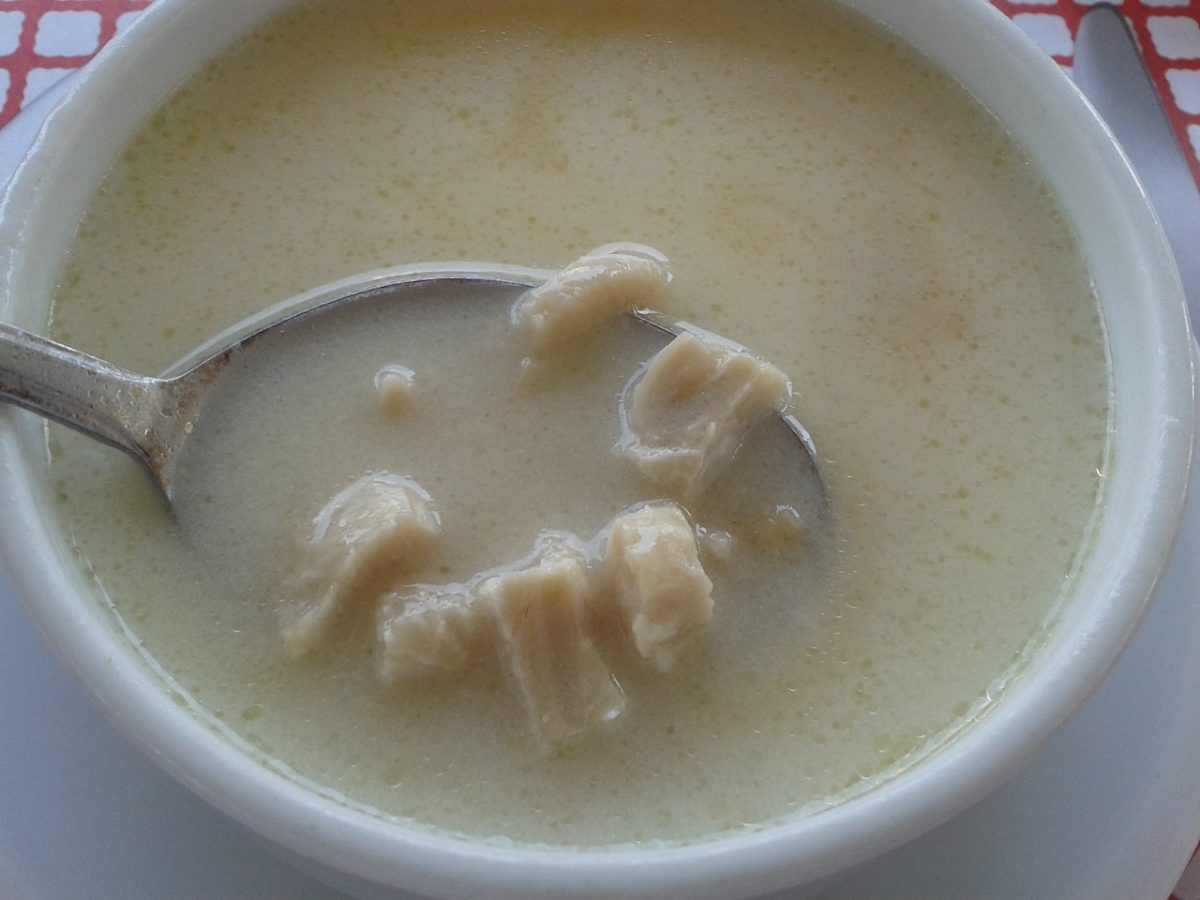
Few things are more dangerous to international relations than food. A Thessaloniki restaurateur named Dimitris Tsarouhas just proved it when he launched a bid to secure UNESCO recognition for patsa, a thick, garlicky tripe soup that has been fueling late-night revelers and settling upset stomachs across the Balkans for centuries.
The problem? Turkey claims the exact same dish under a different name: iskembe. And they're not happy about Greece trying to lock down its cultural heritage.
From Homer to Hangovers
Tsarouhas didn't pick this fight lightly. The 53-year-old spent months assembling a historical dossier, working with author Lena Oflidis, who wrote an entire book tracing the soup's lineage back to ancient Greece. His argument is compelling: the recipe traveled from ancient Greeks to Byzantines to Ottomans, spanning thousands of years of unbroken tradition. He even points to a passage in Homer's "Odyssey" that describes bovine bellies filled with suet and blood served during a feast, suggesting the dish's origins predate Western civilization itself.
"If this isn't patsa, then what else could it be?" Tsarouhas told the Associated Press. His confidence is infectious. He genuinely believes Greece has the evidence to claim this soup as part of its cultural legacy. "We don't have anything to divide with our neighbors," he added. "Rather the taste unites us."
The soup itself is straightforward: bovine stomach simmered for hours until it breaks down into a rich, aromatic broth. The Greek version often includes beef legs, garnished with seeds and hot peppers. It's the kind of dish that tastes better the worse you feel, which is exactly why it has survived so long in Mediterranean tavernas and late-night eateries.
Turkey Fires Back
Turkey's culinary guardians were not amused. Ali Turkmen, a Turkish restaurateur, rejected the Greek claim outright. "Just like with baklava and many other things, they want to claim it as their own," he said. "But it will probably be difficult for them to claim something unique to us. Because it's been a staple in our culture for centuries. Tripe is something specific to Turks."
Turkish media outlets amplified the outrage, accusing Greece of "appropriating" a nationally treasured dish. The evidence they marshaled? A 17th-century Ottoman traveler named Evliya Celebi, whose "Book of Travels" documented tripe soup vendors operating in Istanbul. If it was being sold in the Ottoman capital centuries ago, Turkey's argument goes, then it belongs to them.
This isn't the first time these two neighbors have locked horns over food. Greece's tourism appeal has always rested partly on its culinary traditions, which has made disputes over regional dishes particularly heated. Greeks and Turks have previously sparred over coffee, stuffed grape leaves, and baklava. Each conflict carries echoes of the Ottoman occupation and the complex cultural legacy it left behind.
A Shared History, Divided Claims
The real irony is that both countries are probably right. The Ottoman Empire ruled Greece for nearly 400 years, which means the culinary traditions of both nations are impossibly intertwined. A dish that's "Greek" might have developed under Ottoman administration. A dish that's "Turkish" might have roots in the Byzantine or ancient Greek periods. Food doesn't respect borders or administrative timelines.
Yet despite the tensions, some voices from both sides have started calling for a different approach. Rather than fighting over ownership, they suggest, these shared culinary traditions could become a bridge between the nations. Imagine if patsa/iskembe became a symbol of cultural connection instead of division. The soup's ability to nourish, comfort, and bring people together in late-night tavernas seems like a more meaningful legacy than a UNESCO plaque.
For travelers planning a trip through Greece or Turkey, this dispute adds delicious context to what you're eating. Every bowl of patsa or iskembe carries the weight of history, cultural pride, and centuries of complex coexistence. It tastes better when you understand what you're really consuming: not just food, but competing narratives about identity, heritage, and belonging in one of Europe's most historically charged corners.