You've memorized the phrasebook, drilled the grammar apps, and still freeze when a local actually speaks to you. Sound familiar? A new study from University College London and Tohoku University suggests the problem might not be your memory, but your ears.
Published in the Journal of Experimental Psychology: General, the research challenges the old-school method of rote vocabulary drills. The key, it turns out, is training your ear to treat foreign sounds as pure sound, not as distorted versions of your native language.
What the Brain Does With Unfamiliar Sounds
When you hear a new language, your brain instinctively tries to map those strange noises onto the familiar sounds of your mother tongue. That's why a French 'u' sounds like an English 'oo' to us, or why Japanese speakers struggle to hear the difference between 'l' and 'r'. The harder the sound is to categorize, the harder it is to reproduce.
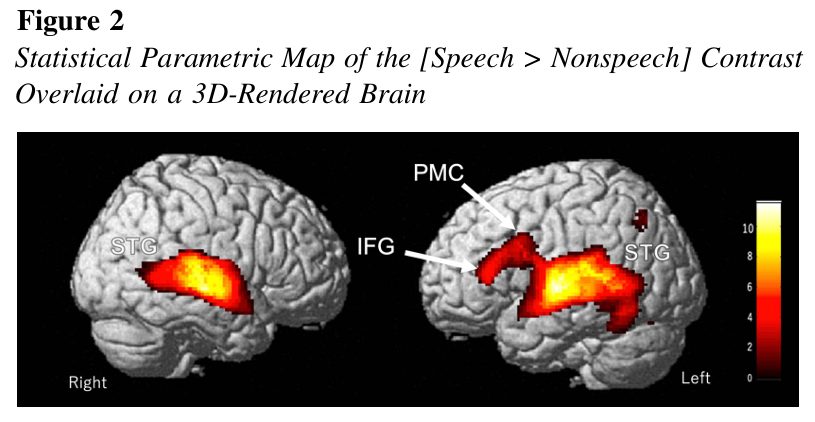
The researchers tested 67 Japanese learners of English, measuring their ability to detect tiny changes in pitch and tone in non-speech sounds. Then they scanned their brains while they tried to distinguish two English vowels that don't exist in Japanese, the 'a' in 'cat' and the 'u' in 'cup'.
The results were striking. Learners with better auditory precision processed those unfamiliar vowels in the same brain regions used for processing music or beeps, not in the typical language centers. In other words, their brains treated the new sounds as acoustic information, not as language to be forced into a familiar pattern.
The Practical Takeaway for Travelers
So what does this mean for your next trip? Stop trying to 'hear' the language through your native filter. Instead, listen to the melody, the rhythm, the pure sound of it. That's the approach used by Israel's famous ulpanim, the intensive Hebrew schools where immigrants learn by immersion, conversation, and repetition, not by translating every word.
Lead author Prof Kazuya Saito-van Poeteren told The Guardian that the problem is not biology, it's lack of meaningful exposure. He argues that teaching methods need to move beyond 'more practice' and toward developing the auditory skills that make the most of limited exposure. The full study is worth a read for the science behind it.
For travelers, this is a game-changer. Instead of just drilling flashcards, try listening to music in the language, watching films without subtitles, or simply sitting in a café and absorbing the sounds around you. Your brain is naturally attuned to acquire language through exposure, as Prof Padraic Monaghan of Lancaster University points out, but you have to give it the right kind of input.
And if you're planning a trip where language feels like a barrier, consider this your permission to ditch the dictionary and put on some local tunes. It might just be the most effective lesson you ever have. For more on how travelers are embracing new skills over souvenirs, check out how Europeans are learning crafts on the road. And if you're worried about your gadgets on the go, here's what you're doing wrong with your power bank.