You're rushing through departures, your brain already halfway through security, when you stop. A bookstore wall catches your eye. Five minutes later, you're at the gate with a paperback you hadn't planned to buy. That moment isn't accident. It's the result of centuries of travelers craving the same thing: something to read when the world gets too loud.
We live in an age obsessed with productivity and constant motion. Yet somehow, the humble vacation book refuses to disappear. In fact, it's thriving. Over 80 million posts flooded TikTok under hashtags like "summer reading" in recent years, turning page-turning into something almost athletic. Reading has become what people aspire to do with their precious free time, especially when work bleeds into weekends and your phone never stops buzzing. The irony? Taking time to actually sit with a book feels rebellious now.
But this isn't new. Travel and reading have been locked together since the 17th century, when young European aristocrats embarked on their Grand Tours. Books weren't luggage filler. They were bridges between classroom knowledge and the lived experience waiting in foreign cities. The real explosion came later. When railways arrived and workers finally clawed out time off, travel became accessible to regular people. By 1848, WHSmith opened the world's first railway platform bookstall at London's Euston Station. They understood something fundamental: people traveling need reading material.
The Paperback Revolution
Publishers caught on fast. They created "Yellowbacks," inexpensive paperbacks with eye-catching covers, small enough to throw in a bag and cheap enough that you wouldn't cry if they got bent. These weren't precious objects. They were practical traveling companions. That same logic drove the creation of the modern airport bookshop.
Hudson Group, founded in 1926, transformed transit kiosks into the dominant bookstores we recognize today, starting at New York's LaGuardia Airport. Those stores cracked a code: arrange books for people in a hurry. Clear sections. Bestseller walls. Top-ten countdowns. The setup almost forces you to grab something you might not have otherwise chosen, especially if you've burned through your packed books before departure. Even the physical books changed. Airport editions often appear as "trade paperbacks," larger than mass-market versions but lighter and softer-covered than hardbacks, a perfect balance for hand luggage constraints.
Why a Book Beats Everything Else
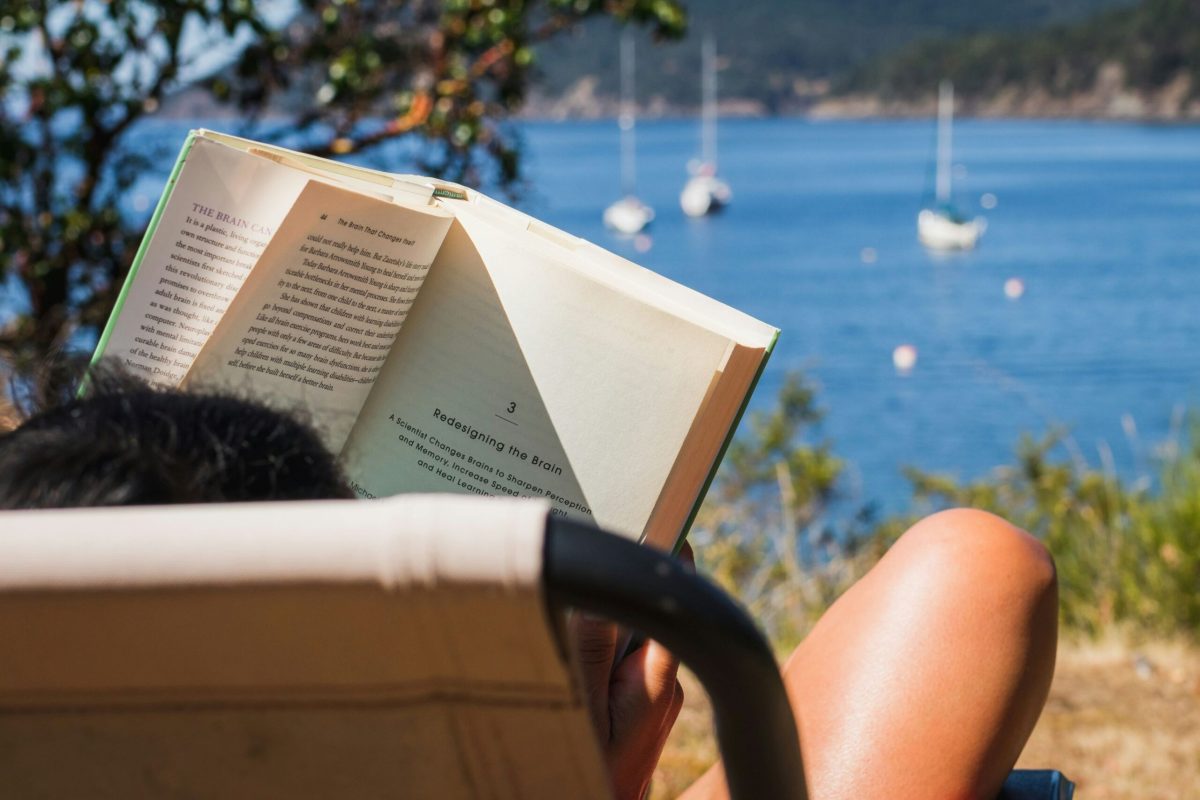
Here's the psychology that airport retailers understood long before neuroscience caught up: a book creates permission to be alone. When you're surrounded by strangers, transit chaos, and the anxiety of getting somewhere new, reading draws a circle of privacy around you. It signals "don't bother me" more effectively than headphones ever could. That buffer matters. It gives your nervous system a break from the noise.
Beyond that, reading triggers what psychologists call "flow state," a zone of focused attention that quiets anxiety and centers your mind. It's exactly the mental adjustment you want before landing in unfamiliar territory. The author has read Stieg Larsson in Namibia, Donna Tartt in the Pyrenees, Milan Kundera in Sydney. Each location shaped how those books felt, making the memories inseparable from the place.
That relationship works both directions. Reading inspires travel. Sixty-seven percent of American millennials want to attend a dedicated reading retreat. Literary tourism now generates billions, with trips to Shakespeare's cottages, Harry Potter exhibitions in Shanghai, and even Tokyo book districts named among the world's coolest neighborhoods. Books aren't pulling people away from travel. They're driving people toward it.
The next time you find yourself in an airport bookshop with a few minutes to spare, remember that moment isn't random. It's the continuation of a 400-year conversation between travelers and pages. Those stores exist because someone figured out that the best way to process the world is often with a book in hand. The airport recognizes what you're about to discover: sometimes the most important part of getting away is what you read while you're getting there.