Venice's art world just got a new playground. The newly opened Orient Express Venezia arrives in the Cannaregio district just as the Biennale draws crowds to the city, offering something the crowds rarely find: a genuinely quiet, thoughtfully designed retreat from the madness outside.
This is the second property from the legendary luxury brand known worldwide through Agatha Christie's crime novel. But unlike its namesake train that once connected continents, this hotel doesn't move. Instead, it occupies Palazzo Donà Giovannelli, a 15th-century mansion that sits on the Rio de Noale canal, recognizable by its striking pink and white stone facade and neo-Gothic lancet windows. Those windows were attributed to Filippo Calendario, the same architect who shaped the Doge's Palace.
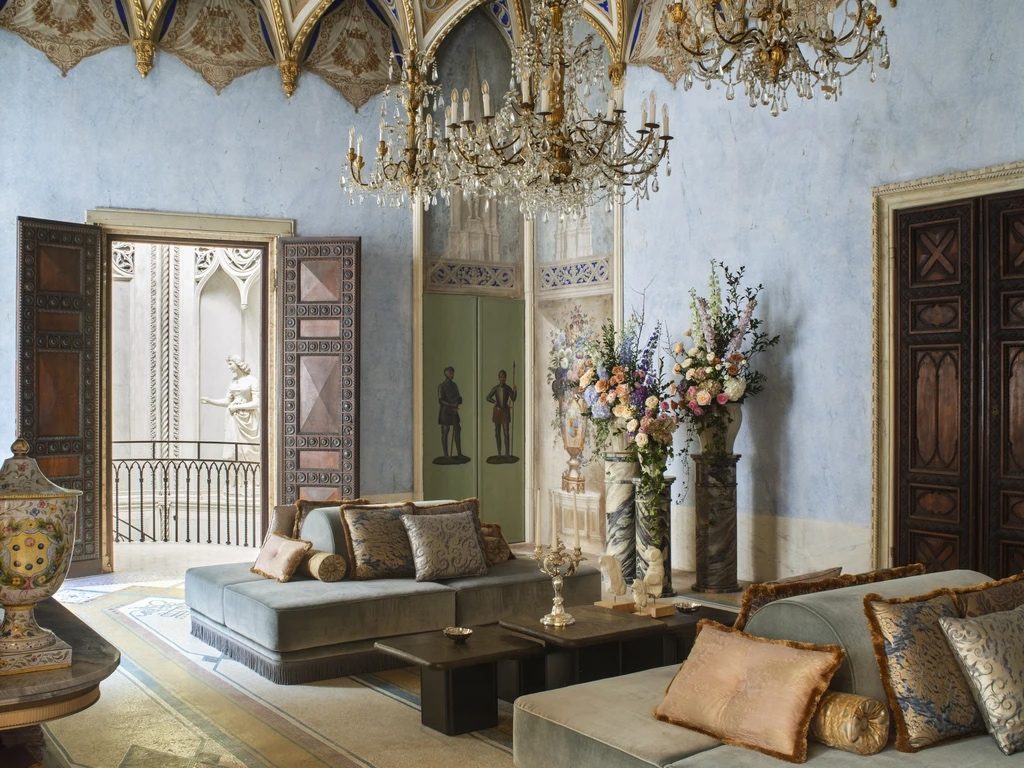
The palazzo passed through the hands of Venice's most important families before becoming an art museum and now entering its most extravagant chapter yet. The eight-year restoration involved stabilizing underwater foundations, preserving original frescoes by 19th-century Venetian master Francesco Hayez, and salvaging an ornate gilded ballroom from 1548. Paris-based designer Aline Asmar d'Amman orchestrated the whole operation, approaching it as "carrying heritage forward" rather than erasing it.
What emerged from the scaffolding is theatrical without feeling theme-parked. The 47 rooms and suites feature vaulted ceilings, watered silks, rich velvets, and carved wooden frames that blend Baroque excess with contemporary restraint. Six Signature Suites each function as their own self-contained world. Murano glass chandeliers cast light across blue-veined plaster, while a rotating selection of contemporary artworks keeps things from feeling frozen in time. The octagonal staircase, attributed to Giovanni Battista Meduna, remains a focal point. "I wanted visitors to feel drunk on beauty," Asmar d'Amman explained.
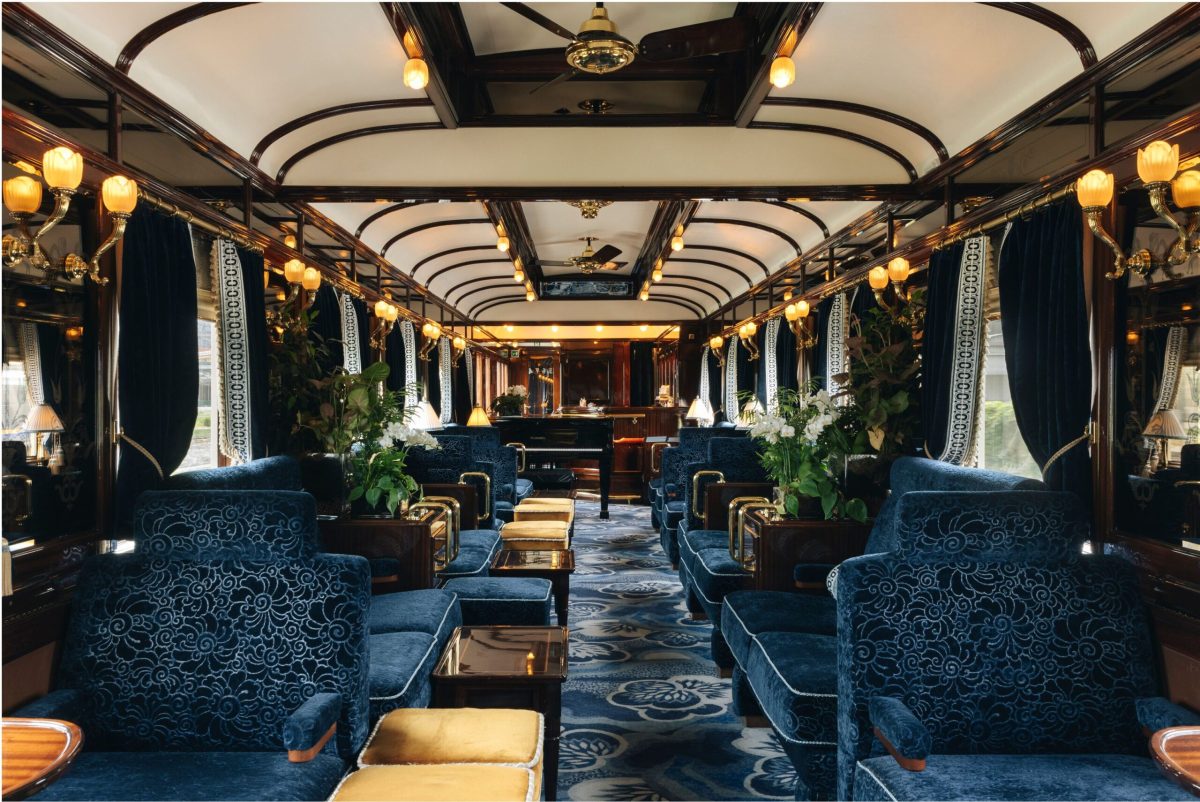
The lobby functions as a grand living room, flowing into a garden via a passage called Calle Meraviglia. A cheeky nod to the hotel's famous namesake arrives in the form of the Wagon Bar, an Art Deco-style lounge inspired by the original Orient Express train cars. Those subtle references prevent the place from becoming purely Venetian nostalgia.
The culinary scene centers on a fine-dining restaurant helmed by chef Heinz Beck, who carries three Michelin stars. Located in the palazzo's courtyard and accessible via the hotel's private boat entrance, it merges haute gastronomy with Venetian traditions. A spa drawing from Roman thermal baths, Ottoman hammams, and Venice's maritime heritage is in development.
Visitors planning a Biennale trip should know that Venice's entry fee regulations have tightened recently, making advance planning essential. The hotel's location in Cannaregio places it far enough from the heaviest tourist flows to offer actual peace, while remaining walkable to the major galleries and exhibition spaces.
Gilda Perez-Alvarado, CEO of Orient Express, framed the opening as opening "a new chapter in the legacy of our brand," celebrating Venice as a place where cultural depth meets imaginative design. Whether that manifests through a pre-Biennale stay or a future visit, this palace has earned its place on the city's most coveted hotel roster.