Here's a plot twist nobody saw coming: Greece is going rogue on Europe's new border rules, and British travelers are the lucky beneficiaries. Starting April 10, 2026, the European Union rolled out its Entry Exit System (EES) across the Schengen area, requiring all non-EU visitors to surrender their fingerprints, facial scans, and passport data at arrival. But Greece, it seems, has other plans for Brits.
The Greek Embassy in London quietly announced that British passport holders would be exempt from this biometric registration altogether. Eleni Skarveli, the UK director of the Greek National Tourism Organisation, confirmed the move just a week after EES went live across Europe, framing it as a way to deliver "a smoother and more efficient arrival experience" for incoming visitors.
Why the special treatment? Follow the money. Greece just had its best tourism year ever, and the UK is doing most of the heavy lifting. In 2025 alone, British travelers sent 4.89 million arrivals to Greek shores, spending a staggering 3.74 billion euros. That's a 7.6% increase in visitor numbers and an 18.5% jump in spending compared to 2024. Simon Calder, writing in The Independent, notes that some Greek border checkpoints process up to 2,000 UK arrivals daily during peak season. For a country that once flirted with leaving the EU altogether, betting on British tourism makes hardnosed economic sense.
The EES Rollout Has Been Messy Everywhere Else
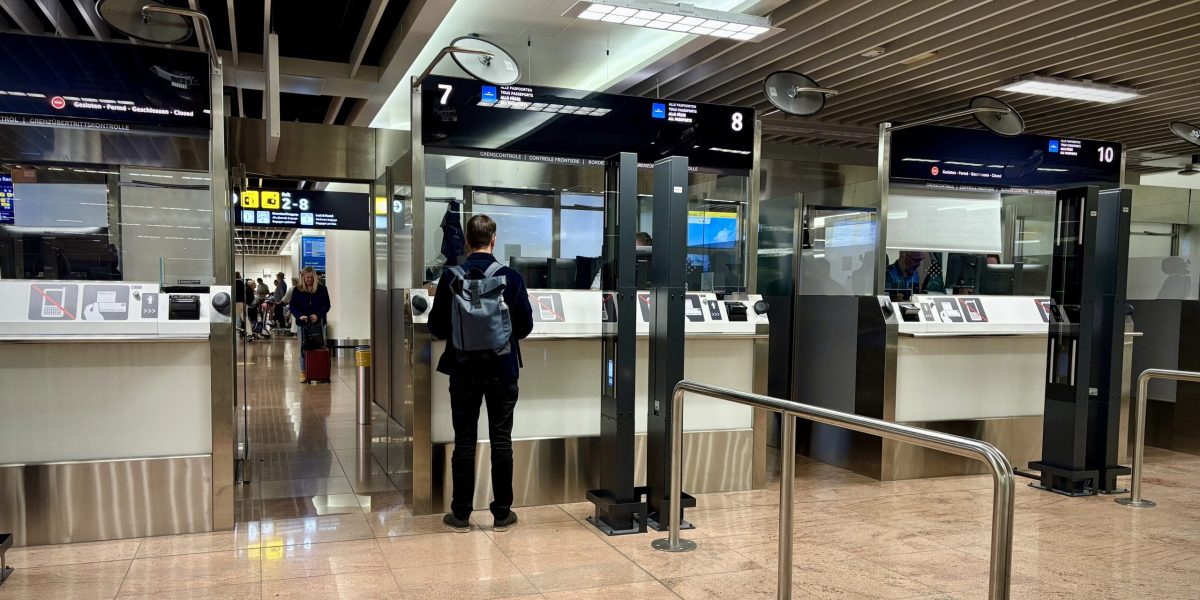
To understand why Greece's decision matters, you need to see the chaos unfolding at borders across Europe. While some countries have managed to implement EES without major disruption, others have turned into logistical nightmares. The UK's Port of Dover installed separate EES lanes for ferry passengers, but the biometric kiosks reportedly aren't properly connected to EU and French police systems. At Umberto Delgado Airport in Lisbon, Portugal brought in the national guard to manage backup lines. Milan saw over 100 passengers miss their EasyJet flight to Manchester because they got stuck in security queues. EU commissioners have already acknowledged that implementation glitches would require mitigations beyond the April 10 deadline.
Greece is taking a different approach: skip the process entirely for Brits and keep your summer tourism machine running at full throttle. No fingerprints, no facial scans, no delays. Travelers walk straight through, and the country's hospitality sector starts cashing in faster.
What This Means for British Travelers
If you're planning a Greek escape this summer, bring your passport and a smile. The practical payoff is real. For older travelers or anyone uncomfortable with biometric systems, this news eliminates a genuine source of stress. You won't be standing in long security queues while your holiday clock ticks down. You won't worry about missing your connection or wondering if your data got processed correctly. Skarveli noted that waiving EES registration "is expected to significantly reduce waiting times and ease congestion at airports," getting visitors out of terminals and into tavernas, beaches, and archaeological sites where they can actually enjoy their trip.
That said, keep your eyes on official guidance from Greek authorities. The UK Foreign, Commonwealth and Development Office recommends checking local announcements before you travel and having your residence documents handy if you're staying longer. Rules can shift, and border procedures always have nuances worth confirming.
A Smart Play in a Fragmented Europe
Greece's decision reveals how the post-Brexit world works. Britain is no longer part of the EU system, making British travelers third-country nationals in the eyes of Brussels. That should mean everyone gets treated the same. But Greece, facing competitive pressure from other Mediterranean destinations and dependent on UK spending, found a loophole and drove a truck through it. Other countries haven't followed suit, at least not yet. The US, Australia, and other major source markets don't get the same courtesy. This is pure tourism arithmetic.
What's striking is how casually Greece thumbed its nose at EU uniformity. A country that once threatened "Grexit" and battled Brussels over debt restructuring has learned the real power play isn't defiance but selective pragmatism. Keep your biggest customers happy, and the rules bend. With major travel changes coming in 2026, Greece's move shows that individual countries still have leverage over how those changes actually play out on the ground.
For British travelers, this is a gift. Fewer hoops to jump through, faster border processing, and a country clearly willing to roll out the welcome mat. Whether other European nations follow Greece's lead or stick with the EU's standardized approach remains to be seen. But this summer, if you're choosing between Greece and another Mediterranean destination, one very practical advantage just tipped the scales.