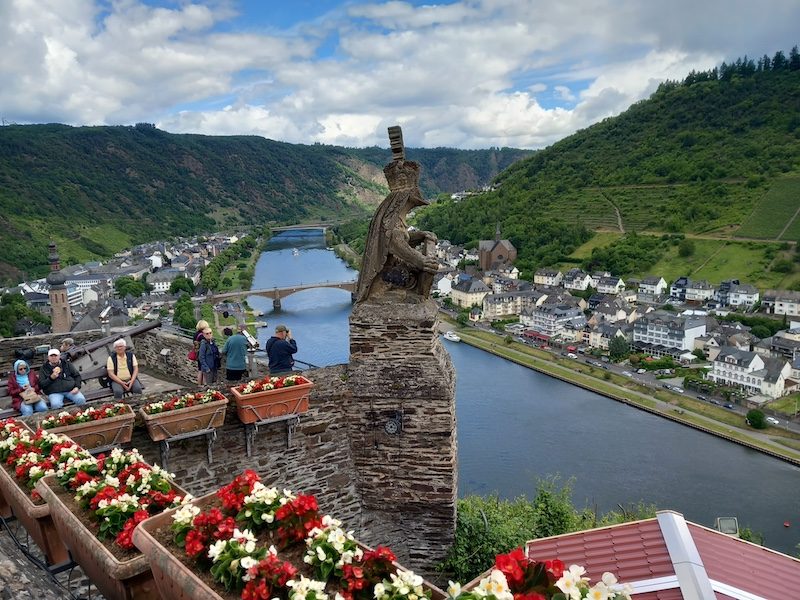
A tractor engine cuts across the water as a farmer maneuvers a weathered truck along a cliff edge above the Mosel River. It's June in western Germany, and the slate slopes that cling to both riverbanks are alive with activity. Vineyard workers scale terraces, inspecting vines that have thrived here for centuries. It looks like tourism and viticulture are thriving together, just as they always have.
The trouble is, they're not.
The Mosel Valley, that postcard-perfect stretch of landscape wound around the riverside town of Cochem, is experiencing a seismic shift. The wine business that built this region is struggling, and the tourism engine that depends on it is grinding through an uncomfortable reckoning. The numbers tell the story: visitors to the area are older than ever. According to Trier's Tourism and Marketing Office, the region has become a stronghold for travelers aged 55 and up, though marketing strategies are successfully pulling in active visitors in their late 30s to early 50s. But the younger crowd? They're simply not coming.
When Your Customer Base Vanishes Overnight
Walk through Cochem or Beilstein today and you'll spot the evidence: comfortable RVs parked along the riverbank, gray-haired cyclists gliding past medieval castles on e-bikes, couples in matching high-visibility vests pedaling with practiced ease. These visitors are self-sufficient in ways previous generations never were. They pack their own picnics, sleep in their own vehicles, and don't need hotel restaurants or wine bars to feel like they've had an experience.
For businesses built on the assumption that travelers would arrive, stay multiple nights, dine out, and buy several bottles of local wine, this shift is catastrophic. The EU Tourism Platform confirms this is happening across European regions, but few places feel it quite as acutely as wine country does.
Hotels, restaurants, wine taverns, and guesthouses face a choice: adapt or close. Some have found success by pivoting toward the cycling crowd, installing bike repair stations, offering packed lunches, and adjusting opening hours to catch the pedaling masses. Others have simply shut their doors for good. The marketplace has become ruthlessly competitive, and nostalgia doesn't pay the bills.
Why Gen Z Is Choosing Thailand Over Riesling
The reasons younger travelers are staying away are straightforward, if uncomfortable for locals. Wine-tasting weekends have lost their appeal to a generation that drinks significantly less than their parents. Budget constraints are real too. Young people simply don't have disposable income for weekend wine trips, even if they wanted them. And many of those who do have money? They're digital nomads, choosing to work remotely from destinations like Thailand where their dollars stretch further and the lifestyle feels more adventurous than a river valley in Germany.
Budget airlines and better international connections have made distant, exotic destinations cheaper and easier to reach than a regional German getaway. The calculation is brutal: for the same cost and hassle, why not book a flight to Southeast Asia?
The Geography That Creates Magic
It's a shame, because the Mosel Valley has so much to offer travelers who actually show up. The landscape itself is a masterpiece of geological drama. Powerful natural forces shaped the Rhenish Massif across western Germany, eastern Belgium, Luxembourg, and northeastern France, creating the hyper-steep, south-facing slopes that catch warming sunlight in a cool climate region perfectly suited to wine. The river itself has been tamed by 20th-century engineering, with locks and barrages turning a once-wild waterway into a reliable transport lane. Cargo barges share the water with multi-deck cruise boats, a strange mix of commerce and leisure.
Nature still throws its weight around occasionally. A prolonged heat wave in 2022 nearly strangled shipping along the Mosel and Rhine. Floods remain a threat, with the most recent damaging esplanades and campsites in towns like Zell and Cochem. Climate change will likely make such events more frequent, adding another layer of uncertainty for businesses already struggling.
Two Banks, Infinite Loops
The bright spot for local tourism is the cycling infrastructure. Smooth paths flank both sides of the Mosel, creating a circuit that makes exploration effortless. Riders can pedal down one bank, cross a bridge or passenger ferry, and return along the other side. Each bend reveals new views. E-bikes have transformed what was once a punishing physical trek into a gentle, accessible cruise suitable for anyone from retirees to families. Couples in matching gear coast past medieval backdrops, panniers loaded with wine and picnics.
Cochem serves as the hub, its fairy-tale Reichsburg Castle looming above timber-framed houses and steep vines. The castle itself welcomes visitors, while the Sesselbahn chairlift offers panoramic views of the river and surrounding peaks. For history enthusiasts, the Bundesbank Bunker reveals Cold War secrets, an underground vault that once sheltered billions in Deutsche Marks.
South of Cochem, cyclists discover Beilstein, the "Sleeping Beauty of the Mosel," squeezed almost impossibly between vines and a river bend. Medieval architecture and cobbled streets have made the village a regular film location and postcard favorite. Above it, the ruins of Metternich Castle keep watch over the town like a patient guardian.
The Wine That Tastes Like Stones and Rain
No visit to Beilstein or anywhere in the valley is complete without tasting what locals have been growing here for generations. Rieslings and Rivaners thrive in the slatey soil that absorbs heat during the day and releases it at night. The result is wines with a distinctly northern character: mineral-forward, with a crisp acidity often described as "wet stones" or "rain on hot pavement." Bright citrus notes and vibrant sharpness make them worthy counterparts to warmer southern varieties.
These distinctive wines are meant to be experienced in the traditional Weinhäuser taverns and Straußwirtschaften, the makeshift bars run by vintners in their own courtyards and cellars. It's where food and wine culture fuse into something unpretentious and real.
A Region Searching for Its Next Act
The Mosel Valley sits just hours from major European capitals, yet it feels like another era. The pace of life is genuinely different here, relaxed and cool as the white wines produced on the slopes. But that charm alone isn't enough to sustain the region anymore. Tourism projects across Europe are learning to reinvent themselves, and the Mosel is doing the same, whether reluctantly or not. E-bikes, cycling tourism, adventure experiences, and more affordable packages are slowly filling the gap left by vanishing wine drinkers.
The question now is whether these adaptations will come fast enough, and whether they can truly replace what's been lost. The tractor still hums across the river. The vineyards still produce world-class wine. But the visitors who used to fill the hotels and restaurants to celebrate those wines? That's a story this valley is still learning how to rewrite.