Picture this: you're gliding across turquoise lagoons in a boat so quiet you can hear the ocean around you. No engine roar. No fuel smell. Just the hum of electric motors and the whisper of water beneath the hull. This is what the Maldives is betting on, and it's happening sooner than you might think.
A landmark partnership between San Francisco-based tech company Navier and Dubai investment firm JIH Global has just launched an ambitious plan to electrify island travel across the archipelago. The Navier Network, backed by $100 million in funding, will deploy up to 100 electric hydrofoil boats across the islands by the end of 2029. The first five vessels are already scheduled for deployment over the coming year.
Why hydrofoils change everything
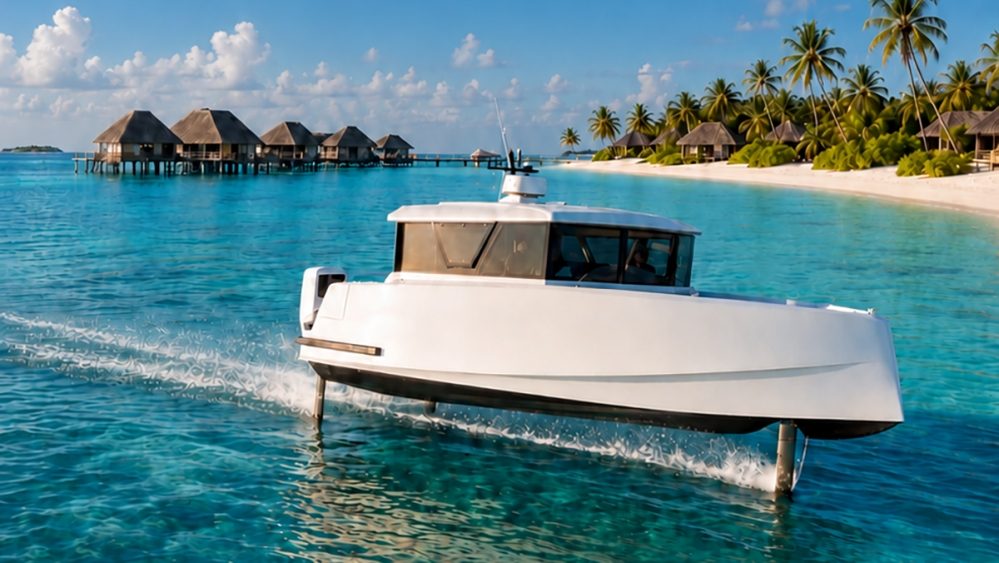
So what makes these boats special? Hydrofoils use underwater wings (literally the opposite of airplane wings) that create lift as the boat speeds up, causing the entire vessel to rise above the water's surface. Think of it as gliding rather than pushing through the water. The result: less drag, less noise, and far fewer emissions than conventional boats. It's engineering that feels like something from a sci-fi film, except it's real and it's arriving in the Maldives next year.
The impact on the islands could be significant. In an archipelago where nearly every journey involves water transport, swapping gas-powered ferries and seaplanes for zero-emission alternatives represents a massive step toward the country's carbon-neutral goal by 2030. With over two million visitors arriving annually (not to mention residents relying on boat transport daily), the environmental upside is substantial.
What you'll actually experience
If you're imagining uncomfortable utilitarian water taxis, think again. The Navier N30 vessels come with lounge seating, air-conditioned cabins, and onboard Starlink Wi-Fi, so you can message friends about your journey while gliding silently past coral atolls. Each boat can travel 75 nautical miles on battery alone, or up to 150 nautical miles in hybrid mode. Translation: you're getting from the airport to your resort or island-hopping between resorts without stopping for a charge.
Sampriti Bhattacharyya, Navier's founder and CEO, framed it bluntly: "We are not just deploying boats. We are building the first sustainable luxury transportation network on water." For a destination that's always positioned itself at the pinnacle of luxury travel, that distinction matters. Electric power isn't a compromise here. It's an upgrade.
Looking beyond the islands
What happens in the Maldives rarely stays in the Maldives. Mohamed Ali Janah, chairman of JIH Global Investment, has already signaled ambitions to export this model beyond the archipelago to other island nations and coastal cities worldwide. If successful here, the Navier Network could become a blueprint for sustainable maritime transport everywhere oceans meet land.
For travelers planning a trip to the Maldives, this news arrives at an interesting moment. When direct flights from Melbourne to the Maldives launched, it made the destination even more accessible. Now, once you arrive, getting around is about to become quieter, cleaner, and honestly more futuristic.
The rollout timeline is aggressive but achievable: five boats by end of 2025, another 95 by the end of 2029. That means if you're planning a return trip to the islands, your second visit could be dramatically different from your first. Quieter mornings without seaplane noise. Clearer waters less disrupted by boat traffic. Resorts and islands connected by a transportation network that feels almost too sleek to be real.
The Maldives has always sold itself on pristine natural beauty. Now it's actually putting serious money behind protecting it.