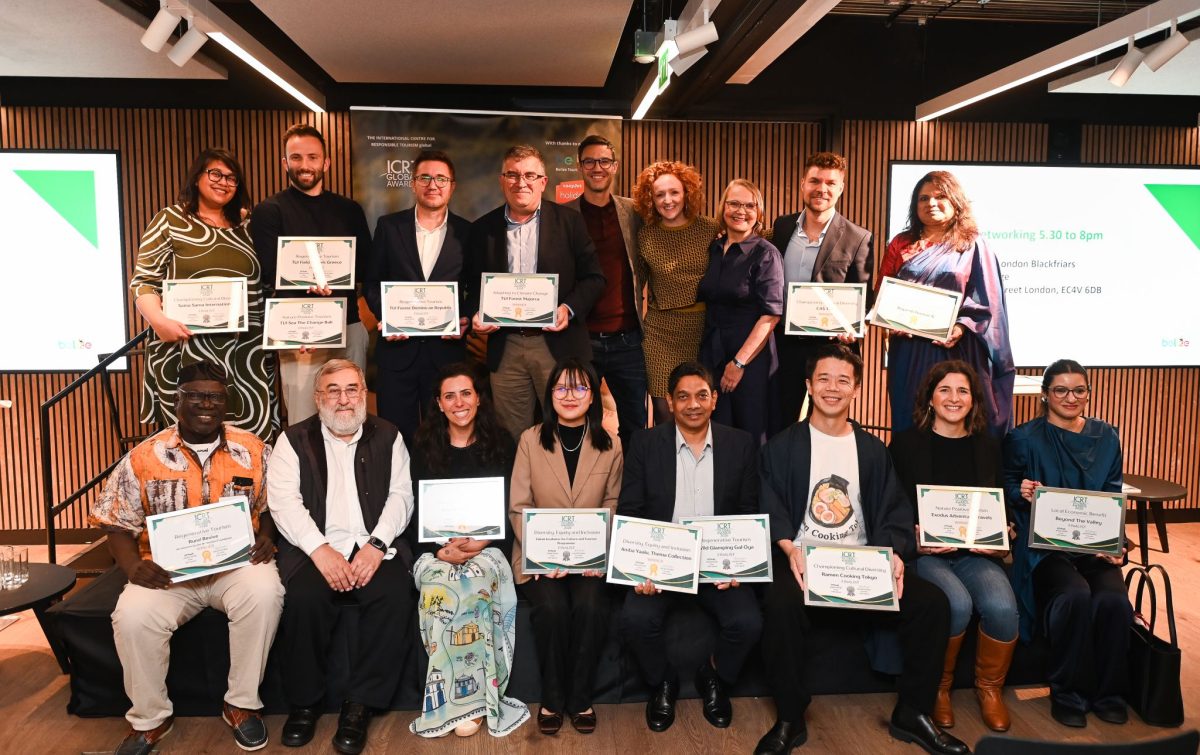
On a rainy London evening, the winners of the 2026 Global Responsible Tourism Awards were announced, and the list reads like a masterclass in travel with a conscience. From a Sri Lankan hotel staffed entirely by women to a Brazilian network that rebuilt livelihoods after a dam collapse, these six projects prove that tourism can be a force for good, not just a way to tick off bucket lists.
The awards, organized by the ICRT Global and sponsored by the Belize Tourism Board, drew from 34 finalists across 24 countries. Each finalist had already won gold in one of six regional competitions, including the European Responsible Tourism Awards held in Brussels in June. That Brussels event also celebrated projects restoring forests, supporting regenerative farming, and preserving cultural heritage, setting the stage for the global showdown.
Belize's tourism minister, Anthony Mahler, summed up the ethos: "Belize believes tourism must deliver real benefits for the people and places that make a destination special." He added that the awards are a chance to "celebrate those who are turning that principle into action." It's a sentiment that echoes through every winner.
Women at the Helm in Sri Lanka
Amba Yaalu Kandalama, a hotel in Sri Lanka, took home the award for diversity, equity, and inclusion. Here, every single position, from management to maintenance, is held by a woman. The judges praised the hotel's flexible working arrangements and safe transport for staff, showing that empowering women in tourism is about more than just hiring, it's about creating an environment where they can thrive.
School Trips with a Purpose
Czech operator CAS Trips won the cultural diversity award for its innovative school trips. Before students even board the plane, they meet local organizations online. Once on the ground, those organizations lead workshops explaining their communities' needs. Then, students roll up their sleeves and work alongside residents to address those needs. It's a far cry from the usual "look, don't touch" tourism.
From Disaster to Economic Hope in Brazil
In Brazil, Céu de Montanhas won the local economic benefit award. The network emerged in Brumadinho after the 2019 Córrego do Feijão dam collapse, a tragedy that exposed the dangers of relying on mining. Now, it helps farmers, cooks, and artisans sell directly to visitors. In 2025, participating businesses generated about US$1.1 million in turnover and created 148 jobs. That's not just recovery, it's reinvention.
Fighting Climate Change in Spain
Spain's TUI Forest Mallorca won the award for adapting to climate change. After repeated wildfires in the Península de Llevant Natural Park, the project is planting native, fire-resistant species and restoring dunes. More than 1,100 people have joined the conservation work, turning a scarred landscape into a living laboratory for resilience.
Rewilding and Citizen Science
Exodus Adventure Travels snagged the nature-positive tourism award for its conservation efforts. The company supports rewilding in Italy's Apennines and works with the Blue Marine Foundation to protect marine habitats. Travelers on selected trips can even log wildlife sightings as part of a citizen science program, making every safari or hike a chance to contribute to real research.
Regenerative Tourism in Namibia
RuralRevive in Namibia won the regenerative tourism award. Around the town of Maltahöhe, the initiative has trained more than 200 farmers and helped them supply organic produce to tourism businesses. It's also developing local laundry, transport, and waste management services, building a desert-based economy that doesn't rely on outside handouts.
Beyond the six category winners, ICRT Global honored Rupesh Kumar K with its first award for a pioneering contribution to responsible tourism. Kumar, who heads the Kerala Responsible Tourism Mission Society, connected hotels in Kumarakom with local farmers and producers through cooperatives. He also developed village visits that pay residents to share traditional skills with travelers, proving that cultural exchange can be a two-way street.
These winners are more than feel-good stories. They're blueprints for a travel industry that's finally asking the right questions. As the new scorecard for tourism shifts beyond money and numbers, projects like these show what's possible when communities are at the center. And if you're wondering whether such ideas can scale, consider that Europe just adopted its first ever tourism strategy, a sign that responsible travel is moving from niche to norm.
For travelers, the takeaway is simple: your choices matter. Whether you're booking a hotel, a tour, or a flight, look for the ones that give back. The Brussels travel site that won big at the World Tourism Awards is a reminder that even the way we plan our trips can have an impact. So next time you're dreaming of a getaway, think about the people and places behind the postcard. They might just be the ones making the real difference.