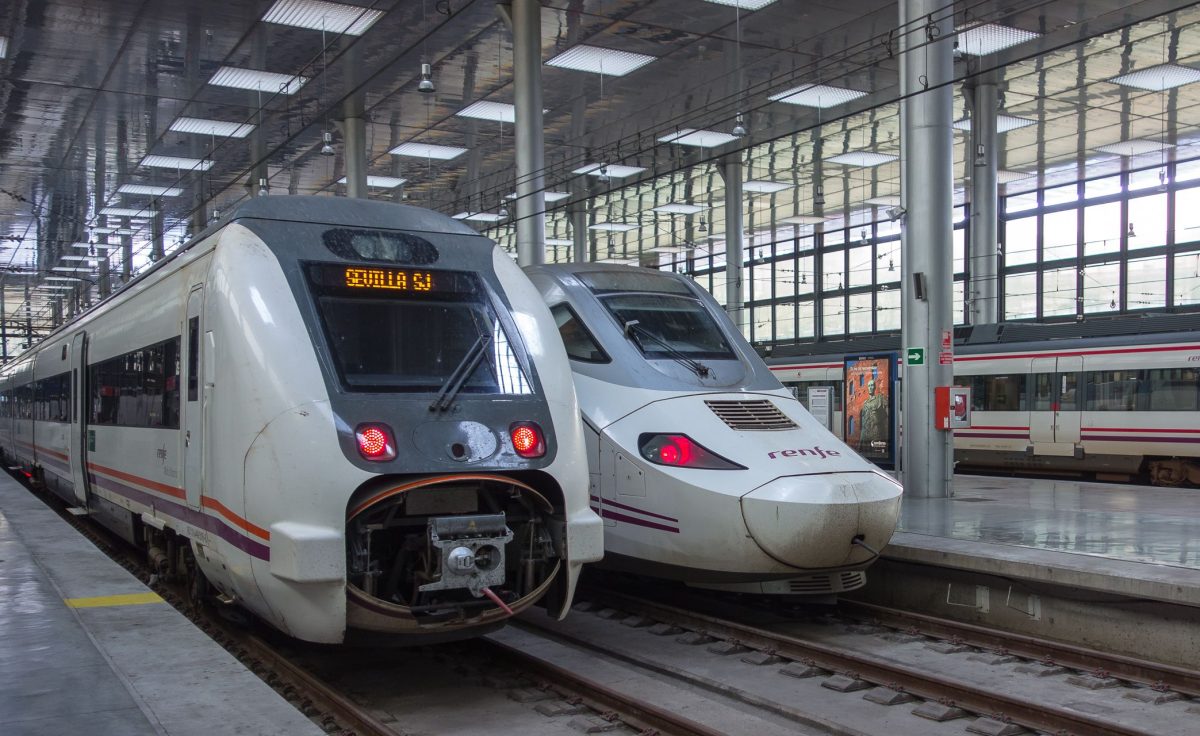
Spain's high-speed rail network has long been the envy of Europe, whisking passengers from Madrid to Seville in under three hours. But on the morning of October 28, 2026, that dream turned into a nightmare. A Renfe AVE train slammed into the rear of a stationary Iryo train near Urda in Toledo province, killing 69 people and injuring more than 100. The crash came just ten months after another deadly accident on the same stretch of line, and it has forced a hard look at the systems meant to keep these trains safe.
The sequence of events is now coming into focus. At 8:30 am, a computer or communications failure knocked out the LZB, the automatic train-control system that governs the line. Six trains ground to a halt over a 63-kilometer stretch. Controllers at Adif, Spain's rail infrastructure manager, then switched to fallback procedures. Audio recordings leaked to Spanish media capture a controller telling the Renfe driver to disconnect and reconnect the LZB and proceed at normal speed. The driver asks for confirmation, and the controller gives it. But the Iryo train ahead could not restart, and at 8:53 am, the Renfe train plowed into it.
What the recordings reveal is damning. The Renfe driver was cleared to resume normal running at 8:36 am, even though standard fallback protocols require movement at no more than 40 km/h with visibility-based caution. The Iryo driver told control that his train was halted at Urda's entry signal and that its safety system would not allow a restart. That message reached the control center at least five minutes before the collision. Yet no further warning appears to have been issued to the Renfe driver. The control center knew the Iryo train was stuck while the Renfe train was barreling toward it.
Railway unions have criticized the release of the audio, arguing it risks scapegoating individual workers instead of addressing systemic failures. But the recordings have become central to public outrage, and they raise a critical question: why did the safety systems not step in when the automatic control went down? Signalling specialist Jaime Tamarit told Politico that protection systems are designed to compensate for human error. In this case, they did not.
The investigation, led by a judge and a government commission, will examine what disabled the LZB, what information controllers had after the failure, and why one train was able to move while the other could not. It will also look at the broader context. Spain has Europe's largest high-speed rail network, but it has been underfunding maintenance for years. According to European Commission data cited by Politico, Spain spent an annual average of €1.5 billion on high-speed rail between 2018 and 2022, with only 16% going to maintenance, renewals, and upgrades. France, Germany, and Italy spent 34% to 39% on the same. Spain's maintenance spending is less than half of its neighbors'.
This is not just a technical failure. It is a failure of priorities. Spain's high-speed network has been a point of national pride, a symbol of modernity and connectivity. But the pressure to keep trains running on time and expand the network has come at the expense of the very systems that keep passengers safe. The previous crash on the same line, in January 2026, should have been a wake-up call. Instead, the same vulnerabilities remained.
For travelers, the immediate takeaway is practical. If you are planning to ride Spain's AVE or Iryo trains, check the latest safety advisories and be aware that the network is under intense scrutiny. The Spanish government has promised a full investigation and has said it will offer solutions to prevent another tragedy. But trust, once broken, is hard to rebuild. Spain's high-speed rail is still one of the fastest ways to see the country, but it is no longer the worry-free option it once seemed.
The crash has also reignited a broader conversation about high-speed rail safety across Europe. While Spain grapples with its own failures, other countries are pushing ahead with ambitious plans. Europe's high-speed rail dream just got a big political push, but this tragedy is a stark reminder that speed means nothing without safety. And for those who love train travel, the question is not just about getting there fast, but getting there alive.
As the investigations unfold, one thing is clear: the systems that were supposed to protect passengers failed, and the consequences were catastrophic. The recordings show a controller giving a driver permission to speed ahead, seemingly unaware of the danger. The driver asked for confirmation, and the controller gave it. Somewhere in that chain of command, the safety net unraveled. The next step is to find out why, and to ensure it never happens again.