
Ask travelers if they care about sustainable travel, and most will say yes. Ask them to actually book a greener trip, and the answer gets complicated. Trip.com Group's 2026 Sustainable Travel Consumer Report, based on responses from 8,777 people across 29 markets, found that 75.4% consider sustainability important when planning travel. But the same study reveals a stubborn gap between values and behavior.
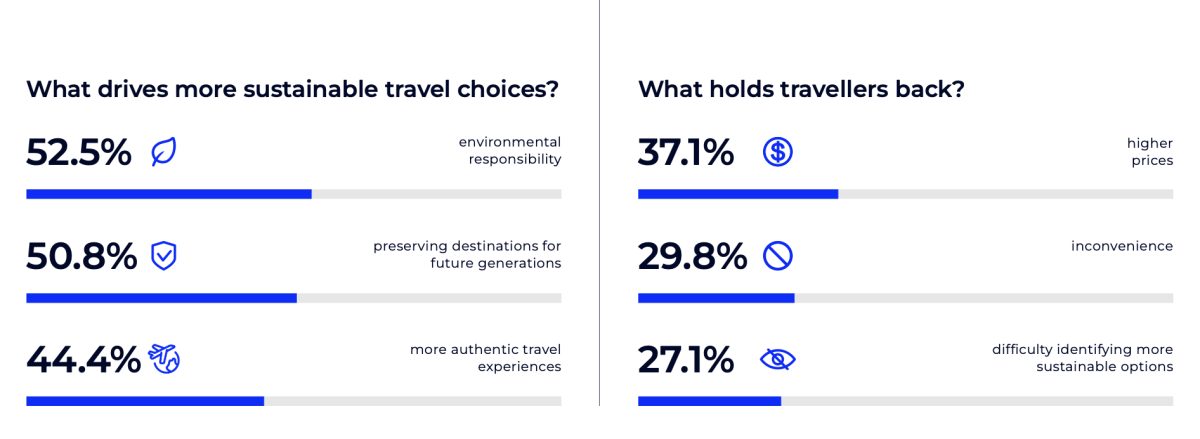
More than half of respondents, 56.8%, said they deliberately chose more sustainable options on recent trips. Environmental responsibility motivated 52.5%, while 50.8% wanted to preserve destinations for future generations. Those numbers sound promising. Yet when asked about barriers, the usual suspects emerged: higher prices topped the list at 37.1%, followed by inconvenience or extra effort (29.8%) and difficulty identifying greener choices (27.1%).
Price remains the heavyweight champion in travel decisions. A solid 64.1% of respondents said cost drives their general travel choices, while 61.8% prioritized quality and comfort. That doesn't mean sustainability is irrelevant, but it often takes a back seat when wallets are open. The report suggests that making eco-friendly options more affordable and easier to spot could close the gap between intention and action.
What Travelers Think Green Travel Looks Like
The survey also asked which lower-impact options actually appeal to travelers. Nature and outdoor destinations led the pack at 41.6%, with scenic rail journeys close behind at 34.1%. Lesser-known spots with fewer crowds attracted 32.7%, and hotels with established sustainability practices plus off-season travel also made the list. These choices aren't just about reducing footprints, they're about enhancing the experience itself.
Good public transport or low-carbon mobility would make a destination more appealing to more than half of respondents. Protecting natural and cultural heritage swayed 50.6%. The message is clear, travelers want to explore without wrecking the places they love. That sentiment echoes in Europe's cultural towns competing for a major sustainability prize, where heritage and green practices go hand in hand.
Climate Change Is Already Reshaping Travel Plans
Extreme weather is no longer a distant threat, it's altering itineraries today. A striking 62% of respondents said they had changed at least one aspect of a journey because of extreme weather. The most common response was delaying or rescheduling, followed by shifting the season or timing, and picking a different destination altogether. This isn't just about comfort, it's about safety and adaptability in a warming world.
Younger travelers are leading the charge on sustainable choices. Nearly 70% of Gen Z and 63% of Millennials said they intentionally chose greener options, compared with 50.6% of Gen X and 40.6% of Boomers. Age clearly influences booking behavior, though affordability remains a universal concern. The travel industry is taking note, as seen in airports treating sustainability as more than a carbon game.
Tools to Help You Travel Greener
Trip.com has launched a feature called My Travel Impact, an in-app dashboard that aggregates stays at properties with the company's "Certified Sustainable" label. It also shows emissions differences for selected flights and rail journeys. Flight estimates use the Travel Impact Model recommended by the non-profit coalition Travalyst, while rail comparisons project savings against travel by petrol car where data allows.
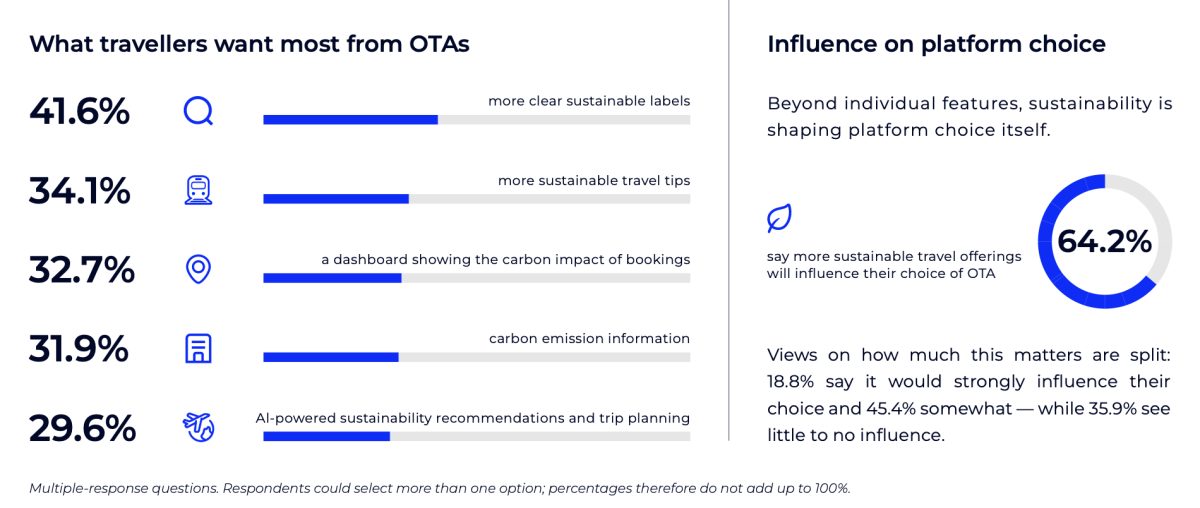
Demand for better guidance is loud. Over 41% of respondents want online travel agencies to display clear sustainability labels, and 32.7% want a dashboard showing the carbon impact of their bookings. A whopping 64.2% said the availability of more sustainable products would influence which platform they use. That's a clear signal for the industry, and it aligns with the broader push for transparency in travel, like navigating new entry systems in Europe.
Jane Sun, CEO of Trip.com Group, framed it as a shared responsibility. "Making travel a positive force for the world it connects is a shared responsibility," she said. The full report is available as a PDF, but keep in mind it's company-sponsored research, so treat the findings as a useful snapshot rather than an independent verdict.
For travelers, the takeaway is practical. If you want to travel greener, look for certified properties, consider rail over short flights, and don't underestimate the power of off-season trips. And if you're weighing the trade-offs, remember that sustainable choices often come with a premium, but they also come with the satisfaction of knowing your trip leaves a lighter footprint. The industry is listening, and the tools to help you decide are getting better.