
Imagine shoes that watch your every step, learning the subtle shifts in your gait that signal trouble ahead. That future just got closer thanks to researcher Dr Jiayang Li at the University of Bristol, who developed a pair of smart insoles packed with hundreds of tiny sensors. These aren't designed for fashion or marathon training. They're built to keep older adults steady on their feet, independent in their homes, and out of hospital emergency rooms.
The Moment That Sparked an Invention
Li's inspiration came from watching his 89-year-old mentor, Peter Langlois, wobble dangerously while walking. Despite having a sharp mind and infectious drive, Langlois couldn't quite trust his balance anymore. One near-fall was enough to spark Li's question: could the semiconductor technology he'd been developing for respiratory monitoring work differently, tackling the hidden crisis of falls among older people?
That question mattered. The World Health Organisation reports that 37.3 million falls serious enough to need medical care happen annually among older adults worldwide. Falls rank as the second-leading cause of unintentional injury deaths, with nearly 684,000 deaths per year. For someone living alone, a single bad tumble can trigger a cascade of problems: hospitalization, loss of confidence, physical decline, and the end of independent living.
How These Shoes Actually Work
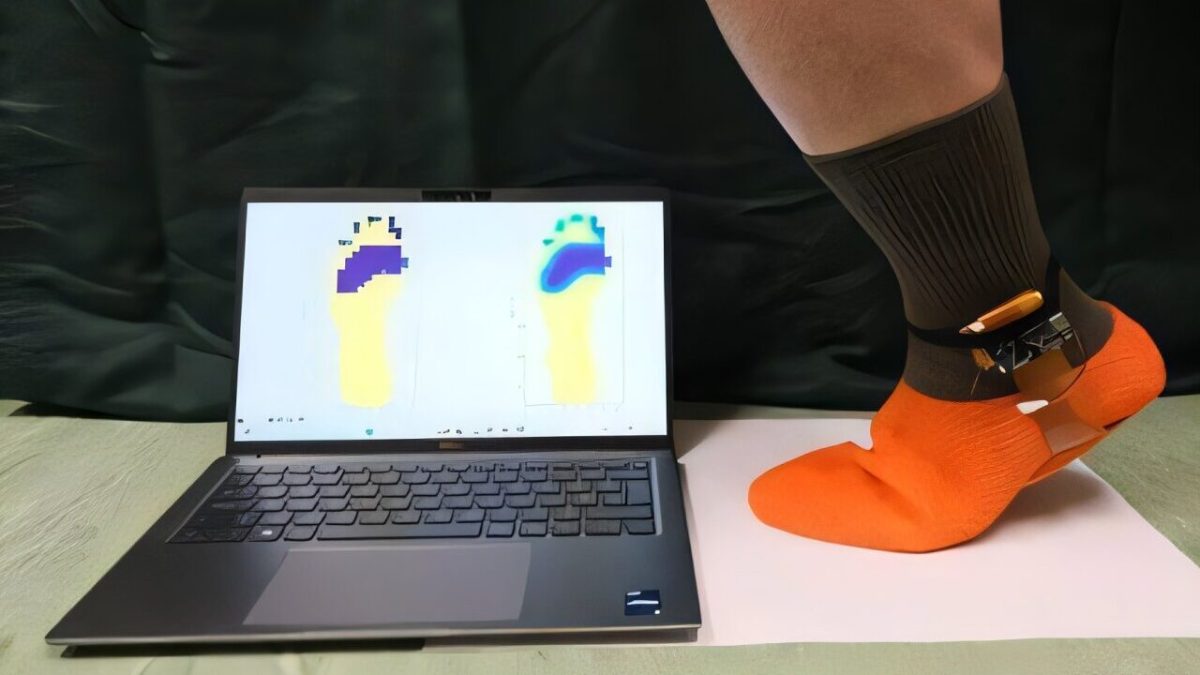
The magic happens in the insoles. Li engineered footwear fitted with hundreds of precise sensors that feed real-time data to an advanced microchip. That single chip monitors all 253 sensors simultaneously, translating foot pressure and movement patterns into detailed images of where weight distributes across each step and how balance shifts.

The technical elegance lies in efficiency. The entire system consumes just 100 microwatts of power, meaning the shoes can run for roughly three months on a single low-voltage battery charge. Users can sync their data wirelessly to a tablet or smartphone, getting daily feedback about their gait without ever stepping into a hospital corridor.
Why This Changes Everything for Aging in Place
Traditionally, detecting fall risk required expensive visits to clinics equipped with motion-capture labs and gait analysis machines. Li's creation moves that sophistication into everyday life. Doctors and family members can monitor detailed leg gesture patterns from home, spotting dangerous shifts in balance weeks before a serious stumble happens. The shoe gives older people something precious: the data they need to stay safe while keeping their independence.
"Mapping their leg gestures in detail could detect risk of falls, helping people like Peter stay safe while also keeping their independence at home," Li explained. "Although this highly detailed analysis could be obtained in hospital, the challenge was to make the technology more mobile and accessible in everyday life. That's what makes our shoe so special."
Part of a Broader Revolution
Li's invention joins a growing wave of wearable technology designed to extend mobility in older age. In 2024, researchers at the Technical University of Munich unveiled WalkON, a pair of robotic shorts with a lightweight tendon-driven system that autonomously assists leg movement using natural motion patterns. These complementary technologies point toward a future where assistive devices don't isolate older people at home, but instead empower them to move confidently through their own lives.
For travelers and their aging families, these innovations carry real implications. Whether you're planning a trip with an elderly parent or thinking about how you'll stay mobile in your own later years, the message is clear: staying on your feet isn't just about luck anymore. It's increasingly something we can measure, monitor, and manage.