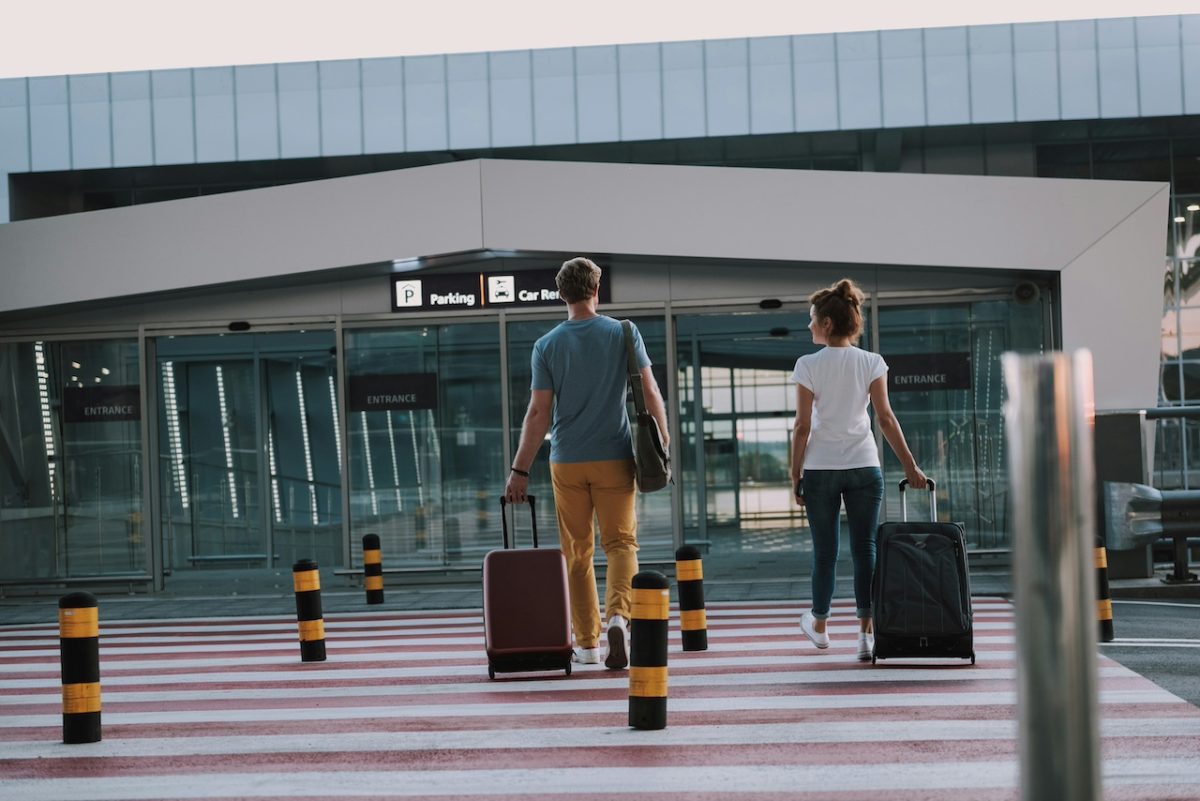
The airport brings out something strange in couples. One partner arrives three hours early with a color-coded itinerary. The other rolls up 90 minutes before boarding, supremely confident they'll make it through security with time to spare. Add a ticking clock and mounting dread, and suddenly you're both exhausted before your plane even takes off.
Travel itself demands a lot from relationships. Navigating check-in lines, managing luggage, enduring passport control, clearing security, finding gates. For many people, flying has become routine. For others, each step feels like negotiating a foreign country. And when two people with completely different travel rhythms are yoked together, friction builds quickly.
The Airport Divorce Explained
What sounds like relationship doom is actually the opposite. An airport divorce is a simple strategy where couples separate at the terminal and travel through the airport process on their own terms, reuniting later on the plane or after landing. The name plays on drama, but the reality is refreshingly practical.
Some couples split right before passport control and meet up a few gates over. Others don't reunite until boarding. Some take different flights entirely, meeting up at baggage claim. A few even spring for different cabin classes if one partner can't sleep in economy while the other could nap anywhere. The variations are limitless. The goal is always the same: let each person move at their own pace without triggering the other.
Dr. Madeleine Roantree, a psychologist quoted by Metro UK, puts it plainly: "They can move at their own pace, manage their own anxiety and preserve their emotional energy for the holiday itself rather than spending it arguing in a security queue. Sometimes a little autonomy prevents a lot of unnecessary resentment."
When This Actually Works Best
The airport divorce solves real logistical problems for some couples. Partners with different passport types or frequent flyer statuses move through security at different speeds. One person suffers in economy class while the other thrives. One needs to arrive absurdly early to feel calm; the other finds hanging around the terminal soul-crushing. These aren't personality clashes. They're just different needs.
For couples where airport stress is the real culprit (not a symptom of deeper conflict), this flexibility can genuinely help. A little breathing room at a stressful moment can reset the mood before your vacation even starts. You arrive at your destination on good terms instead of already tired and resentful.
The key is knowing which camp you fall into. If airport tension is a minor friction point, separation works. If every stressful situation turns into a fight, the airport divorce isn't solving anything. It's just treating the symptom while the underlying issue remains. In those cases, couples might want to consider whether airport time itself deserves a different approach entirely, or if travel itself isn't the real battleground.
Making It Work
If you're considering this, be explicit about timing and meeting points. "See you at boarding group 2" is clearer than vague promises to reunite somewhere. Exchange seat numbers if you're booked separately. Set phone expectations in case someone misses their connection.
You might also think about which parts of travel genuinely stress you out. Is it the crowds? The uncertainty? The feeling of rushing? Once you identify your specific trigger, you can design an airport experience that actually works for you instead of compromising on something that frustrates you both.
Travel is supposed to expand your world, not shrink your patience for the person beside you. If arriving separately at the airport means you actually enjoy your trip together, that's not a sacrifice. That's strategy.